India Islamic Academy Deoband launches offline centres in Mumbai, Telangana’s Nalgonda
U-LEAD programme in Mumbai brought together hundreds of Ulama, Imams and professionals whereas Nalgonda women’s training workshop drew over 800 participants, highlighting Islamic education, leadership development and modern skills
India Islamic Academy Deoband (IIAD), an educational initiative under the Deoband Educational and Research Foundation (DERF), has announced plans to establish offline educational centres in Mumbai (Maharashtra), and Nalgonda (Telangana), marking an important expansion of its educational outreach beyond online learning.
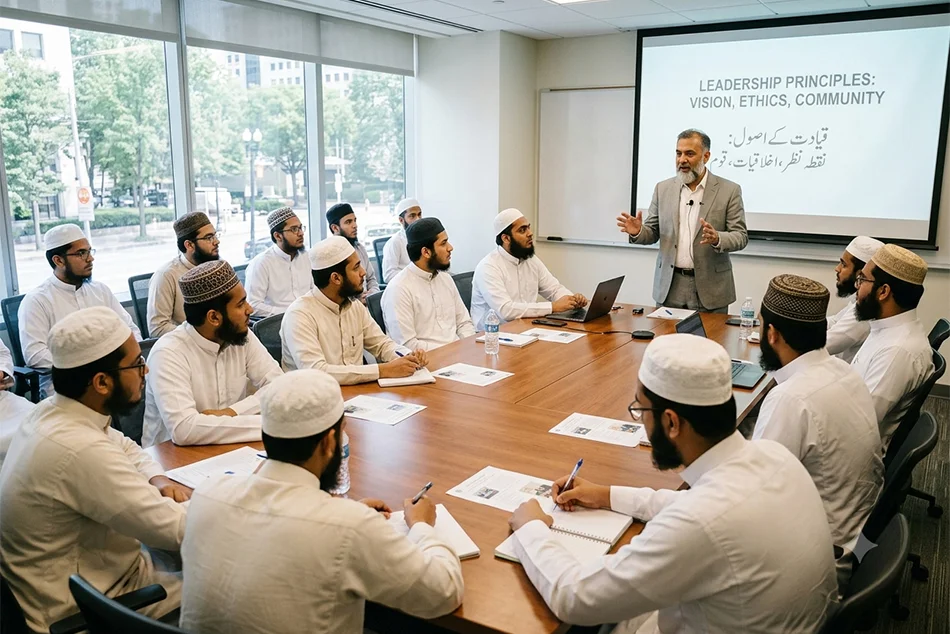
According to a Press release the above announcements were made during two programmes held in October 2026. The U-LEAD (Ulama Leadership, Empowerment & Development) programme in Mumbai on October 15 brought together hundreds of Ulama, mosque Imams, doctors, professionals and young people to discuss leadership development, Islamic education and community engagement. A women’s training workshop organised under the aegis of Jamiat Ulama Nalgonda on October 17 brought together more than 800 women, students and female Islamic scholars (Aalimas), highlighting women’s education, child development and contemporary skills.
The proposed centres are intended to complement IIAD’s online programmes through in-person education, training and local community engagement. The Academy aims to complete the necessary establishment-related formalities for the Nalgonda centre within the next six months, with regular academic activities targeted to begin in 2027.
Mumbai U-LEAD programme focuses on leadership development
The U-LEAD programme was held on October 15 at Yusufia Hall in Noor Masjid, Andheri West, Mumbai. The gathering brought together religious scholars, mosque Imams, doctors, professionals from diverse fields and young people to discuss the changing educational and social responsibilities of religious institutions.
Addressing the gathering, Maulana Mehdi Hasan Aini Qasmi, Founder and Director of India Islamic Academy Deoband (IIAD), announced plans to establish IIAD’s first offline centre in Mumbai. He emphasised that contemporary religious leadership requires not only a strong grounding in Islamic scholarship but also effective communication, teaching proficiency, leadership capabilities, organisational management and an understanding of present-day social challenges.
He outlined the Academy’s vision of connecting traditional Islamic scholarship with contemporary educational approaches, structured skills development and community engagement. He also highlighted the importance of making systematic Islamic education accessible to students, working professionals, doctors, engineers, women and homemakers who wish to pursue religious learning alongside their other responsibilities.
Skills development for Ulama and Imams
The Mumbai programme introduced initiatives aimed at strengthening the leadership, communication, teaching and organisational capacities of Ulama, Imams, madrasa students and female Islamic scholars.
Maulana Aini Qasmi highlighted the importance of modern teaching methodologies and child psychology in improving educational outcomes. He stressed that teachers should consider students’ age, aptitude, learning patterns and individual needs when planning lessons.
He also emphasised the importance of effective Friday sermons as instruments of religious guidance, ethical development and constructive social engagement. He proposed strengthening the educational and community-oriented role of mosques through study centres, counselling services and neighbourhood-level initiatives, while preserving their primary religious functions.
The programme was presided over by Maulana Mufti Syed Muhammad Huzaifa Qasmi, Nazim-e-Tanzeem of Jamiat Ulama Maharashtra. In his presidential address, he stressed the need for sound scholarship, serious study and a strong understanding of religious teachings to address contemporary intellectual and ideological challenges.
Maulana Muawwiz Abu Darda Qasmi spoke about intellectual and ideological challenges facing young Muslims and the importance of informed guidance.
Maulana Muhammad Ijaz Qasmi, Deputy Director of IIAD, introduced the Academy’s educational programmes and outreach activities, while Syed Furqan Hassanuddin, Founder of the Academy, outlined its organisational framework and future plans.
Other distinguished participants included Maulana Siraj Ahmad Nadwi, Maulana Mufti Abdul Basit Qasmi, Maulana Wahaj Athar, President of Jamiat Ulama Andheri and Bandra, and Maulana Muhammad Qasim, General Secretary of Jamiat Ulama Andheri. The proceedings were conducted by Maulana Mufti Shabbir Ahmad.
The programme was convened by Dr. Shamsullah Chaudhary, with support from Dr. Akhlaq Usmani, Dr. Ehtesham, Dr. Danish, Dr. Ijaz Khan, Dr. Idris, Dr. Haris and Dr. Zulfiqar. Volunteers from Mumbai Youth Forum assisted with coordination, hospitality and logistical arrangements.
Nalgonda workshop highlights women’s education and social reform
On October 17, 2026, Jamiat Ulama Nalgonda organised a one-day training workshop for women in Nalgonda, Telangana. More than 800 women, students and Aalimas participated in the programme, which focused on religious education, family responsibilities, child development and the need to equip women with skills relevant to contemporary society.
The workshop was presided over by Maulana Syed Shah Ehsanuddin Qasmi, president of Jamiat Ulama Telangana and founder and Nazim of Darul Uloom Nalgonda. Maulana Mehdi Hasan Aini Qasmi attended as chief guest and addressed the concluding session. Maulana Zeeshan Nadwi also shared his views, while Mufti Zubair Mazahiri conducted the proceedings.
In his address, Maulana Aini Qasmi emphasised the importance of women’s religious and educational development, character building and their contribution to social reform. He said that raising a well-rounded generation required not only moral and academic education but also an understanding of children’s psychological needs and developmental challenges.
The workshop included discussions on artificial intelligence (AI), digital technology, communication and public speaking, leadership development and professional skills for female Islamic scholars. Participants also discussed social concerns, including dowry practices, substance abuse and illiteracy, and explored the role of education and community engagement in addressing these challenges.
Speakers encouraged women and Aalimas to develop their capabilities in response to changing social and educational needs and to play a more active role in family guidance, education and social reform.
Nalgonda to host IIAD’s first offline centre in Telangana
During the workshop, IIAD announced plans to establish its first offline educational centre in Telangana in Nalgonda. The proposed centre is expected to provide a local platform for Islamic education, women’s training, leadership development and contemporary skills programmes.
According to the Academy’s plan, the necessary establishment-related formalities are expected to be completed within the next six months, with regular academic activities targeted to commence in 2027.
Jamiat Ulama Nalgonda coordinated the workshop, with Hafiz Syed Furqan Hassanuddin and his team playing an important role in its organisation. Hafiz Shamsuddin, Maulana Abdul Karim Adil, Maulana Zia, Maulana Sami and Hafiz Atiqur Rahman Baig were among those who supported the arrangements.
The proposed centre aims to expand educational and training opportunities for women, students and local communities while connecting traditional Islamic learning with digital skills and leadership development.
Bridging traditional Islamic scholarship & contemporary education
The proposed centres in Mumbai and Nalgonda form part of IIAD’s broader effort to expand access to structured Islamic education and strengthen local educational engagement.
Through its online courses, diploma programmes and skills development initiatives, the Academy seeks to serve learners from diverse backgrounds, including students, working professionals, women and religious scholars. Its approach emphasises combining religious learning with effective teaching, communication, leadership and practical competencies.
The U-LEAD initiative seeks to strengthen the institutional and community leadership capacities of Ulama and Imams. The proposed offline centres are expected to provide additional opportunities for direct interaction, training and educational activities.
The two programmes also highlighted the potential of mosques and educational institutions to contribute to learning, counselling, youth guidance and community welfare alongside their core religious and educational responsibilities.
By combining the accessibility of online learning with local, in-person engagement, IIAD aims to create additional opportunities for religious education, professional development and community-based initiatives.
About India Islamic Academy Deoband
India Islamic Academy Deoband (IIAD), is an educational initiative operating under the Deoband Educational and Research Foundation (DERF). It focuses on Islamic education, academic development, skills enhancement and leadership training. Through online programmes and expanding outreach initiatives, the Academy aims to make structured Islamic learning accessible to diverse learner groups and strengthen the educational, intellectual and social contributions of Ulama, educators, women and young people.
Follow ummid.com WhatsApp Channel for all the latest updates.
Select Language to Translate in Urdu, Hindi, Marathi or Arabic