Why Trump is pressurizing Saudi Arabia to accept Israeli help against Houthis
The poisonous provocation, arriving after four years of a relatively stable ceasefire between Saudi Arabia and the Houthis, appears to be a carefully calculated Israeli incitement, channeled through US President Donald Trump.
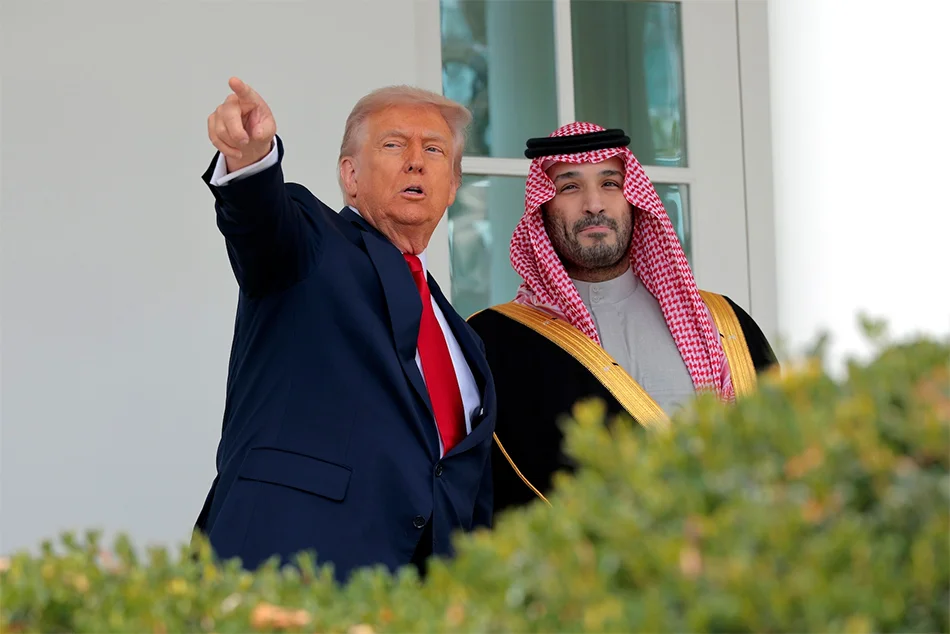
The statement made on 16 October, 2026 by U.S. President Donald Trump — in which he urged Saudi Arabia to accept the Israeli offer of assistance in its ongoing battle against the Houthi’s “Ansar Allah” movement in Yemen, and to join the “Abraham Accords” normalization framework with the occupying state, comes as no surprise.
This poisonous provocation, arriving after four years of a relatively stable ceasefire between Saudi Arabia and the Houthis, appears to be a carefully calculated Israeli incitement, channeled through the US President. Its intent is to entangle the Kingdom once again in a conflict with the Houthis — a conflict it already waged for eight years, eventually realizing that the only way to end this war of attrition is through the negotiating table, and coexistence with its southern Yemeni neighbor, and a truce, followed by further talks toward a comprehensive peace.
A military solution is all but impossible, regardless of how much the Saudi arsenal expands or how extensive foreign interventions — whether Israeli, American, or even Arab, might become.
It is both regrettable and highly suspicious that Trump has taken it upon himself to act as a spokesperson for the Kingdom of Saudi Arabia — not only by calling on it to accept Israeli military intervention in this “Arab and Islamic” conflict, but by going so far as to “assert” that the Saudi leadership would indeed accept the Israeli offer.
Even more dangerous is the escalation of deliberate and misleading leaks in the Israeli media — most notably in the far-right Jerusalem Post, which speak of “indirect” Saudi-Israeli intelligence cooperation in the war in Yemen, facilitated by the U.S. Central Command (CENTCOM).
This is part of a joint Israeli-American pressure campaign on the Saudi leadership, aimed at pushing the Kingdom into the arms of its Israeli enemy by exploiting its desperate need for military support.
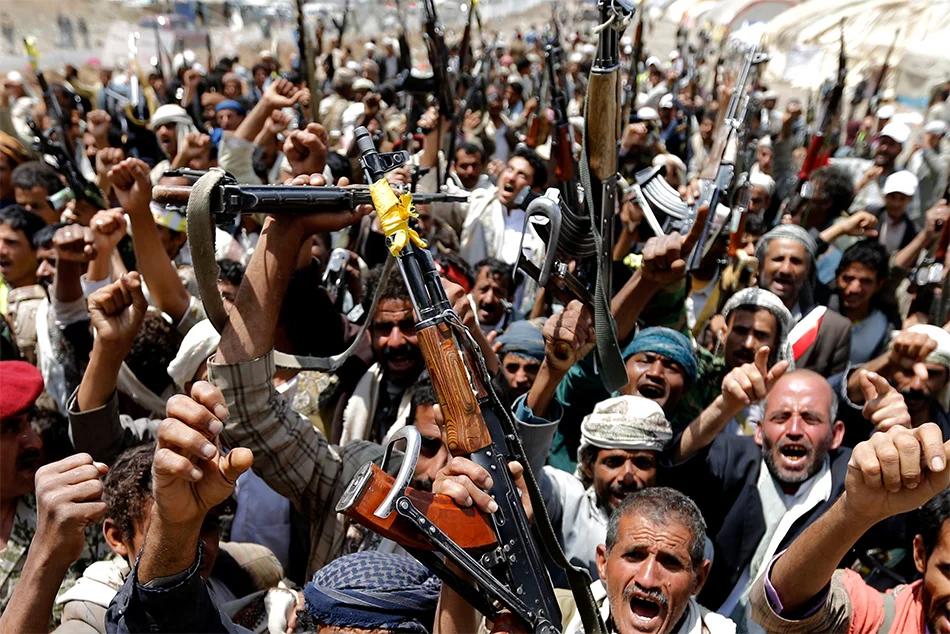
This pressure follows the success of the Yemeni Houthi military command in striking most of Saudi Arabia’s civilian airports — particularly in the capital, Riyadh, and the city of Dammam, the oil hub of the Gulf region and the headquarters of Aramco, the company that manages the industry.
Also Read: Decoding The Ideology Behind Houthis’ Destructive Doctrine
It is striking that Trump, who falsely claims to care about Saudi Arabia and its security, rejected a request from Saudi Crown Prince Mohammed bin Salman to intervene militarily on the Kingdom’s behalf in the war against the Houthis. This request was based on the mutual defense treaty between the two nations — a treaty for which Trump had already secured a massive payment of $1.3 trillion during his first overseas visit after taking office.
Trump has no intention of meeting the Saudi Crown Prince’s demands for military intervention, for two reasons:
- First: He suffered a major defeat at the hands of the Houthis when he previously decided to intervene militarily to halt their devastating attacks — attacks that included striking U.S. aircraft carriers and damaging several of them in the Red Sea and the Arabian Sea.
- Second: Using this rejection of American intervention — on the side of the Saudi leadership and military in this war, as leverage to compel the Saudi leadership to accept Israel’s offer of intervention, which would subsequently lead to normalization.
The greatest gift President Trump could offer to the Yemeni Houthi “Ansar Allah” movement, would be the success of his pressure on the Saudi leadership to abandon its refusal and accept Israel’s offer to intervene in the war on its behalf.
This is because the Saudi leadership would lose its legitimacy among its own popular base and the broader Islamic world — especially considering that more than 95 percent of the Saudi people oppose normalization with the Israeli occupation state.
They support their leadership’s stance in rejecting any Israeli military intervention in the Saudi-Yemeni war, and they stand firmly in the camp of the Palestinian resistance, which seeks to restore all legitimate Palestinian rights, including the establishment of an independent Palestinian state.
Also Read: Saudi Arabia’s Houthi Trap
We find this false “exaggeration” of the Israeli occupation state’s military capabilities in the region quite baffling. The Americans, along with certain other Arab states, seem to forget that the Israeli occupation state suffered a massive defeat at the hands of the Yemeni “Ansar Allah” movement. For over a year and a half, the movement has struck deep within Israeli territory in solidarity with the Palestinian people and their steadfastness against the war of extermination in the Gaza Strip.
Sanaa stands as the only Arab capital that has truly stood by the “Mujahideen” in the Gaza Strip and the West Bank; Yemeni hypersonic missiles, cluster-warhead missiles, and drones have struck Jaffa and Haifa—even reaching the passenger terminal at Lod Airport—while reducing the city of Eilat and its port, located at the gateway to the Red Sea, to ruins and rendering them inoperable.
If the Israeli military cannot even protect its own airports, how could it possibly protect the airports in Riyadh, Dammam, Abha, Khamis Mushait, Jizan, or Najran?
The only path to ending this war and sparing the innocent blood of both Saudis and Yemenis is a return to the negotiating table. This is an “intra-Arab” conflict—one that must be resolved through mutual understanding and dialogue.
If the United States, seeking to mitigate its own losses and safeguard its warships and aircraft carriers, has already opted to negotiate with the Houthis to reach a ceasefire agreement, why does the Saudi leadership not do the same, and as quickly as possible?
Once again, it is a disgrace that Arab mediators have chosen to remain silent and turn their backs on this war. The only state that has offered its mediation to spare the blood of our Saudi and Yemeni brethren is Iran, represented by its Foreign Minister, Abbas Araghchi, with a meeting held in the Sultanate of Oman.
Saudi Arabia’s rejection of an Israeli offer to intervene in the conflict is a sound and wise stance — one that should be maintained and further solidified.
Returning to the negotiating table with our brethren in Yemen would neither be a source of shame nor diminish Saudi Arabia’s standing.
Dialogue remains the only viable path to ending this war, preventing further bloodshed, and shutting the door on hypocrites and opportunists. Time will tell.
[Abdel Bari Atwan, Chief Editor of Al Rai Al Youm, initially wrote this editorial in Arabic and appears in translated form in crossfirearabia.com. Views are personal.]
Follow ummid.com WhatsApp Channel for all the latest updates.
Select Language to Translate in Urdu, Hindi, Marathi or Arabic