Decoded: Rekha Gupta’s 1st Year as Delhi Chief Minister
As Rekha Gupta completes one year as Delhi Chief Minister, the question arises: has her tenure lived up to her ambitious promises?
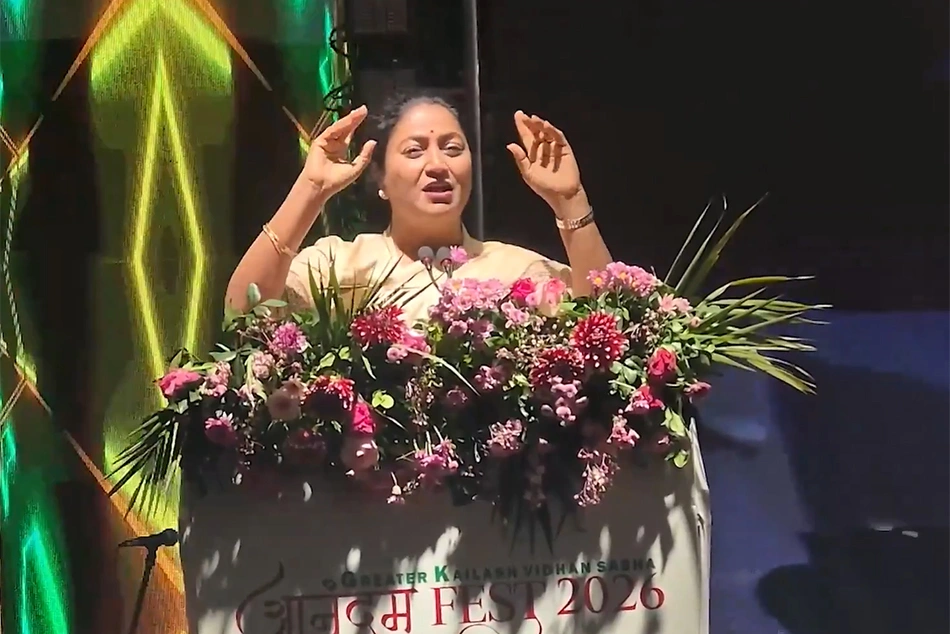
Delhi has witnessed women at the helm before, each leaving behind a distinct political and administrative imprint on the National Capital. From diplomacy to development, the city’s past female Chief Ministers shaped governance in their own ways. As Rekha Gupta completes one year in office, the question arises: has her tenure lived up to her ambitious promises?
After completing her first year, Rekha Gupta appears to have made tall claims but delivered little since taking the oath to this important position in the National Capital. Despite coming from a background in student politics, her report card as Delhi Chief Minister is far from impressive. She seems to understand the nuances of politics, yet at the same time, she is often seen creating considerable buzz without substantial delivery on the ground.
For many observers, her underperformance does not come as a surprise. Critics argue that the party’s top leadership prefers leaders who do not overshadow the central high command with a larger-than-life image. Whether this perception holds weight or not remains a matter of debate.
In this article, let us analyse her first year in office as Delhi Chief Minister and examine what has — and has not — changed for the people of Delhi.
A Legacy of Strong Women Leaders in Delhi
Delhi’s political history is marked by notable women leaders who brought unique strengths to governance.
Sushma Swaraj was known for her diplomatic acumen and sharp political intelligence. Though her tenure as Delhi Chief Minister was brief, her administrative clarity and leadership style were widely acknowledged.
In contrast, Sheila Dikshit of the Congress redefined Delhi’s urban landscape during her three consecutive terms. Her developmental vision transformed the city’s infrastructure, with the Delhi Metro standing as the most visible symbol of that era. Roads, flyovers, and urban renewal projects under her leadership reshaped the capital.
Against this backdrop, Rekha Gupta entered office with sweeping claims and bold declarations, but has little delivery on the ground zero. Let us further analyse her performance so far in the Delhi CM office.
A Manifesto Filled with High Expectations
When the BJP secured a majority in Delhi after two consecutive terms of AAP rule, it was seen as a significant political shift. Rekha Gupta’s campaign promised:
- A dramatic reduction in air pollution
- Cleaning and rejuvenation of the Yamuna
- Clean and uninterrupted water supply
- Improved civic infrastructure
- Better environmental standards
Her promises resonated with a city fatigued by long-standing civic crises. With BJP in power at the Centre, control through the Lieutenant Governor’s office, and later gaining dominance in the MCD as well, supporters described the arrangement as a “double engine” — and eventually even a “triple engine” government. The expectation was clear: seamless coordination would fast-track development.
One Year Later: Ground Reality vs Rhetoric
However, as Rekha Gupta completes one year in office, critics argue that the gap between promises and performance remains wide.
Despite the so-called “triple engine sarkar,” residents continue to grapple with:
- Severe winter air pollution
- Persistent Yamuna contamination
- Broken roads and traffic congestion
- Waterlogging during monsoons
- Inadequate water supply in several areas
- Women scheme of giving away 2500 still on paper
Reports from independent and opposition-leaning platforms have described “no respite” for residents despite consolidated power structures. AAP leaders and other critics allege widespread failures, delayed welfare rollouts, and over-reliance on public relations optics rather than tangible governance.
Some controversies and public gaffes have also drawn attention, alongside internal criticism within the party over issues such as air quality management. Remember how Delhities mocked in chorus – AGI in the Delhi stadium when she appeared with Messi in his event in the National Capital.
The ₹1 Lakh Crore Budget: Historic or Hyped?
One of the biggest announcements during Rekha Gupta’s tenure was the Delhi Budget for 2025–26, presented on March 25, 2025.
Set at ₹1 lakh crore, it became the largest budget in Delhi’s history — marking a 31–32% increase over the previous year’s estimates of around ₹76,000 crore. The BJP government projected it as a “historic” blueprint aimed at building a self-reliant and developed Delhi.
The budget emphasized infrastructure upgrades, pollution control, welfare schemes, and urban development. However, critics argue that:
- Implementation has been slow.
- Some schemes are expansions of central government programs such as Ayushman Bharat, rather than independent state innovations.
- Promises like women’s financial assistance and pollution mitigation remain partially implemented or delayed.
Since the financial year runs until March 2026, the full impact of the budget will ultimately depend on execution — an area where skepticism remains strong.
AAP to BJP: The Political Shift and Public Mood
Delhi’s transition from two terms of AAP governance to BJP rule marked a significant political change. Many voters hoped that alignment between the Centre and the state would resolve long-standing friction and accelerate development.
Yet, after one year, public sentiment appears mixed.
Some residents acknowledge improvements in cleanliness drives and action against legacy waste. Others feel that little has changed in their daily lives — with pollution still suffocating winters, infrastructure gaps persisting, and civic complaints unresolved.
Delhi remains a city struggling with entrenched structural problems that have spanned multiple administrations — from Congress to AAP and now BJP.
Governance in a Complex Capital
It is also important to recognise that Delhi’s governance structure is uniquely complex. Power-sharing between the elected government, the Centre, and the Lieutenant Governor has historically complicated decision-making. The AAP-led government frequently complained about non-cooperation from the Union government, citing administrative hurdles as a major obstacle. In response, the BJP leadership at the Centre claimed that a “double engine sarkar” would ensure smoother governance and better coordination.
However, that claim now appears to ring hollow. In Delhi’s case, it is effectively a “triple engine” government, with the BJP in power at the Centre, the state, and the MCD. Yet, despite this consolidated control, there is little visible evidence of transformative governance on the ground.
Even with expanded authority across agencies, translating political dominance into administrative efficiency is not automatic. Long-standing environmental and urban crises demand sustained, coordinated execution rather than headline announcements. Unfortunately, critics argue that not only has implementation been weak, but even the seriousness of intent appears questionable — let alone visible results on the ground.
Final Thought 1-Year On: Celebration or Course Correction?
As Rekha Gupta marks one year as Delhi Chief Minister, the broader assessment remains cautious.
Her tenure began with expansive promises and a record-breaking budget. Yet for many Delhiites, visible change on the ground appears limited. Critics call it a year of “jumla and hollow claims,” while supporters urge patience, arguing that structural reforms take time.
The coming months — particularly the implementation phase of the ₹1 lakh crore budget — will be decisive. Whether her government can convert political dominance into measurable improvement will determine how history ultimately judges Rekha Gupta’s first year in office.
For now, Delhi watches — hopeful, skeptical, and still waiting.
[The writer, Mohd Ziyauallah Khan, is a freelance content writer & editor based in Nagpur. He is also an activist and social entrepreneur, co-founder of the group TruthScape, a team of digital activists fighting disinformation on social media.]
Follow ummid.com WhatsApp Channel for all the latest updates.
Select Language to Translate in Urdu, Hindi, Marathi or Arabic