Indian Diplomacy Falters on Iran War
The US-Israel attacks on Iran has placed India in an uncomfortable diplomatic position, exposing the limits of its much-touted strategic autonomy.
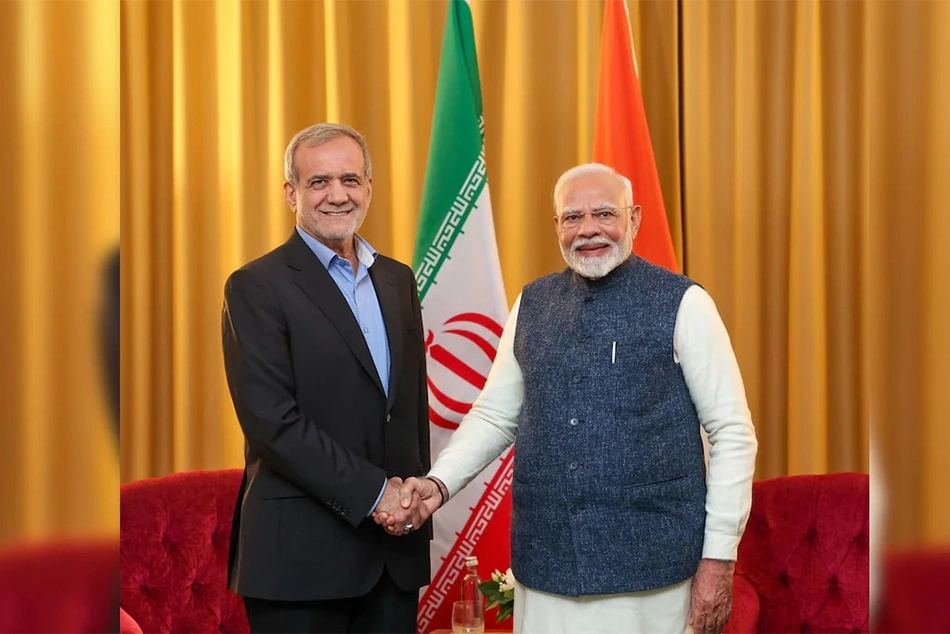
[Indian Prime Minister Modi with President of Iran, Masoud Pezeshkian, in a file image]
The US-Israel attacks on Iran has placed India in an uncomfortable diplomatic position, exposing the limits of its much-touted strategic autonomy. New Delhi’s cautious and delayed responses suggest that its foreign policy is increasingly being shaped by immediate economic and energy concerns rather than by a consistent strategic doctrine. If India wishes to retain credibility as a responsible and influential global actor, it will have to demonstrate greater diplomatic coherence, act with greater promptness in moments of crisis, and ensure that its commitment to strategic neutrality is not perceived as selective or inconsistent.
Less said the better about India’s stand on the current tension in West Asia. The US-Israel alliance’s attack on Iran has, in no uncertain terms, exposed weakness of the country’s foreign policy. Reportedly, PM Modi made telephonic calls to the UAE President, the Saudi Crown Prince, the King of Bahrain, the Sultan of Oman, the Crown Prince of Kuwait and the Qatar Sheikh, between March 1 to 3, and condemned attacks on their respective countries and violation of their sovereignty and territorialintegrity.
Further, PM Modi even called the Israeli PM Benjamin Netanyahu and King of Jordan Abdullah II on March 2 and conveyed deep concern at the evolving situation in the region but avoided talking to Iranian President Dr Masoud Pezeshkian despite the fact the Persian country faced attacks from the US-Israel alliance.
Factually, it took 13 days for the MEA to express grief over the death of scores of school children in Iran. On February 28, the first day of the US-Israel war with Tehran, 175 people, 166 of them girl students, were killed in the America-led attack on ShajarehTayyebeh girls’ elementary school in Minab city in Iran.
In its response on March 12, basically 13 days after the tragic strike, MEA Spokesperson Randhir Jaiswal said:
“As far as the question of the school children you talked about is concerned…as I have said, we have issued several statements on the ongoing conflict. We have underlined the need for prioritizing the safety of all children. We regret the precious lives lost and express our grief in this regard.”
On the same day, PM Modi also spoke to the Iranian President and posted on X,:
“Had a conversation with Iranian President, Dr. Masoud Pezeshkian, to discuss the serious situation in the region. Expressed deep concern over the escalation of tensions and the loss of civilian lives as well as damage to civilian infrastructure.”
This was seen as a major development in the diplomatic circles but was just for the sake of it and lacked any conviction or forceful messaging.
Basically, the Indian response started coming after the domestic energy crisis in India started convulsing due to the alleged delays in the gas and petrol supply chains. Iran’s closure of the Strait of Hormuz, the supply of oil and gas to India was hampered. Around 90% of Indian gas imports and 45% of crude oil come from the Strait of Hormuz. However, what worsened the situation, was due to the fact that Qatar halted production of gas after Iran targeted the Gulf country’s gas fields.
India imports about 60% of its LPG consumption from the Gulf countries. Of them, Qatar accounts for nearly 45% of India’s LNG imports and the rest is sourced from other Gulf countries, including the UAE and Saudi Arabia. PM Modi’s conversation with the Iranian leadership in this background was seen as a confused and largely a delayed effort.
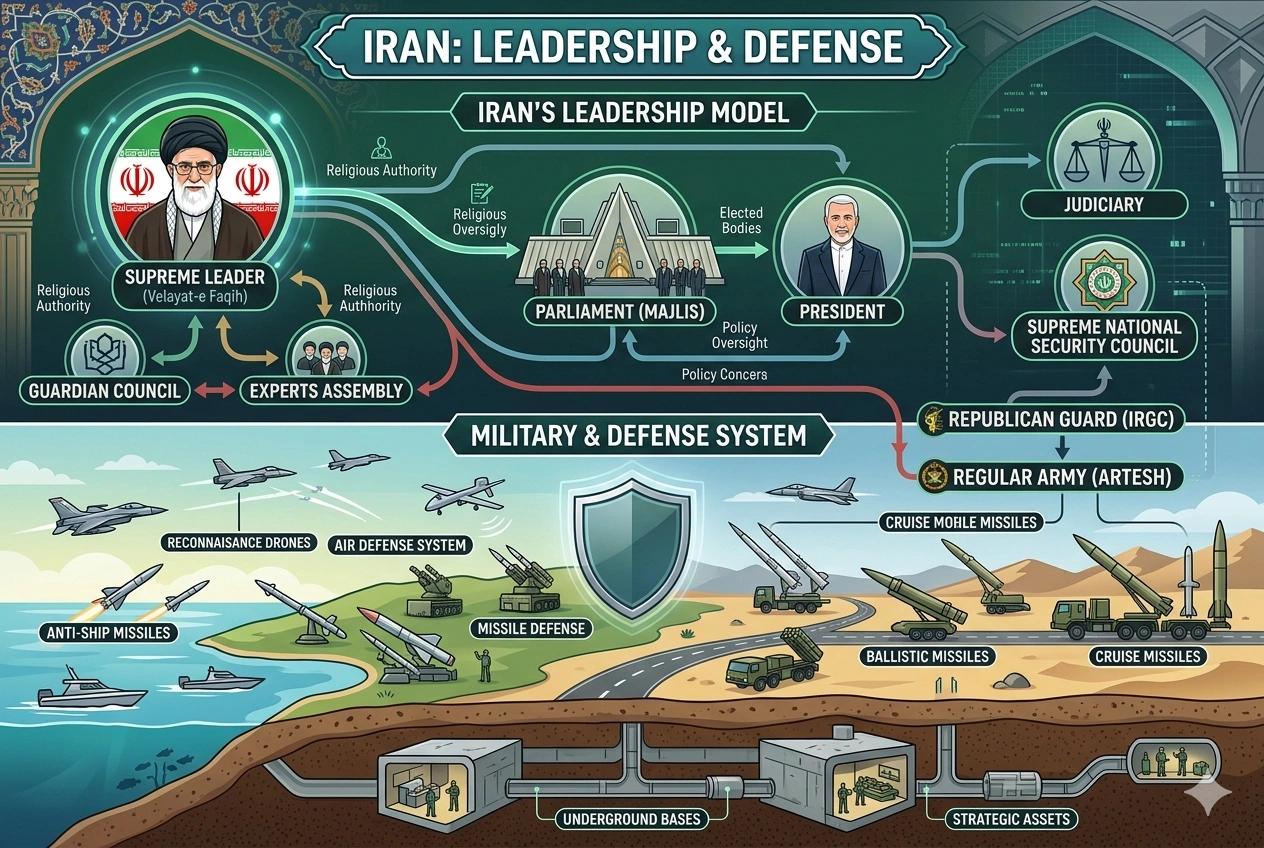
Globally the assassination of Iran’s Supreme leader Ayatollah Ali Khamenei has been condemned by most global leaders, yet India’s hesitation to condemn it, which came five-days after the attack, shows a lack of agility and import, which India attached to this development and also damaged its reputation as current president of the BRICS.
It would not be wrong to surmise that the Iran war has thrown a challenge to India’s foreign policy and mandarins managing it. While Iran is a BRICS member, so are Saudi Arabia and the UAE. But, BRICS has yet to issue a statement on the war. Though Iran has urged India, which is currently the BRICS Chair, to issue a statement on behalf of the group, condemning the US and Israeli strikes against Iran and the killing of Supreme leader Ali Khamenei, the regional alliance members are still waiting for the response.
What one could conclude from this is that currently India is in a bind and hesitating to take sides in the worst conflict of West Asia, and which imperil the whole world ultimately. But the bigger question is whether India has, in reality, maintained neutrality in the ongoing war. How would one see Prime Minister Modi’s telephonic conversations with leaders of the Gulf countries and Jordan, and condemning attacks on their territories but not be in touch with the Iranian authorities?
In this regard, India’s response is guided by its economic, investment and energy demand issues. The Persian Gulf countries are home to 9.6 million Indians, and also a key to India’s energy security. Besides, they have made substantial investments in various sectors in India. For example, under the Bilateral Investment Treaty, which was signed by India and the UAE in 2024, the Gulf country has committed to invest $75 billion in India’s infrastructure. Meanwhile, the UAE is planning to develop a Special Investment Region in Dholera in Gujarat.
Despite all these factors influencing its response, India should have shown diplomatic maturity and refused to be swayed by any kind of emotions it exhibited while condemning attacks on Saudi Arabia, UAE and other Gulf nations.
Overall, the ongoing Iran war has placed India in an uncomfortable diplomatic position, exposing the limits of its much-touted strategic autonomy. New Delhi’s cautious and delayed responses suggest that its foreign policy is increasingly being shaped by immediate economic and energy concerns rather than by a consistent strategic doctrine. While safeguarding national interests and maintaining relations with Gulf partners is undoubtedly important, diplomacy also demands balance, clarity and timeliness.
India has traditionally prided itself on pursuing an independent foreign policy and maintaining cordial relations with all sides in West Asia. However, the recent episode indicates that this balance is becoming increasingly difficult to sustain amid shifting geopolitical alignments and competing economic interests.
If India wishes to retain credibility as a responsible and influential global actor, it will have to demonstrate greater diplomatic coherence, act with greater promptness in moments of crisis, and ensure that its commitment to strategic neutrality is not perceived as selective or inconsistent.
Follow ummid.com WhatsApp Channel for all the latest updates.
Select Language to Translate in Urdu, Hindi, Marathi or Arabic