Narendra Modi's Approval Ratings: A Closer Look
The recurring claim that 'Modi is the world’s most popular leader' reveals more about media amplification and political messaging than about any definitive measure of public opinion.
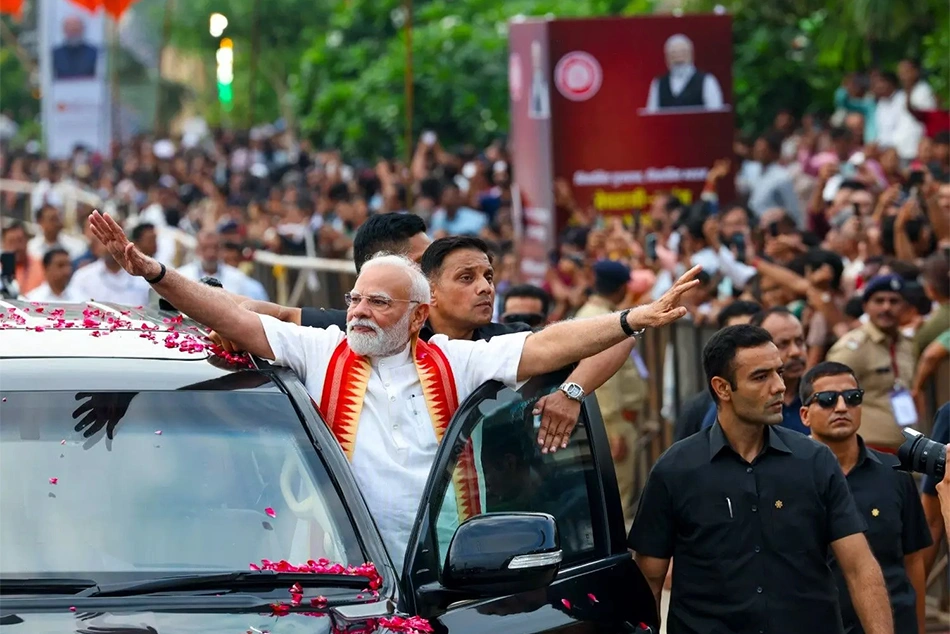
Every few months, Indian media headlines loudly proclaim that “Modi is the world’s most popular leader,” citing approval ratings from an American firm called Morning Consult. The moment such surveys are released, hordes of users — often linked to organised IT cells, begin echoing the same narrative, portraying the Indian Prime Minister as an indispensable global leader or “Vishwaguru.”
Ironically, this is little more than a fallacious claim dressed up as celebration.
However, these assertions are based on a single proprietary online tracker whose methodology and limitations are rarely examined. To assess the credibility of such headlines, it is essential to understand who conducts this survey, how it works, and why its findings should be interpreted with caution. In this article, we explore why these surveys often amount to little more than hype and misrepresentation, lacking a solid grounding in reality. Let’s begin.
Who Conducts the Survey?
The data originates from the Global Leader Approval Rating Tracker, a product of Morning Consult Political Intelligence, run by Morning Consult which is a US-based business intelligence and polling company founded in 2014.
It is a privately held, for-profit firm backed by venture capital, led by CEO and co-founder Michael Ramlet. The tracker covers leaders across more than 20 countries, publishing rolling approval and disapproval ratings based on daily online surveys.
How the Modi Approval Rating is Calculated?
The widely circulated claim about Modi’s global popularity comes from this tracker. The ratings are based on a 7-day rolling average of responses to a standard question asking whether respondents approve or disapprove of a leader’s performance.
Morning Consult relies on large-scale online surveys drawn from multiple panel providers. These surveys are non-probability samples, meaning participants volunteer rather than being randomly selected.
To adjust for imbalances, the data is statistically weighted using demographic factors such as age, gender, education, and region, attempting to mirror the country’s adult population.
What’s Problematic About the “Most Popular Leader” Claim?
The headline involves two major leaps:
- From Online Sample to National Opinion: Morning Consult’s data reflects only the views of online, panel-accessible individuals, not the entire population. In a country like India, marked by deep digital divides, this is a significant limitation.As a result, the data represents only a segment of society often more urban, connected, and privileged not the full diversity of India’s population.
- From National Data to Global Ranking: Comparing leaders across countries assumes uniform survey quality and representation. In reality, countries differ widely in internet access, political contexts, and survey infrastructure.Treating such varied data as directly comparable is methodologically weak.
- Over-Precision of Numbers: Approval ratings like 68% vs 75% are often presented as exact figures. However, in non-probability polling, the actual uncertainty is much larger and not fully measurable.
These figures are better suited for tracking trends over time rather than making precise comparisons or rankings.
How Should These Numbers Be Interpreted?
A more reasonable approach is to treat these ratings as one imperfect indicator of opinions among India’s digitally connected population—not as the definitive voice of 1.4 billion people.
Global rankings and exact percentages should be viewed with skepticism, especially when stripped of methodological context.
How Reliable is Morning Consult?
Morning Consult is a large and data-driven organisation, but its track record is mixed. For instance, during the 2016 US presidential election, its polling overestimated Hillary Clinton’s lead, reflecting a broader industry trend.
Subsequent evaluations have often ranked it below traditional pollsters that use probability-based sampling. The firm has also promoted theories like “shy Trump voters,” but later analyses have questioned the scale and significance of such effects.
Limitations of Non-Probability Online Polling
The concerns with Morning Consult are part of a broader debate about non-probability online surveys:
No True Margin of Error: Traditional margins of error assume random sampling, which these surveys lack. This means uncertainty is often understated.
Heavy Dependence on Weighting: Statistical adjustments attempt to correct sample imbalances. However, if key political or social variables are missing, biases may persist or even worsen.
Lack of Transparency: Since these are proprietary products, detailed data, methodologies, and weighting processes are not publicly available, limiting independent verification.
India-Specific Methodological Concerns
Several red flags are particularly relevant in the Indian context:
- Digital Divide Bias: Online samples tend to over-represent urban, educated, and higher-income groups, which may skew politically.
- Uneven Internet Access: Large sections of rural, low-income, and older populations remain underrepresented.
Limited Methodological Disclosure: Key details—such as panel composition, regional representation, language coverage, and response rates—are not fully transparent. - Question Framing Effects: Slight differences in wording or survey design can significantly influence responses, especially in polarised environments.
- Commercial Incentives: As a paid intelligence product, there is an inherent tendency to present simplified, clean narratives rather than nuanced, uncertainty-rich findings.
What the Headline Should Actually Say
A more accurate and responsible version of the popular claim would be:
“According to a US-based, non-probability online polling firm’s proprietary tracker—subject to significant methodological limitations—Modi currently records the highest measured approval among the leaders it tracks.”
This framing reflects the reality far better than the sweeping and definitive headlines often seen in Indian media.
Final Thought
In the end, the recurring claim that “Modi is the world’s most popular leader” reveals more about media amplification and political messaging than about any definitive measure of public opinion. What is often presented as a global, data-backed truth is, in reality, derived from a single, methodologically limited online tracker that captures only a narrow slice of society.
When stripped of its hype, the narrative does not hold up to rigorous scrutiny. The gaps in sampling, the challenges of cross-country comparisons, and the lack of full transparency make it clear that such rankings are far from conclusive. Yet, these nuances are frequently lost in the rush for attention-grabbing headlines and viral narratives.
A more responsible approach demands scepticism, context, and a willingness to question convenient claims especially when they are repeatedly used to shape public perception. Rather than accepting such surveys at face value, readers and media alike must recognise their limitations and resist turning selective data into sweeping conclusions.
[Mohd Ziyauallah Khan is a freelance content writer & editor based in Nagpur. He is also an activist and social entrepreneur, co-founder of the group TruthScape, a team of digital activists fighting disinformation on social media.]
Follow ummid.com WhatsApp Channel for all the latest updates.
Select Language to Translate in Urdu, Hindi, Marathi or Arabic