From 1830 Algeria to Gaza and Minab – A Moral Crisis of International Order
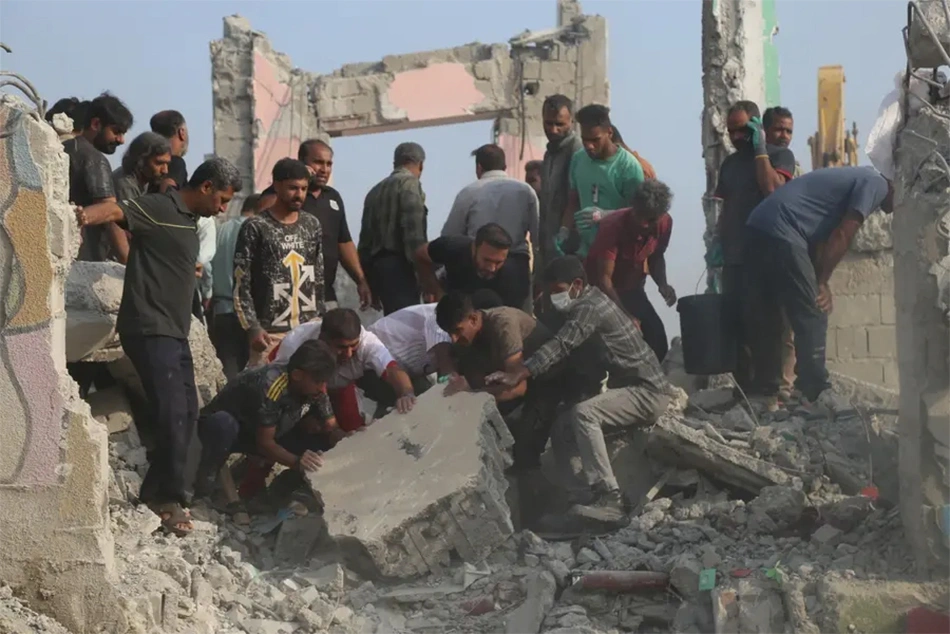
Since October 2023, Gaza has endured one of the most intense bombardment campaigns in the contemporary world. amd now the brutal killing of girls in the US-Israeli attack on a school in Minab, Iran
“The colonized person who writes history makes it as the story of a people from whom truth has been systematically stolen.” — Frantz Fanon
The Simplest Test
There is a simple test for the sincerity of any international order: apply the same moral and legal standard to the same act, regardless of who commits it.
If a missile struck a school in Washington, Paris, or London and killed even a single child, the word would be immediate: terrorism. Emergency sessions would convene. Moral outrage would be unambiguous.
But when schools are struck elsewhere, the vocabulary shifts.
“Collateral damage.”
“Operational complexity.”
“Intelligence failure.”
The law does not change.
The child does not change.
Only the flag changes.
That shift reveals hierarchy.
When Words Adjust to Power
Since October 2023, Gaza has endured one of the most intense bombardment campaigns in the contemporary world. UN agencies have documented repeated destruction of civilian infrastructure, including schools sheltering displaced families. UNICEF has warned of disproportionate harm to children. Human Rights Watch and Amnesty International have raised serious concerns about distinction and proportionality under international humanitarian law.
The deliberate targeting of civilians by non-state actors — including Hamas’ attacks of 7 October 2023 — is criminal under the Rome Statute. The same principles bind states. The law does not fragment depending on political alignment.
Self-defense is recognized. It does not suspend distinction, proportionality, or precaution.
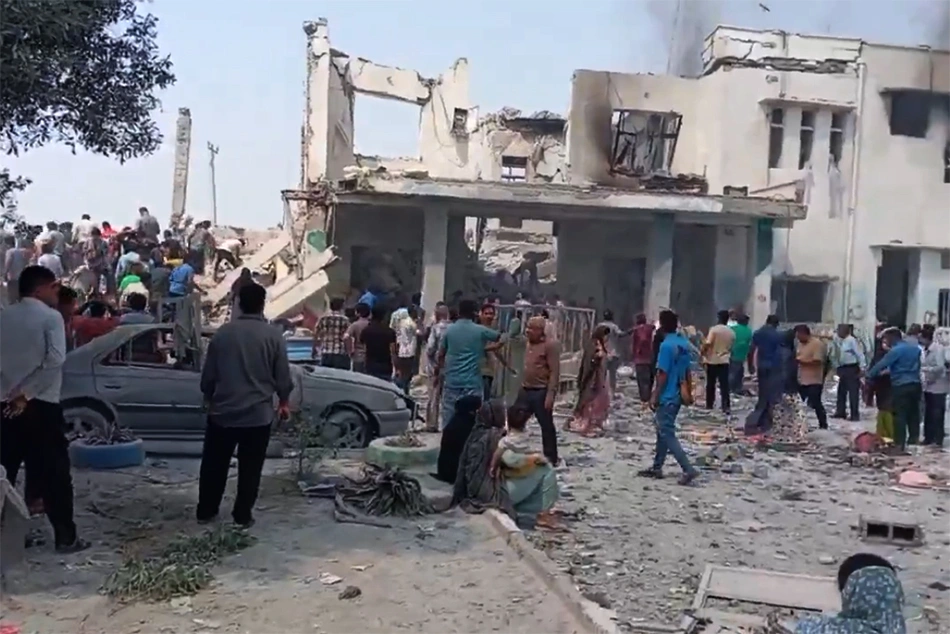
On 28 February 2026, a girls’ primary school in Minab, Iran, was struck during U.S. and Israeli operations. Footage was verified by Reuters, The New York Times, The Washington Post, and Factnameh. According to Iranian authorities, at least 148 people were killed, the majority children. UNESCO condemned the strike as a grave violation of international humanitarian law.
The Israeli military said it was “checking.”
The U.S. military was “looking into it.”
The U.S. Ambassador to the UN called the broader operation “a moment of moral clarity.”
Moral clarity declared over the ruins of a school.
Normalization is erosion.
Algeria’s Method
Algeria learned early that vocabulary precedes legitimacy.
In 1830, invasion was called civilization.
Mass repression was called pacification.
During 1954–1962, resistance was called terrorism.
Language was the first conquest.
Malek Bennabi described colonisabilité — not just domination, but the internalization of the dominator’s categories. Ibn Khaldun had observed centuries earlier that defeated peoples tend to adopt the intellectual frameworks of their conquerors.
Who defines terrorism?
Who defines legitimate defense?
Who defines proportionality?
When identical acts receive divergent classifications depending on geopolitical position, universality collapses into hierarchy.
Mohammed Harbi showed that this analysis is not nationalist sentiment. It is structural critique.
Algeria’s history is not invoked as grievance. It is invoked as methodology.
The Politics of Grief
Achille Mbembe argued that sovereignty includes the power to decide whose death matters.
When a child dies in a Western capital, the death becomes an event — named, mourned, memorialized.
When children die in Gaza or Minab, deaths accumulate as numbers.
This asymmetry is structural. Media infrastructures, diplomatic reflexes, and institutional vocabularies were built within particular centers of power.
Mahmood Mamdani demonstrated how identical violence is labeled differently according to alliance. Aimé Césaire exposed the structural exception embedded within proclaimed universalism.
Yet critique must apply equally. The killing of civilians is criminal regardless of flag, grievance, or cause. The principle either holds universally — or it disintegrates.
Law and Power
The Geneva Conventions and the Rome Statute are binding instruments.
Antony Anghie showed that modern international law emerged from colonial encounters structured in favor of imperial powers. Mohammed Bedjaoui argued that law reflects power at the moment of codification. B.S. Chimni described selective enforcement as structural, not accidental.
Universality requires application.
If enforcement is selective, law becomes instrument.
The Cost of Inconsistency
Consistent humanitarian law is not merely ethical. It is strategic.
Credibility erodes when standards fluctuate. Power can compel. It cannot indefinitely manufacture legitimacy.
Partha Chatterjee described populations formally included within universal norms but materially excluded from protection.
Orders collapse quietly — through withdrawal of credibility.
Ngũgĩ wa Thiong’o reminded us: control definitions, control political existence. When definitions lose acceptance, authority thins.
One Standard — Or None
Gaza and Minab differ in context. They require independent investigation.
But the principle is shared.
Does international humanitarian law apply to the act — or to the actor?
If to the act, then a school is a school.
A child is a child.
The legal analysis does not change with the flag.
If to the actor, then universality is fiction.
The standards already exist. They do not require invention.
They require application.
Inconvenience is not an exemption. It is irrelevant.
[The writer, Laala Bechetoula, is an independent Algerian writer and analyst.]
Follow ummid.com WhatsApp Channel for all the latest updates.
Select Language to Translate in Urdu, Hindi, Marathi or Arabic