Pope Leo vs US President Donald Trump
Pope Leo’s sharp criticism of war, sectarian manipulation and the political misuse of religion has cast fresh attention on the narratives shaping the US-Israel confrontation with Iran
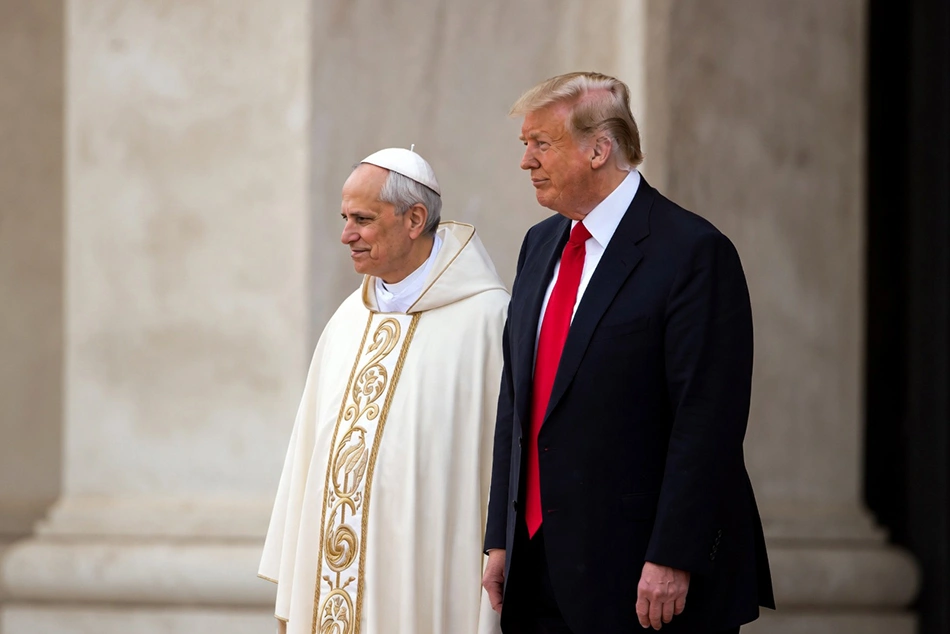
Pope Leo’s sharp criticism of war, sectarian manipulation and the political misuse of religion has cast fresh attention on the narratives shaping the US-Israel confrontation with Iran.
Speaking in Cameroon, Africa, the pontiff warned against turning geopolitical rivalry into a civilisational struggle between Christianity and Islam, while also highlighting the dangers of deepening Shia-Sunni divisions. His remarks challenge strategic rhetoric that risks transforming a political conflict into a broader religious and identity-based confrontation with destabilising global consequences.
Pope Leo has criticised leaders who spend billions on wars and said the world was “being ravaged by a handful of tyrants” in unusually forceful comments during a visit to Cameroon. Speaking in a region scarred by conflict and instability, the pontiff framed war not only as a political failure but as a moral catastrophe, condemning the global systems that sustain endless militarisation while millions suffer poverty, displacement and insecurity. His remarks carried significance beyond a conventional appeal for peace, particularly because they came at a moment of escalating confrontation involving the United States, Israel and Iran, where narratives about civilisation, religion and geopolitical loyalty have increasingly shaped public discourse.
The pontiff blasted those he said had manipulated “the very name of God” for their own gain, while touring a region ravaged by a deadly insurgency. That statement was widely interpreted as a criticism of political actors who invoke religion to legitimise strategic objectives. In the context of the Iran conflict, such criticism has resonated with analysts who argue that one recurring American tactic has been to frame geopolitical rivalries in civilisational or religious terms, recasting power struggles over security, influence and resources as existential conflicts between belief systems. According to this view, presenting US-Israeli confrontation with Iran as part of a broader struggle between Christianity and Islam serves to simplify a highly complex political conflict into a polarising moral binary.
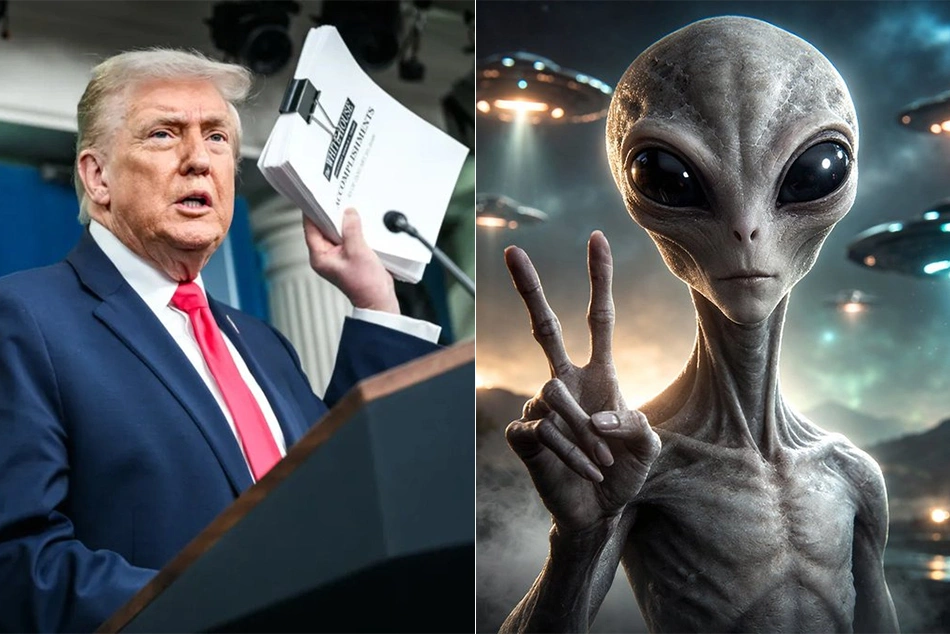
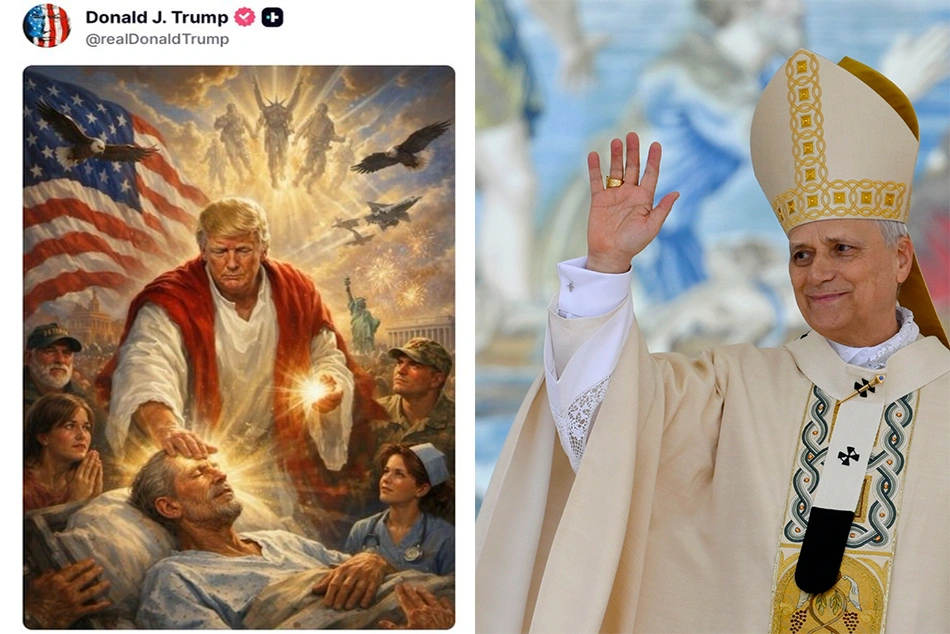
The remarks come just days after a high-profile spat with US President Donald Trump, who posted a lengthy attack on the Pope, a vocal critic of the US-Israeli military operation in Iran. The dispute highlighted a deeper clash over rhetoric and strategy. While Trump and allied voices have often employed language suggesting a defence of Western civilisation against hostile forces, the Pope has pushed back against narratives that risk transforming political conflict into religious confrontation. Critics of American foreign policy argue that such framing can be strategically useful, not necessarily because policymakers explicitly seek a Christian-Muslim war, but because civilisational rhetoric can mobilise domestic constituencies, consolidate alliances, and delegitimise adversaries.
The Pope had voiced his concern about Trump’s threat that “a whole civilisation will die” if Iran did not agree to US demands to end the war and open the Strait of Hormuz. For Leo, such language appeared dangerous precisely because it elevates strategic disputes into apocalyptic terms. In some interpretations, invoking the survival of civilisation echoes a long tradition of portraying geopolitical rivals as threats not merely to states but to entire cultural or religious orders. This can reinforce perceptions across the Muslim world that Western powers are engaged in hostility toward Islam itself, a perception that extremist groups have historically exploited for recruitment and propaganda.
Leo, who last year became the first US-born Pope, has previously also questioned the Trump administration’s approach to immigration. His broader critique of exclusionary nationalism connects with his warnings about war rhetoric. Observers note that sectarian fragmentation has often accompanied external interventions in the Middle East, where tensions between Shia and Sunni communities have sometimes been exacerbated by regional competition and outside strategic calculations. In this reading, portraying Iran primarily through a sectarian lens as a Shia threat to Sunni Arab states can deepen intra-Muslim divides while weakening the possibility of broader regional solidarity against escalation.
This is where the concern about increasing the gulf between Shia and Sunni Islam becomes particularly significant. Some analysts argue that strategic narratives emphasising Iran’s sectarian identity can encourage Sunni-majority governments and populations to interpret regional conflict through confessional rather than political terms. That dynamic can shift attention away from debates about sovereignty, deterrence or international law, and instead foster a perception of an internal Islamic struggle layered atop confrontation with the West. Such outcomes may serve short-term geopolitical aims by fragmenting potential opposition, but they can also entrench long-term instability.
“Leo should get his act together as Pope,” Trump wrote in a Truth Social post at the time. The sharpness of the criticism illustrated how unusual it was for a pontiff to speak so directly about the strategic narratives surrounding war. Yet Leo’s intervention can also be understood as an attempt to resist the instrumentalisation of religion itself. By warning against those who manipulate God’s name, he appeared to reject both militant religious rhetoric in conflict zones and state-level uses of religious identity as a tool of geopolitical mobilisation.
The Pope told reporters at the start of his Africa tour that he did not want to get into a debate with Trump but would continue to promote peace. That insistence on peace, however, did not amount to neutrality toward rhetoric. Rather, it suggested opposition to the framing mechanisms that can transform limited military confrontations into broader identity conflicts. If war with Iran is perceived globally not as a strategic contest but as Christianity aligned with Israel against Islam, the consequences could extend far beyond the battlefield, influencing interfaith relations, diaspora politics, radicalisation patterns and global diplomatic alignments.
Critics of such civilisational framing also argue that it obscures the diversity of positions within both Christianity and Islam. Many Christians reject militarised interpretations of Western identity, just as many Muslims—Sunni and Shia alike—oppose sectarian narratives. Yet political rhetoric often compresses these distinctions. By reducing complex societies into blocs, it can create the very polarisation it claims merely to describe. This is one reason the Pope’s comments were seen by supporters as an effort to prevent religious identity from becoming a weapon in strategic competition.
His choice to make these remarks in Cameroon added symbolic weight. Speaking in Africa, where communities have often experienced the spillover of externally influenced conflicts, Leo’s warning linked global militarism with local suffering. It suggested that wars framed by great powers in strategic or civilisational language can have devastating consequences far from the centres where those narratives are produced.
Ultimately, the significance of Pope Leo’s comments lies not only in his criticism of war spending or political strongmen, but in his apparent challenge to the narratives that sustain prolonged conflict. Whether one accepts the argument that American tactics deliberately seek to cast US-Israel versus Iran as a Christian-Islamic struggle, or sees such outcomes as unintended consequences of broader strategy, the risk he highlighted remains the same: when religion becomes entangled with geopolitical confrontation, conflicts can harden into identity wars that are far harder to resolve.
By continuing to promote peace while warning against the misuse of God, Leo positioned himself against both militarism and sectarian manipulation. In doing so, he raised a broader question about whether political leaders are containing conflict or recoding it in ways that widen divisions—between nations, between religions, and within Islam itself. That question, more than the personal dispute with Trump, may explain why his comments reverberated far beyond Cameroon.
[The writer, Asad Mirza, is Delhi based Journalist and Author.]
Follow ummid.com WhatsApp Channel for all the latest updates.
Select Language to Translate in Urdu, Hindi, Marathi or Arabic