Changing Landscape of West Asian Defence and Security
The old framework of rigid alliances in West Asia is giving way to overlapping security partnerships, strategic hedging, internal military modernization, and new calculations shaped as much by technology and economics as by traditional geopolitics
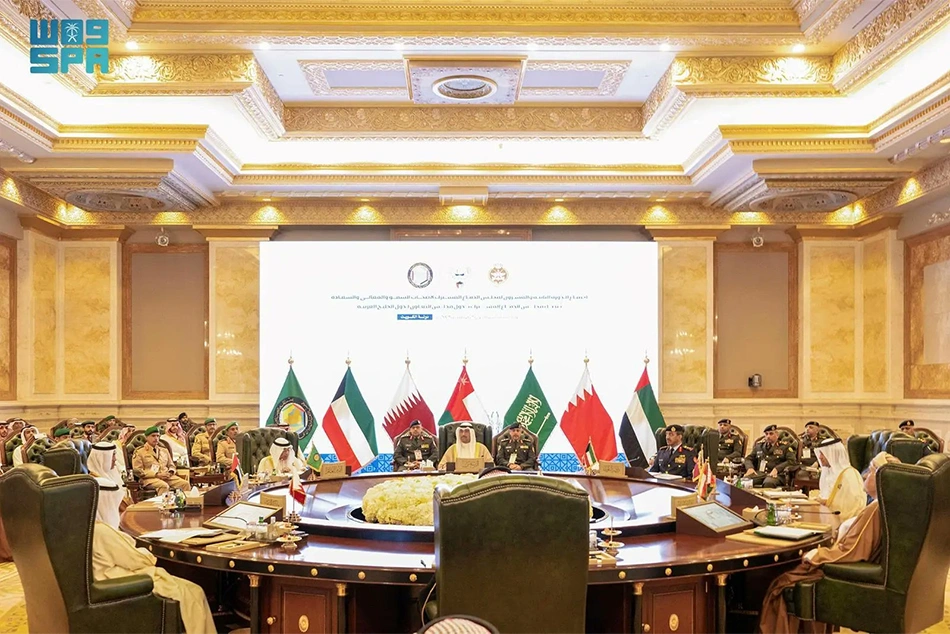
The old framework of rigid alliances in West Asia is giving way to overlapping security partnerships, strategic hedging, internal military modernization, and new calculations shaped as much by technology and economics as by traditional geopolitics.
West Asia’s defence and security architecture is undergoing one of its most profound transformations in decades. What was once defined by fixed rivalries — Arab versus Persian, state versus non-state actors, US security guarantees versus Iranian deterrence — is now evolving into a far more fluid and contested order.
At the centre of this transformation lies a hard lesson reinforced by the recent Iran-US+Israel confrontation: security in West Asia can no longer be outsourced. That realisation is driving almost every major regional power, from Saudi Arabia to Qatar, from the UAE to Jordan, to rethink deterrence, military preparedness and diplomatic balancing.
Saudi Arabia has emerged as a pivotal actor in this changing landscape. Riyadh’s defence strategy is increasingly defined by dual-track thinking — strengthening military capabilities while pursuing selective de-escalation. On one hand, the kingdom continues to invest heavily in missile defence, indigenous defence production and strategic partnerships beyond its traditional US dependence. On the other, it has shown a pragmatic willingness to engage rivals, including cautious diplomatic channels with Iran. This reflects a shift from confrontation toward managed competition.
The UAE, meanwhile, has moved even further toward a model of strategic autonomy. Abu Dhabi is no longer content to be viewed simply as part of a Gulf collective security system. It is building itself as an independent defence power, combining advanced military procurement, cyber capabilities, artificial intelligence integration and diversified strategic partnerships. Its security calculations are increasingly global, extending from the Red Sea to the Eastern Mediterranean and into the Indo-Pacific. Yet, its exposure during recent regional escalation has also underscored the vulnerability even sophisticated states face in an era where energy infrastructure, ports and digital systems have become legitimate targets.
Qatar’s position reflects another emerging trend — small-state resilience through strategic relevance. Anchored by diplomacy, energy leverage and its hosting of major military facilities, Qatar continues to pursue a balancing strategy that avoids rigid bloc politics while preserving strong security partnerships. This balancing approach is becoming increasingly common across the Gulf.
Oman remains unique. Long known as a mediator, Muscat’s value in the evolving security order lies precisely in its neutrality. In an increasingly polarised region, neutral diplomatic actors have become strategic assets. Oman’s role in mediation, maritime stability and quiet diplomacy gives it disproportionate importance relative to its size.
Jordan, meanwhile, is becoming a frontline buffer state in a more dangerous environment. Pressured by instability in Syria, uncertainty along the Israeli frontier, and risks from regional spillovers, Amman’s security doctrine is becoming increasingly defensive. It is investing in border security, intelligence coordination and air defence, while also navigating difficult domestic economic and political pressures.
Iran, however, remains central to the region’s security recalibration. Despite military pressure, sanctions and internal strains, Tehran has demonstrated that it retains substantial capacity for strategic disruption — whether through missile forces, maritime leverage, proxy networks or cyber tools. Yet, Iran itself is changing. Its security thinking is increasingly shaped by the recognition that traditional proxy structures face new limits, particularly in Syria and Lebanon.
That shift is visible in Lebanon, where Hezbollah remains a major actor but operates under growing strain. Israeli pressure, domestic Lebanese fragility and changing regional calculations have all complicated Hezbollah’s traditional deterrence model. Lebanon is increasingly not just a front in regional confrontation but a reflection of a larger transition in which armed non-state actors face mounting pressures from both military and political realities.
Syria presents perhaps the starkest example of how fragmented theatres are reshaping regional security. Rather than returning to centralised order, Syria has become a space of overlapping influence — involving regional powers, militias, residual extremist threats and competing external interests. In this fragmented environment, security is increasingly about managing instability rather than resolving it.
One of the most important changes across West Asia is the move away from reliance on a single external guarantor. While the United States remains a critical security actor, confidence in exclusive dependence on Washington has weakened. Regional powers are diversifying. Turkey, Pakistan, India and even limited European partnerships are increasingly being considered as part of broader security calculations. This diversification does not replace the US influence, but it alters its exclusivity.
Another major transformation is the widening definition of security itself.
Defence in West Asia is no longer confined to armies, air forces and missile systems. It now includes cyber resilience, infrastructure protection, maritime security, food security, water stress and energy route protection. The disruption around the Strait of Hormuz reinforced that strategic chokepoints remain central to regional security, but it also showed that pipelines, data centres, desalination plants and logistics corridors are now part of the defence equation.
Technology is accelerating this shift. Drone warfare, missile interception systems, autonomous surveillance and cyber defence are reshaping the balance between large and small powers. Smaller states can now generate deterrence through advanced systems once available only to major powers. At the same time, the spread of precision strike capabilities makes traditional assumptions about strategic depth increasingly fragile.
There is also a deeper political shift underway: the region is moving from ideological blocs toward interest-based alignments. States increasingly cooperate issue by issue rather than through permanent camps. A country may coordinate with one power on maritime security, another on intelligence and a third on economic connectivity. This flexibility may reduce some risks of rigid polarisation, but it also creates a more complex and less predictable security order.
Perhaps the defining feature of the new West Asian defence landscape is that it is becoming multipolar from within. Security is no longer shaped only by external great powers imposing order. Regional actors themselves are driving the restructuring.
That does not mean the region is becoming more stable. In many respects, the opposite may be true. But it does mean the old model — based on external protection, proxy containment and static deterrence — is giving way to something far more adaptive.The emerging security order in West Asia is being built around resilience rather than certainty, flexibility rather than fixed alliances, and layered deterrence rather than singular guarantees.
It is a landscape shaped not by the end of conflict, but by a recognition that conflict itself has changed. And in adapting to that reality, West Asia is redefining the very meaning of defence and security in the 21st century.
[The writer, Asad Mirza, is Delhi based Journalist and Author.]
Follow ummid.com WhatsApp Channel for all the latest updates.
Select Language to Translate in Urdu, Hindi, Marathi or Arabic