TVK Victory: A Decisive Turning Point in TN Political Trajectory
What the TVK victory in Tamil Nadu shows is not merely a change in electoral fortunes but a deeper structural shift driven by youth aspirations, digital mobilisation, and a growing fatigue with entrenched political binaries
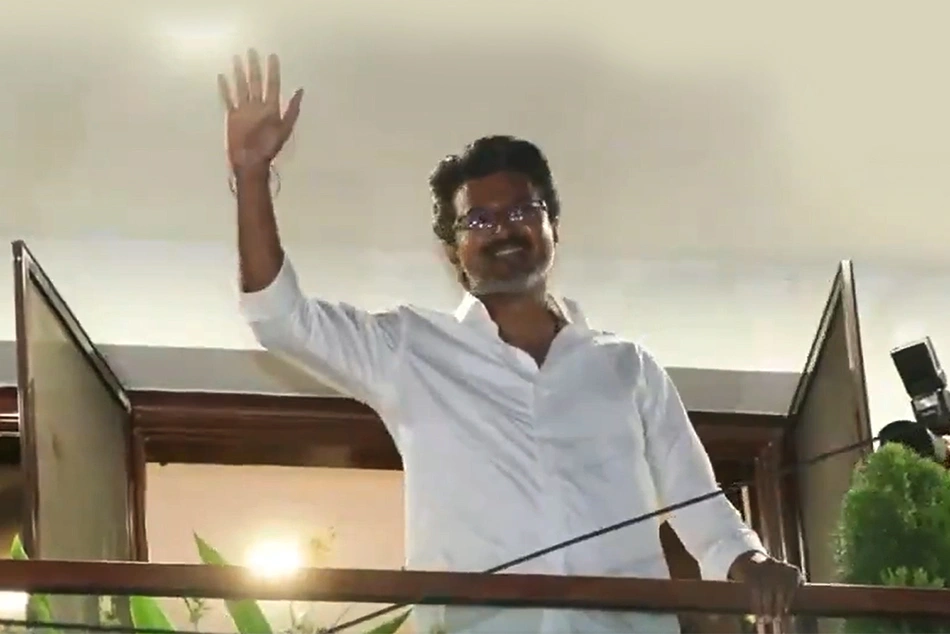
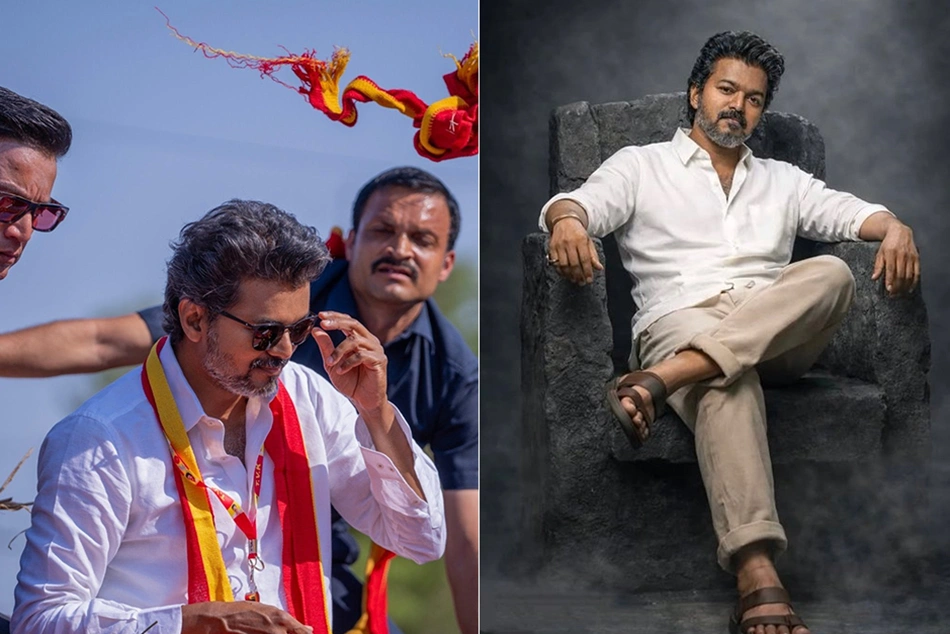
[Actor C Joseph Vijay greeting party supporters after TVK victory Monday May 04, 2026]
The 2026 Tamil Nadu Assembly election marks a decisive turning point in the state’s political trajectory. What has emerged is not merely a change in electoral fortunes but a deeper structural shift driven by youth aspirations, digital mobilisation, and a growing fatigue with entrenched political binaries.
At first glance, the results may appear to reflect conventional anti-incumbency against the Dravida Munnetra Kazhagam. Concerns over rising electricity tariffs, perceptions of dynastic consolidation, and governance gaps created a climate of dissatisfaction. However, discontent alone does not produce political realignment. It requires a vehicle—and in this case, that vehicle was Vijay and his party, Tamilaga Vettri Kazhagam.
Unlike earlier actor-led political ventures, Vijay’s emergence cannot be reduced to charisma alone. His appeal lies in occupying a strategic middle ground: offering an alternative to the long-standing DMK–All India Anna Dravida Munnetra Kazhagam duopoly without adopting the sharper ideological edges of other challengers. For many voters, particularly in urban and semi-urban regions, this positioning created a sense of transition without rupture.
A defining feature of this election has been the decisive role of young and first-time voters. With over a crore voters in the 18–29 age group, the electorate has shifted toward a generation shaped by digital culture, economic precarity, and global exposure. Their concerns are less anchored in traditional ideological narratives and more in outcomes—employment, healthcare access, and institutional transparency. This does not signify a rejection of the Dravidian legacy, but rather dissatisfaction with its current institutional expression.
Within this generational shift lies a more nuanced political divergence. While Vijay represents a “hope” narrative centred on renewal, Seeman and his Naam Tamilar Katchi continue to command a distinct ideological following. Seeman’s decade-long emphasis on Tamil nationalism and resource protection resonates with a segment of youth seeking ideological clarity and cultural assertion. The contrast between Vijay’s broad-based appeal and Seeman’s ideological consistency highlights a fragmentation within the youth vote itself.
Perhaps the most transformative dimension of this election is the role of digital ecosystems. Campaigns were no longer confined to rallies and traditional media. Instead, short-form videos, meme culture, and decentralised content networks shaped political perception. This “algorithmic hegemony” enabled emerging parties to bypass institutional media gatekeeping and directly engage with voters. It also created echo chambers where political momentum appeared amplified and self-reinforcing.
The cumulative effect of these forces is the breakdown of Tamil Nadu’s long-standing bipolar political system. The state is now entering a multipolar phase where no single formation can easily command dominance. As the results indicate, TVK has emerged as the single largest party but falls short of a clear majority.
This raises immediate concerns about the nature of government formation. A fractured mandate often opens the door to opportunistic alliances, defections, and opaque negotiations—phenomena historically less pronounced in Tamil Nadu’s relatively stable electoral landscape. Whether the state can navigate this transition without eroding democratic norms remains an open question.
The 2026 election, therefore, is less about who has won and more about what has changed. Tamil Nadu’s electorate—especially its youth—has signalled a shift toward performance-driven politics, digital engagement, and diversified representation. The era of predictable alternation between two dominant parties appears to be giving way to a more fluid, contested, and uncertain political future.
[The writer, Pon Chandran, belongs to PUCL, Coimbatore.]
Follow ummid.com WhatsApp Channel for all the latest updates.
Select Language to Translate in Urdu, Hindi, Marathi or Arabic