Sugam Parivahan Seva in MP: 150 Electric Buses to Enhance Public Transportation
Madhya Pradesh is set to re-launch the state-run public transport after a 21-year gap with the Mukhyamantri Sugam Parivahan Seva — an ambitious scheme that will deploy over 5,200 buses across the state
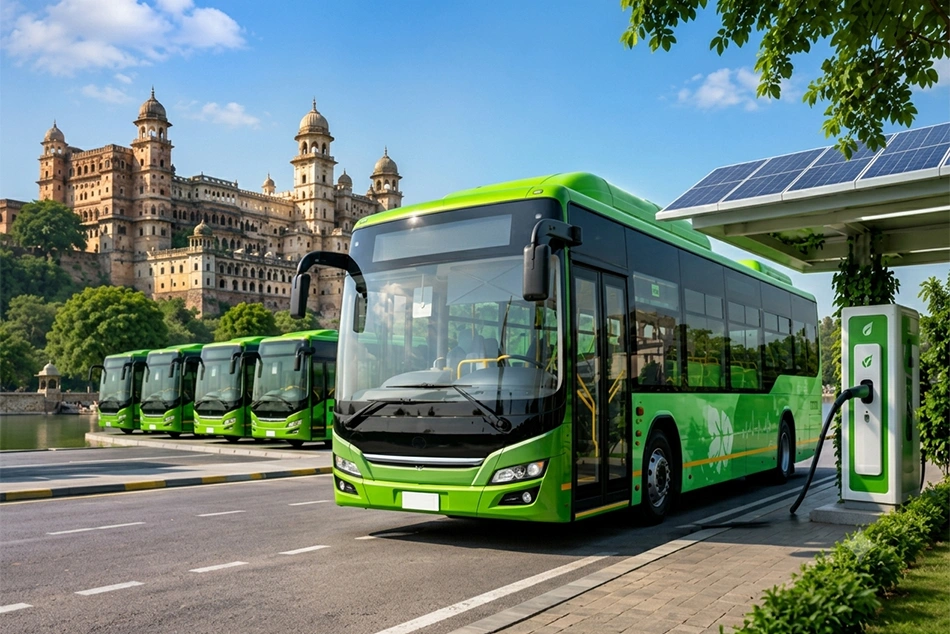
Madhya Pradesh is set to re-launch the state-run public transport after a 21-year gap with the Mukhyamantri Sugam Parivahan Seva — an ambitious scheme that will deploy over 5,200 buses across the state.
The first phase begins in the Indore region from July 2026, including 150 electric buses under the Central government's PM e-Bus Sewa. This transformation of the Parivahan landscape carries significant implications for motor insurance policy holders, road safety, and the insurance requirements of both private and commercial vehicle operators.
The Mukhyamantri Sugam Parivahan Seva: What It Is
The Mukhyamantri Sugam Parivahan Seva is Madhya Pradesh's new state-run public bus transport initiative, approved during a high-level board meeting of the Madhya Pradesh Passenger Transport and Infrastructure Limited chaired by Chief Minister Mohan Yadav.
The state has been divided into seven transport zones — Indore, Ujjain, Bhopal, Jabalpur, Sagar, Gwalior, and Rewa — with a total of 5,206 buses planned across the network.
The earlier state-owned Madhya Pradesh State Road Transport Corporation had shut down in 2005 following financial losses, leaving a 21-year gap in government-run bus services. The new Sugam Parivahan Seva restores public transport at scale.
The First Phase: Indore and 150 Electric Buses
Operations will begin in the Indore region from July 2026, with 1,688 buses planned for Indore in the first phase alone. The city will also receive 150 electric buses under the PM e-Bus Sewa scheme, which will operate across 28 identified routes within Indore city and its suburban areas.
These buses will be managed by Atal Indore City Transport Service Limited (AICTSL). The Indore region will additionally see 608 buses operating on 121 intercity routes to other Madhya Pradesh districts, and 276 buses on 101 interstate routes connecting MP to Maharashtra, Gujarat, Rajasthan, and Uttar Pradesh.
Motor Insurance Policy Requirements for the New Fleet
A fleet of over 5,200 buses operating on public roads is a significant motor insurance policy requirement. Under the Motor Vehicles Act, 1988, every vehicle used on a public road — including buses operated under public-private partnership models — must carry valid third-party motor insurance at a minimum.
For a fleet of this scale, comprehensive motor insurance with adequate passenger liability coverage, third-party property damage protection, and coverage for accident-related claims from passengers and third parties is not optional.
The motor insurance policy structure for public bus fleets must comply with IRDAI guidelines and the Motor Vehicles Act's specific provisions for transport vehicles carrying passengers.
What the Electric Bus Fleet Means for EV Insurance in MP
The 150 electric buses being deployed in Indore under PM e-Bus Sewa introduce the specific motor insurance considerations relevant to electric vehicles at fleet scale. EV insurance must account for the battery pack — the most expensive single component in an electric vehicle — as well as coverage for charging infrastructure damage, specific risks associated with electric drivetrain systems, and third-party liability coverage tailored for vehicles with different operational performance characteristics.
As electric buses and private EVs become more common on MP's roads, the motor insurance ecosystem in the state will need to evolve to serve both fleet operators and private EV owners effectively.
Road Safety Impact: More Buses, Better Road Behaviour
The reintroduction of state-managed public transport at scale has a direct road safety dimension. A well-managed public bus fleet operating on defined routes, maintained to regulatory standards, and operated by trained drivers under institutional oversight produces better road safety outcomes than the informal and overloaded private vehicles that MP commuters have been using in the absence of state bus services.
For motor insurance policy holders in Madhya Pradesh — particularly those driving on routes that will now carry regular bus traffic — understanding the new traffic patterns, priority lanes or stops that will be introduced, and the locations of bus terminals affects both driving safety and claims exposure.
Women's Safety and the Raksha Bandhan Launch
Chief Minister Mohan Yadav announced that the Sugam Parivahan Seva will be symbolically launched to coincide with Raksha Bandhan, with a specific focus on providing safe and reliable public transport for women.
The scheme addresses the long-standing concern about women's safety on public roads — particularly in rural and semi-urban areas where informal transport options have often been the only available option.
Safe, government-operated bus services with defined routes, ticketing systems, and accountability mechanisms reduce the dependence on risky informal transport, which has been a significant source of road accidents and personal safety concerns in MP's smaller towns and villages.
The Parivahan App and Digital Motor Documentation
For all vehicle owners in Madhya Pradesh, the government's Parivahan infrastructure — including the Parivahan app and the Vahan vehicle registration database — remains the authoritative platform for vehicle documentation verification.
As the state's public transport network expands and road traffic increases, the importance of maintaining up-to-date vehicle registration, valid driving licences, and valid motor insurance policy documentation through the Parivahan system increases correspondingly. Traffic enforcement alongside expanding bus network infrastructure will likely increase the scrutiny of private vehicle compliance documents on routes that intersect with the new bus network.
What This Means for Private Car Insurance Holders in MP
For private car owners in Madhya Pradesh, the expansion of public transport infrastructure under Sugam Parivahan Seva signals several changes worth anticipating. Road traffic density on routes served by the new bus network will change — some routes may see reduced private vehicle traffic as commuters shift to public buses, while others may see temporary congestion during the initial rollout period.
The presence of heavy electric buses on urban roads introduces specific road-sharing awareness needs for private vehicle drivers. For motor insurance policy holders, maintaining comprehensive coverage during this transition period — rather than reducing to minimum third-party coverage — provides the broadest financial protection against the claim scenarios that infrastructure transitions can introduce.
Conclusion
Madhya Pradesh's Mukhyamantri Sugam Parivahan Seva is a transformational public transport initiative that will reshape how millions of commuters travel across the state. The 150 electric buses launching in Indore from July 2026 represent both the beginning of this transformation and a signal of the direction of public transport in India.
For motor insurance policy holders in MP — whether private vehicle owners or fleet operators — understanding the insurance dimensions of this new landscape, maintaining valid and adequate coverage, and staying current with Parivahan documentation requirements ensures they are well-positioned as the state's transport infrastructure enters a new phase.
[Sana Ahmed is Staff Writer at ummid.com.]
Follow ummid.com WhatsApp Channel for all the latest updates.
Select Language to Translate in Urdu, Hindi, Marathi or Arabic