Israeli-American Attack on Iran: A Prelude to Middle East's Destruction
The latest attacks by Iran and Israel on each other is no longer just a traditional fight of words between the two countries, but is leading to a permanent change in the geographical and political map of the Middle East
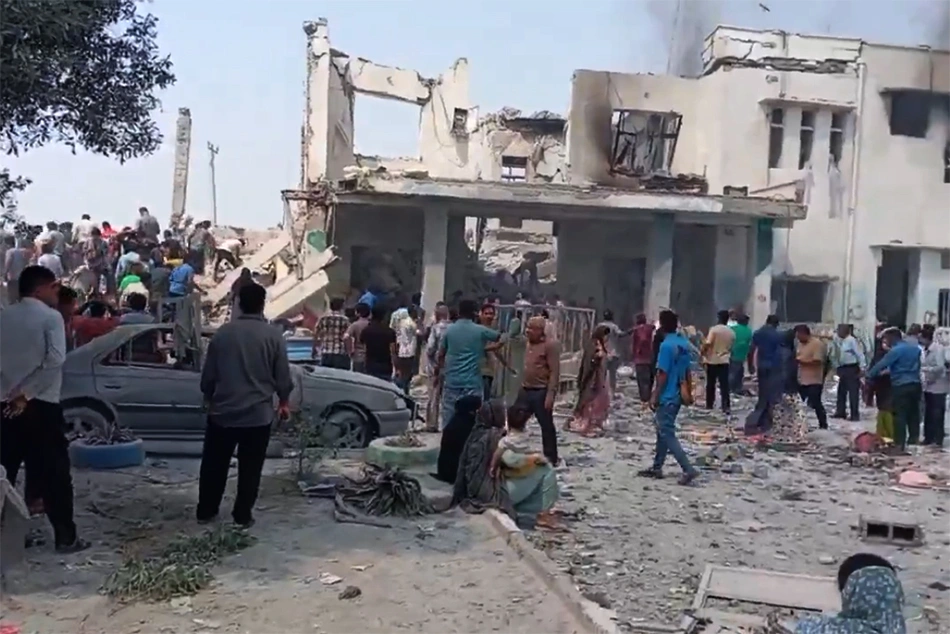
[Iran has claimed the US and Israeli bombing on an elementary school in Minab city has killed 42 girls.]
The latest attacks by Iran and Israel on each other heralds a horrific and decisive phase in the verbal duel between the two.
It is no longer just a traditional fight of words between the two countries, but is leading to a permanent change in the geographical and political map of the Middle East.
1. From historical background to direct confrontation
For almost four decades, Israel and Iran have fought a "shadow war" against each other, which included cyber-attacks, targeted killings and proxy wars.
However, the Israeli attack on the Iranian consulate in Damascus on April 1, 2024, and then the first Iranian attack on Israel from its territory with hundreds of drones and missiles, broke all old records. By 2025 and early 2026, this tension has now taken the form of a regular regional war.
2. Israel's New Military Strategy: "Operation Lions Roar" (February 2026)
The recent events of February 2026 have proven that Israel has now decided to uproot Iran's nuclear and military programs. On February 28, 2026, Israel launched "Operation Lions Roar", which aims to target sensitive areas in Tehran and the Iranian leadership and their offices.
Attacks on nuclear facilities: By targeting Iran's nuclear centres (Natanz and Fordow), Israel sent a clear message that it would go to any extent to prevent Iran from becoming a nuclear power.
End of strategic patience: Iran, which previously struck through its proxies (Hezbollah, Hamas and Houthis), is now directly targeted by them. On the other hand, the explosions in the Iranian capital have also exposed the weaknesses of Iranian security institutions.
3. America's Role and Direct Involvement
In the current situation, America's role is no longer that of a mere assistant, but following the recent instructions of President Donald Trump, the US forces have launched "Major Combat Operations" against Iran.
Deployment of Naval Fleets: The presence of US Navy ships (USS Gerald R. Ford and USS Abraham Lincoln) in the Persian Gulf has brought the pressure on Iran to the limit.
Ultimate: The start of the bombing campaign as soon as the deadline given by the US to Iran to give up its nuclear weapons has expired, marks a new turning point in world politics.
4. Gulf States: A Difficult Situation
The Israel-Iran war has put the Gulf States (Saudi Arabia, the United Arab Emirates, Qatar, Kuwait) in a very difficult strategic dilemma. At the same time, Iranian attacks on American bases in these countries have also proven that this time Iran will not only directly target Israel and American assets, but also the countries supporting both of them, which could also cause military problems for the Gulf States in the Central Asian region.
Saudi Arabia and the UAE: On the one hand, these countries are afraid of Iran's growing influence and are cooperating with Israel behind the scenes on intelligence, but on the other hand, they do not want Iranian missiles to target their oil facilities (such as Aramco).
The importance of Qatar: Qatar, where the largest US military base (Al-Udeid) is located, is trying to mediate on the one hand, while on the other hand, it is also trying to protect itself from Iranian attacks.
Regional economic risks: If Iran were to close the Strait of Hormuz, oil prices would skyrocket worldwide, paralyzing Gulf economies and global supply chains.
5. Confrontation in Syria and Lebanon
Israel has almost completely destroyed Syria’s air defences for operations against Iran, allowing it to gain access to the Iranian border.
Hezbollah’s weakness: Despite a November 2024 ceasefire in Lebanon, Israel continues to bomb Hezbollah’s weapons shipments. Hezbollah, once Iran’s most powerful proxy, is now internally disintegrating.
Iraq’s role: Pro-Iranian Iraqi militias have carried out drone attacks on Israel, prompting Israel to retaliate, violating Iraq’s sovereignty.
6. Technological superiority: Missiles vs. laser systems
A key feature of this war is the competition in technology. While Israel used the "Arrow" and "David's Sling" for its defence, it also activated its "Iron Beam" laser system by the end of 2025, but Iranian missiles, which despite being low-cost and capable of effectively destroying and attacking in the air, left no stone unturned in destroying the most expensive Israeli weapons.
7. Iran's Internal Situation
Along with the war, Iran is also facing severe internal resistance. Inflation is increasing due to economic sanctions and war devastation, as well as unrest among the Iranian people and waves of protests have been seen in many cities. Israel and the United States are trying to use this public unrest for regime change.
8. Impact on World Peace and Future Road Map
This war is no longer limited to the Middle East. Russia and China's silent support for Iran and on the other hand, NATO and the US's support for Israel have deepened the shadows of World War III.
Impact on Pakistan and India: This situation is worrisome for the countries of South Asia because millions of Indians and Pakistanis live and work in the Gulf countries and this war is bound to have a negative impact on them and these countries.
The conflict between Israel and Iran has now reached a point from which the path of return is very difficult. Israel's aim is to eliminate Iran's 'strategic depth', while Iran is fighting for its survival.
If this conflict continues, the dream of development of the Gulf countries may be shattered and the world may suffer from a long economic crisis. The international community must intervene immediately, otherwise this fire in the Middle East will engulf the entire world.
[The writer, Asad Mirza, is Delhi based Journalist and Author.]
Follow ummid.com WhatsApp Channel for all the latest updates.
Select Language to Translate in Urdu, Hindi, Marathi or Arabic