Crowd Management: The Makkah Model
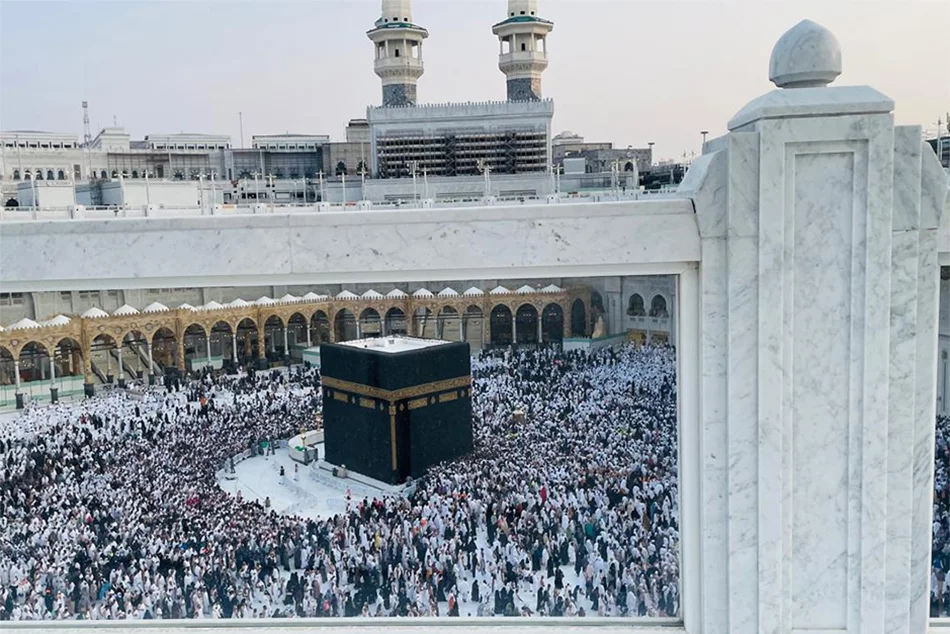
Those, who have already performed Hajj, have personally seen the success, effectiveness and beauty of the Makkah Crowd Management Model, but the glimpses of this can also be experienced while in Makkah al Mukarramah for Umrah
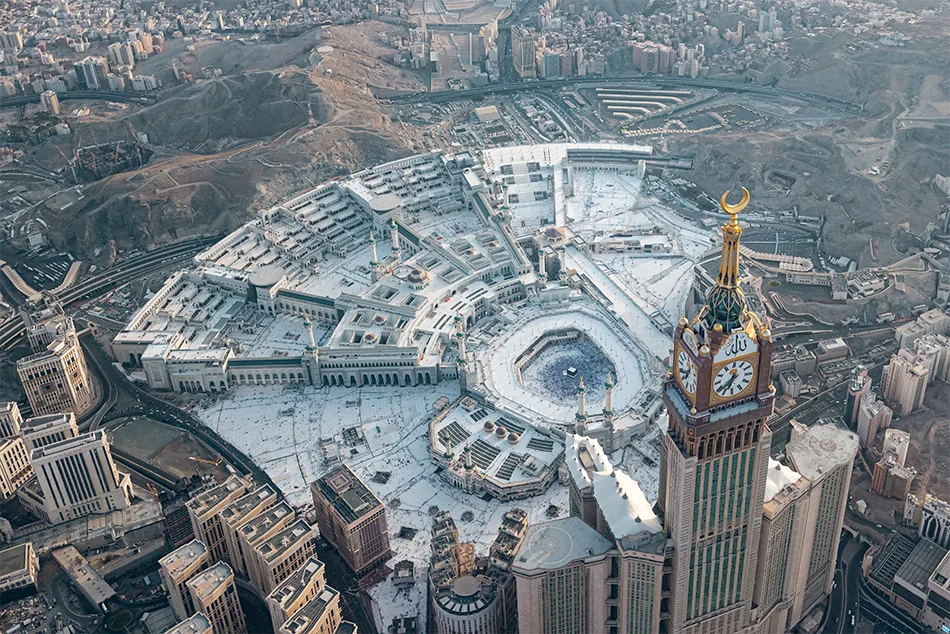
As the number of pilgrims arriving in Makkah al Mukarramah for the annual Hajj surges with every passing year – over 2.5 million despite quota and entry restrictions, it has been a challenge for the Saudi government to manage the crowd. One remembers, how, despite all efforts to avoid them, stampedes took place resulting in the death of hundreds of pilgrims.
With the task to find out the reasons behind these stampedes, the Saudi Government formed a high level research team so that a concrete solution is found out. The team was led by then Chief of Muslim World League, Dr. Abdullah Omar Naseef, and included experts belonging to different nationalities and ethnic groups from all around the world.
Ziauddin Sardar – the British-Pakistani scholar, cultural critic, and futurist who was also one of the members of this team, has described at length in his 2004 autobiographical memoir, "Desperately Seeking Paradise: Journeys of a Skeptical Muslim", how they recorded on camera and later did a thorough analysis of the behavior, habit and movement of the pilgrims at different stages of Hajj to find out the causes of the stampedes and disturbances.
Sardar wrote that the team also analyzed the old recordings of the stampedes, especially in Mina at the time of the stoning of the devil ritual. In one such recording, Sardar wrote, they were surprised to notice that one tragic stampede was the result of, astonishingly, a Nigerian pilgrim scratching his nose. Giving more details, Sardar wrote that as the Nigerian pilgrim raised his arm to scratch his nose, his elbow hit an Indonesian pilgrim who fell on the ground leading to the stampede.
This was the time when the pilgrims on Hajj were accommodated in mixed zones. But the pilgrims nowadays find them distributed and accommodated in different zones and areas as per their nationalities, ethnicities and physical built. The reason behind this is the finding of the team. This, along with many other measures – including wide walkways, clear entry and exit lanes, staggered time for different rituals, and physical barriers like stanchions and barricades, that the team of experts came out with as a result of which a model crowd management system came into being that not only made stampedes and disturbances things of past but also made the flow of pilgrims smooth, easy, seamless and hassle free.
Those, who have already performed Hajj, have personally experienced and seen the success, effectiveness and beauty of the Makkah Crowd Management Model. But, the glimpses of this extraordinary and successful crowd management model can also be experienced while in Makkah al Mukarramah for Umrah.
Makkah Road and Bus Network
Upon reaching the Holy City and checking-in their hotels, the first thing that concern the Umrah pilgrims is how fast to reach the Grand Mosque, Masjid e Haram, and see the Holy Kaaba, the first House of Allah, The Almighty, built on Earth. And they are able to do so easier than their expectations, courtesy the Makkah road and bus network.
I have crisscrossed five states of the United States in 2010. My first halt was Washington DC, and besides its wider roads, I found the nomenclature and naming system of its roads unique and very interesting. But, I found the state of the art road network of Salt Lake City, probably improved for the Winter Olympics 2002, the best.
I have also been in Saudi capital Riyadh – first in 1994 and later in 2008. Riyadh’s road network is also impressive and so is the infrastructure of other cities in the Kingdom, thanks to the millions of dollars pumped in for the purpose.
But, Makkah has no comparisons.
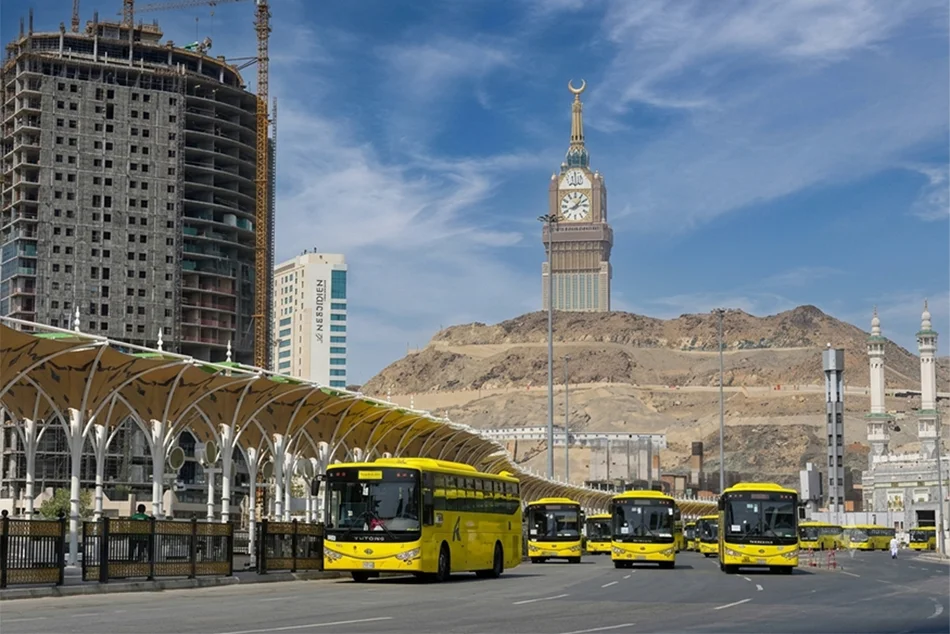
Built to tackle 5 million pilgrims as per the Kingdom’s Vision 2030, the roads are wider than the normal I saw in Salt Lake City, Washington and even in Riyadh. A number of flyovers and tunnels have been built to avoid traffic congestion, and to fit large buses and transport vehicles running round the clock to ferry the pilgrims. Moreover, most of the roads leading to the Grand Mosque have covered walkways to provide shade and make walking comfortable.
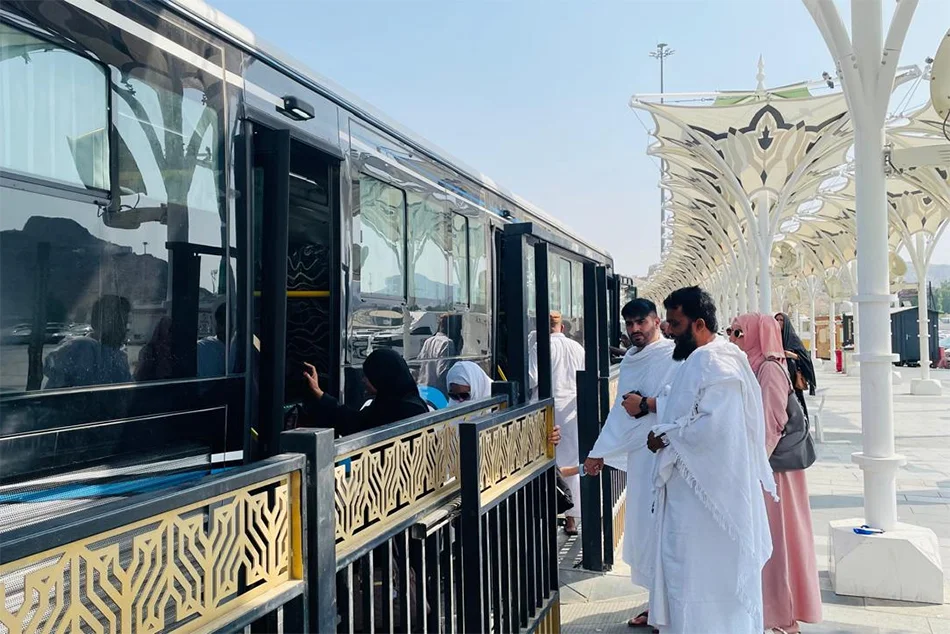
The Makkah Bus Network, comprising of thousands of large air-conditioned buses having small refrigerators, and some even washrooms, help pilgrims reach the Makkah Grand Mosque from their hotels. The Saudi Government has made it compulsory for every hotel to sign a contract with a transport company of their choice to take pilgrims to Masjid e Haram in Makkah and back.
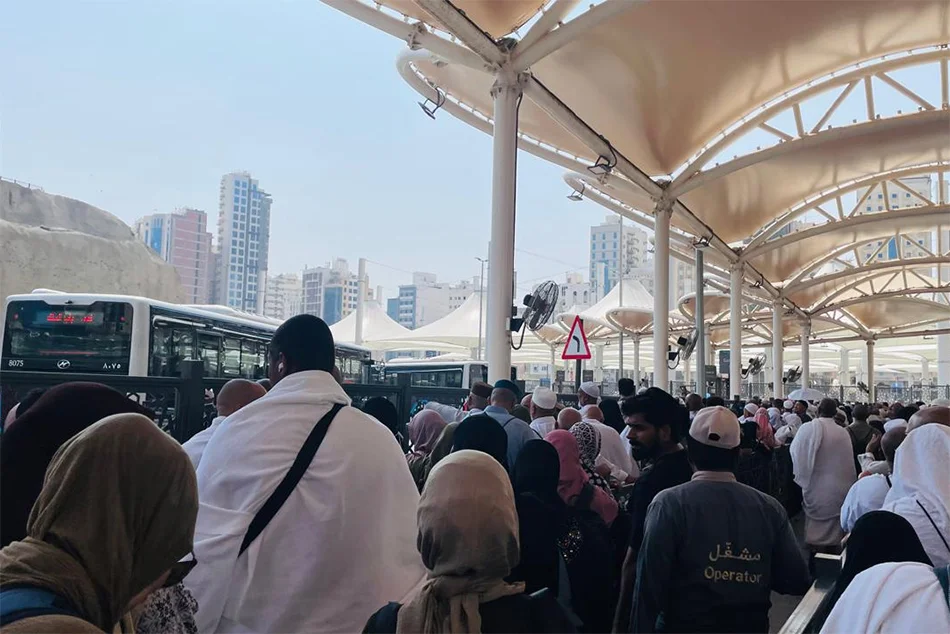
Dorratul al Akhiyar, where we were staying, and other hotels in the area, had contracts with Dallah Albaraka. It used to take 4-5 minutes by these shuttle buses to reach the Kudai Bus Station. From there, another 5 minute ride by Al Qaid bus shuttles to reach the King Abdul Aziz Gate Bus Station for Pilgrims. Travelling through these bus shuttles is part of the pilgrims’ Umrah package.
During out ten-day stay in Makkah al Mukarramah, the maximum we waited for the Dallah Albaraka shuttle bus was 15 minutes, that too only once. Otherwise, we always found – be it 03:00 in the afternoon or 03:00 early in the morning, the bus standing in front of our hotel to take us to the Grand Mosque. On the other hand, Al Qaid never kept us waiting. Whenever, we reached the Kudai Bus Station, we found dozens of Al Qaid shuttles parked to take us to the Grand Mosque.
The Al Qaid staffs were trained to tactically manage the huge crowd, especially that turn up at the bus station after every obligatory salah five times every day. As thousands of pilgrims turn up at the bus station, they close the main gate for few minutes, systematically line-up 40 to 50 buses, and then ask the pilgrims to board.
“No police, no crazy whistling, no shouting, no pushing and no mindless hustling. Within minutes, hundreds of pilgrims find them in their comfortable seats of the neat and clean air-conditioned luxury buses. It’s all so amazing”, my wife said.
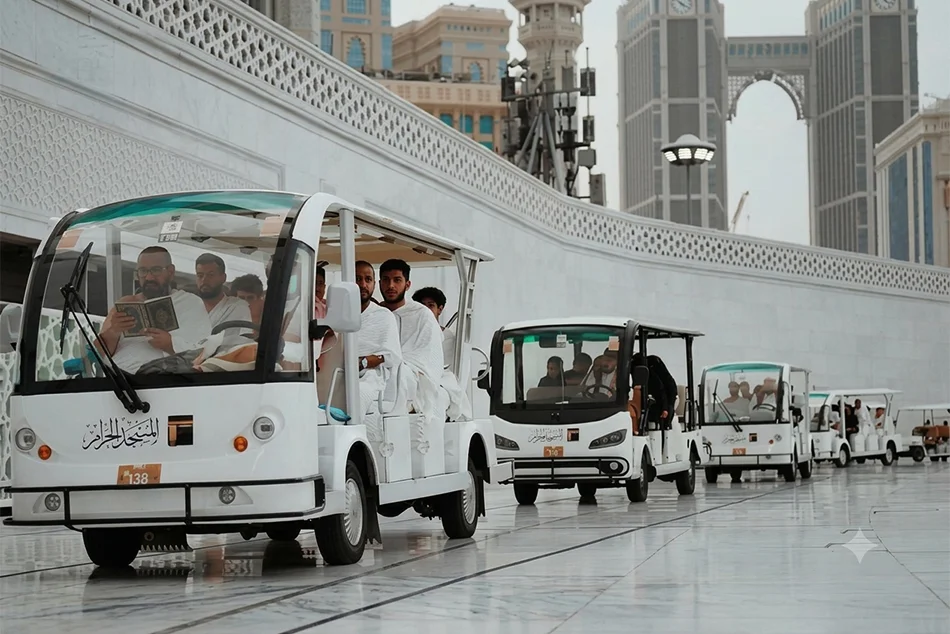
The Saudis are also spending a lot of efforts and money on Haramain High Speed Train network. But, unfortunately, we could not personally experience its true potential. But wait, we noticed pilgrims arriving in the Mataaf area on the first floor of the Grand Mosque, near the spot where Rukn e Yamani is marked, using the Electric Golf Carts.
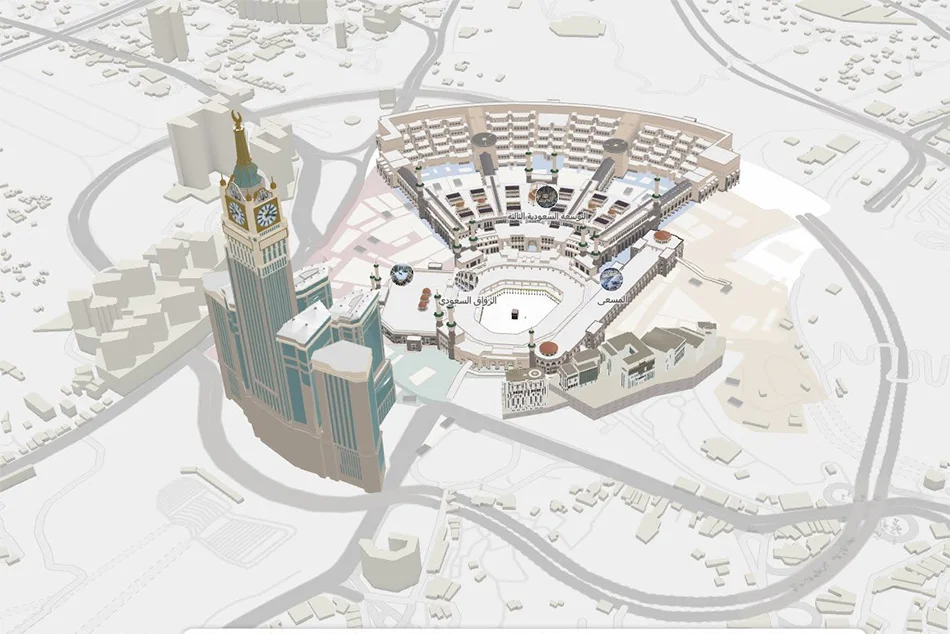
Inside Masjid e Haram, and at Peace
The capacity of The Grand Mosque is around 4 million. Other than Hajj and Ramadan when the Makkah Haram is full to its capacity, close to 2 million Muslims are always there at any given time. For the smooth movement of such a huge number, the Saudi Government has spent millions of dollars for the expansion of the Sacred Site.
A total of 262, including 13 for Pilgrims with Special Needs, make the entry and exit of pilgrims seamless. Escalators and lifts – put on and off depending on the crowd density on different floors, have been provided to take pilgrims to different floors of the Grand Mosques. At every gate, you will find automatic shoe bag dispensing machines.
The Grand Mosque has its own security staff besides housekeeping and maintenance. These security staffs, in a remarkable coordination with each other, take care of the complete moment of the pilgrims in and around the Grand Mosque. Around an hour before the obligatory prayers when the crowd begins to surge, they start barricading different areas so that the inner halls of The Grand Mosque are filled first and outer later.
On our first day in Makkah while wearing Ihram, we used the King Abdulaziz Gate to enter the Holy Mosque. Afterwards, we used the gate number 74 or 84 to enter and exit the Grand Mosque for most of the time, though we also used Ajyad Gate for the purpose on a few occasions. The gates 74 and 84 were convenient for us to reach the first floor – for daily prayers as well as to perform Tawaf. The same gates we used to go to the top floor (open roof) or terrace of the Grand Mosque.
The coordination of the Grand Mosque Staffers is exemplary on Fridays. The Friday Prayer on October 02, 2026 was scheduled at 12:15 PM. We reached the Grand Mosque at 10:30 AM and proceeded to gate number 74 to reach, as usual, the 1st floor. Yet, the escalator took us to the 3rd floor of the Grand Mosque.
This was unintentional and without our efforts.
For, these were the security staff who - based on the information available to them of empty and occupied floors and crowd density, accordingly led the pilgrims to suitable areas and zones of the premises.
“You just need to be inside the Grand Mosque. Once inside, no matter how many pilgrims are there, you will find yourself in complete peace”, my wife said.
Unlike entry, the exit of pilgrims after the obligatory prayers is a bit challenging for the Grand Mosque staff. This is because soon after the mandatory prayers a huge crowd of pilgrims try to exit simultaneously, all at once. But, they do, and do it with complete perfection.
“Haji… Ya Hajji… This way…
“Haji… Ya Hajji… Not that way”, they keep advising the pilgrims with smiles dancing on their faces.
No tingling, no anger, no displeasure, no aversion… just a broad smile.
[The writer, Aleem Faizee, is Founder Editor of ummid.com. Aleem Faizee has also worked as a Researcher at Tata Institute of Social Sciences (TISS) and with Action Aid for its research work published as “BROKEN PROMISES -A study on the socio-economic status of Indian Muslims: Seven years post Sachar”. His research work “Mollywood: The Rise and Fall of a Subaltern Cinema” is part of the book “Creative Industries in India” published by Routledge India of Taylor and Francis Group, London. A prolific writer, Aleem Faizee has also written for The Times of India as a Freelance Journalist for over 10 years.]
Follow ummid.com WhatsApp Channel for all the latest updates.
Select Language to Translate in Urdu, Hindi, Marathi or Arabic