Why Rahul Gandhi needs to do more to defeat the RSS-BJP combine
Whether Rahul Gandhi will achieve his political objectives remains highly debatable, as his path depends on shifting coalition dynamics, public sentiment and the electoral strength of the BJP.
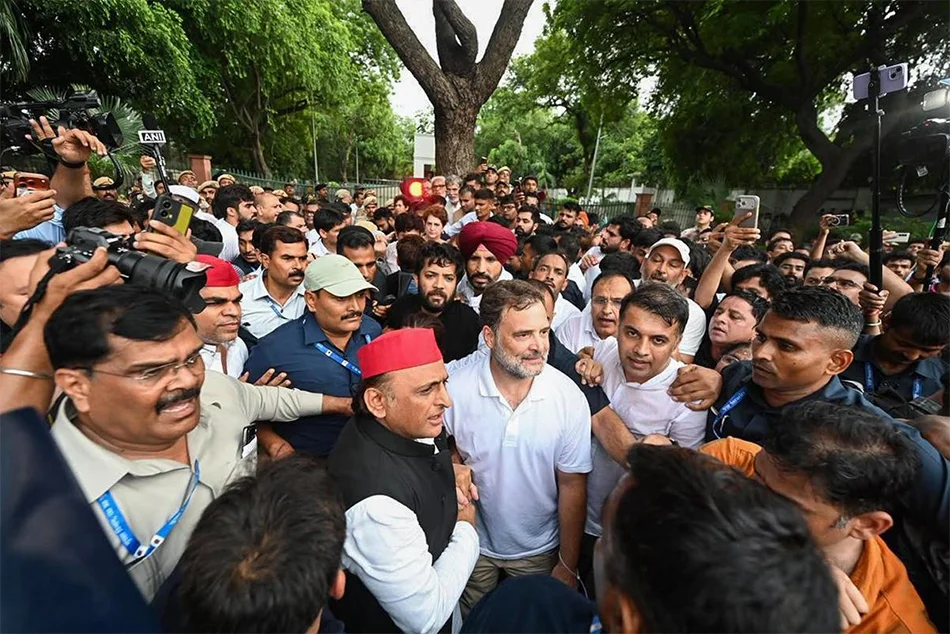
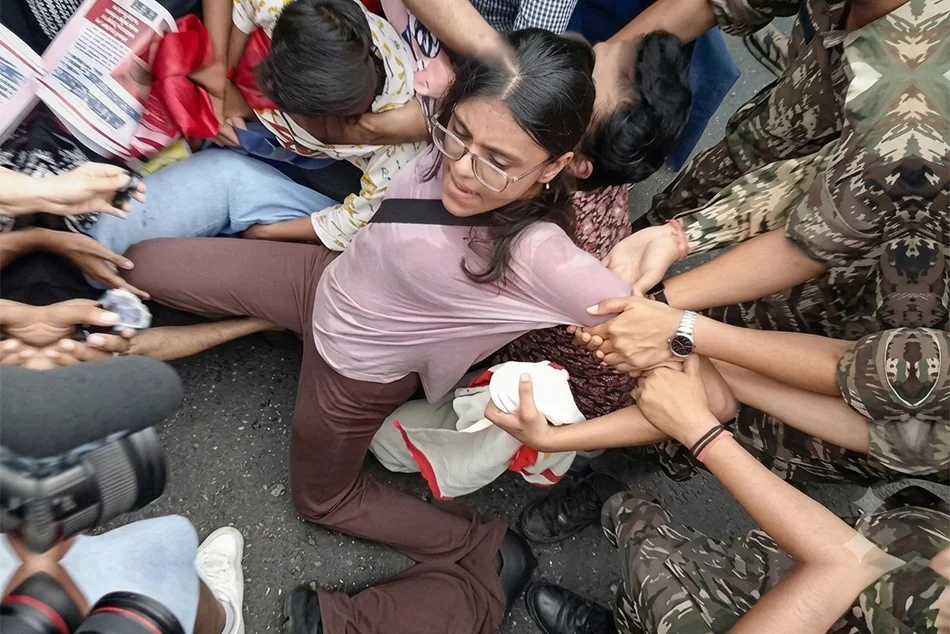
After a three-month, dispassionate hawk-watch on the course of the students’ protest, Narendra Modi and Amit Shah have finally worked out a reeky strategy to attack the Congress and Rahul Gandhi, persecute student leaders, and deny them their fundamental right, guaranteed by the Constitution, to dissent and protest by forcing them to sign a malodorous peace bond, with the dubious intention of weaponising preventive mechanisms.
These two strategies manifest the complete administrative and political bankruptcy of the Gujarati duo. Protesters are required to sign a peace bond when executive authorities have sufficient information or grounds to believe that they are likely to commit a wrongful act, cause a breach of the peace, or disturb public tranquillity. They are made to sign peace bonds when agitators are found to have a history of engaging in confrontational conduct or violent protests. None of the protesters, whether Abhijit Dipke, Saurabh Das, Rank or even Neha Bora, has any such record. Before making them sign, the authorities must be in possession of sufficient material and evidence that they are likely to commit a breach of the peace, disturb public tranquillity, or engage in an unlawful assembly.
For Amit Shah, for whom decent politics has been an alien concept, this measure is standard legal protocol to regulate public demonstrations, maintain public order, and ensure that designated protest guidelines are followed in the national capital. There is no denying that the use of peace bonds against student organisers is state-enforced intimidation meant to silence legitimate institutional critique.
Ironically, without addressing the core concern of the disenfranchisement of nearly 18 crore voters and evolving a mechanism to fulfil the aspirations and needs of the people, Modi coined the new word “parjeevi” (parasite) to malign and discredit Rahul Gandhi, alleging that the opposition utterly lacks political credibility, does not enjoy the trust of the people, and simply aims to create disorder and undermine public progress. Apparently, their strategy looks like an attempt to send a strong political message through active campaign planning against Rahul. In reality, however, it manifests an utter lack of self-confidence and Modi’s desperation to keep the situation under his control, a situation that has already slipped out of his grip.
Yet another vital component of the Gujarati duo’s strategy has been dismissing the allegations of “vote theft”. If they concede to the opposition’s demand, it would make the Modi-Shah combine more vulnerable and strengthen the public perception that Rahul has been right. It would not only blunt Modi’s attack on Rahul but also reinforce the perception that the Modi government is an illegal government because it came to power by committing “vote theft”. It would further weaken Modi’s moral standing.
Rahul Gandhi and the INDIA bloc have declared their agitation a “fight to the end to restore democracy”. Gandhi has accused the government of hijacking democratic institutions and stated that the opposition is fully prepared for mass arrests and will not back down until its concerns regarding the electoral rolls are resolved. Rahul is likely to unveil his protest strategy at the November 1 rally at Ramlila Maidan in Delhi. The rally would also reinforce the public perception that, contrary to Modi’s rhetoric about “People with PM Modi”, he actually stands alienated and despised.
Rahul Gandhi’s focus has been on structural and issue-based warfare, pivoting towards tactical aggression and operational precision rather than saffron ideological rhetoric. With Modi making a strategic shift characterised by high-stakes narrative control and sharp public counter-offensives, Rahul has to bring about a major strategic shift of his own. Populist rhetoric attracts people’s attention more quickly than a thorough dissection of ideology. He has to assimilate the ideological and political bankruptcy of the saffron ecosystem into the prevailing binary to counter the ruling establishment on structural grounds. This strategic evolution must rely on calculated, highly pragmatic moves designed to hit the government where it counts.
Rather than engaging purely in public ideological debates, the new strategy should target institutional vulnerabilities. By publicly challenging the independence of top government bodies, such as the Election Commission of India (ECI) over voter revisions, he must introduce an element of executive doubt. Similarly, promising future legal accountability for ground-level police enforcers aims to alter the calculus of how bureaucratic orders are executed. Rahul could counter the BJP’s organisational machinery by attempting a programmatic expansion to capture younger demographics. He has to ensure that his new strategy translates the generic appeal of the Bharat Jodo Yatra into a permanent digital and institutional pipeline targeting Gen Z and Gen Alpha.
Instead of focusing on classical high-level political theories, his strategy must consolidate around the hard mathematics of the OBC, Dalit and tribal vote banks. In crucial states like Uttar Pradesh, the messaging must rely on concrete promises regarding reservations, social justice and systemic inequality rather than broad anti-establishment lecturing. He must identify with the needs and aspirations of the poor, Dalits and minorities. Only by winning the trust of these people can he counter the BJP’s mercenary mechanism for looting polling booths. The strategy must bridge the gap between central coordination and grassroots execution.
The Gujarati duo’s decision not to remove Gyanesh Kumar Gupta may backfire, providing a boost to Rahul’s strategy. Contrary to Modi and Shah’s strategy, it may strengthen the public perception that Gyanesh has been instrumental in bringing BJP governments to power at the Centre and in the states by manipulating the electoral process. This would prove disadvantageous for Modi and Shah. It is worth mentioning that, in his first remarks on the agitation demanding Gyanesh’s resignation and the scrapping of SIR, Shah accused the Congress of pursuing negative politics and said it needed to introspect rather than rely on what he described as fabricated media events.
Modi’s entire thrust under this strategy has been to discredit Rahul and prove that he is unable to rule. This is part of an attempt to downgrade Rahul’s image as a future prime minister. Once Rahul’s image gets a boost, the possibility of Modi’s ouster from politics will increase. Modi is scared of this scenario. His reference to Rahul as a failed political product was an attempt to shift the political debate from the government’s performance to the credibility, leadership and judgement of its principal challenger.
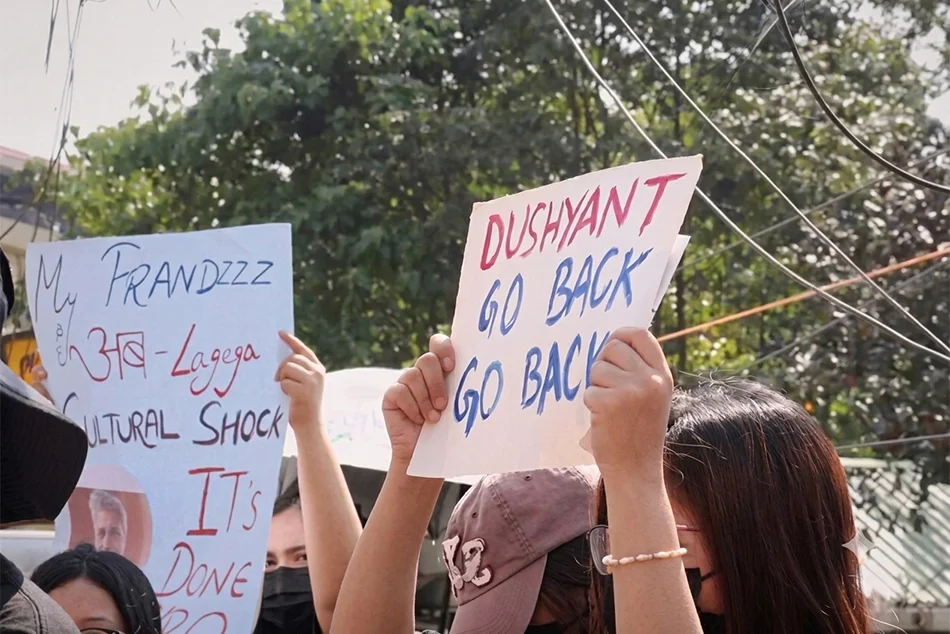
There is little doubt that Rahul has to be more aggressive and mobilise young people around protests against the Chief Election Commissioner. The SIR adds another dimension to this mobilisation. Youth participation will give an institutional controversy wider public resonance. It is absolutely clear that young people will not accept the verdict of the ECI and Gyanesh without protest. They will protest against any misadventure. Opposition parties, and Rahul in particular, must ensure that street mobilisation translates into a coherent political argument supported by concrete evidence to influence public opinion.
There is no ambiguity that the intensifying protest over the SIR prompted Modi’s latest attack on the Congress. Modi had earlier tried to use some independent youth and student organisations to blunt Rahul’s initiative, but the strategy failed. The determination of young people and students to bring about fundamental change will be tested during the assembly elections in Manipur, Goa, Punjab, Uttarakhand and Uttar Pradesh in 2027. Already scared by the developing situation, the BJP launched a massive nationwide outreach programme running from October 22 to November 5, 2026, to dismantle the opposition’s momentum. The BJP’s shortage of ideas is also evident in Modi’s endeavour to remind the public of the 1984 anti-Sikh riots. This is an attempt to weaponise historical fault lines, as the Congress will hold a major rally on November 1 to remind people of the killing of Sikhs in October 1984 and accuse Rahul of insensitively “rubbing salt on the wounds of the Sikh community” to score political points.
There is no denying that directly attacking saffron ideology is insufficient for the opposition and Rahul; the core support base must instead be dismantled. His ideological attacks against the BJP and RSS often fail to dent their core support base because of a combination of voter priorities, narrative mismatches and organisational realities. The saffron ecosystem’s Hindu-Muslim binary and its politics of communalism and divisiveness have penetrated so deeply that such attacks fail to make any substantive difference.
The burgeoning middle class and the neo-middle class have blurred ideological distinctions. Rahul’s core strategy for attacking the RSS and BJP relies heavily on an ideological, institutional and identity-focused blueprint. His political narrative has shifted from purely policy-based criticism to framing the conflict as a civilisational battle over the soul and structure of India. Positioning the Congress-INDIA alliance as the sole defender of the Constitution against what it describes as attempts by the BJP-RSS to destroy it will not help.
The BJP’s support base is built on a highly resilient dual pillar: a deep-seated cultural ideology (Hindutva) and a massive, direct-benefit welfare apparatus, often termed “Labharthis” or beneficiaries. Rahul Gandhi’s critique of the RSS as an “imposition on India’s identity” does not alienate BJP voters because they see the party not just through an ideological lens but also as an effective provider of digital governance, housing, sanitation and subsidised grain. An ideological message requires a robust, hyperlocal machinery to transmit it, translate it into regional dialects and convert it into votes.
Whether the attack has been effective depends on how success is measured. If the goal was to completely dismantle the BJP’s moderate voter base, the impact has been limited, as the BJP remains a dominant political force. However, if the goal was to check the BJP’s electoral momentum, consolidate the opposition and peel away specific vulnerable segments of the floating electorate, the strategy has demonstrated measurable efficacy in recent electoral cycles. Whether Rahul will achieve his political objectives remains highly debatable, as his path depends on shifting coalition dynamics, public sentiment and the electoral strength of the BJP.
[The writer, Arun Srivastava, is a Senior Journalist.]
Follow ummid.com WhatsApp Channel for all the latest updates.
Select Language to Translate in Urdu, Hindi, Marathi or Arabic