What Targeting of Justice Tabassum Khan Says About Minority Rights in Today’s India
The threats against Judge Tabassum Khan reveal a nation at a crossroads. Will India allow mob power — emboldened by political silence — to overshadow constitutional power? Or will it defend the institutions that safeguard democracy?
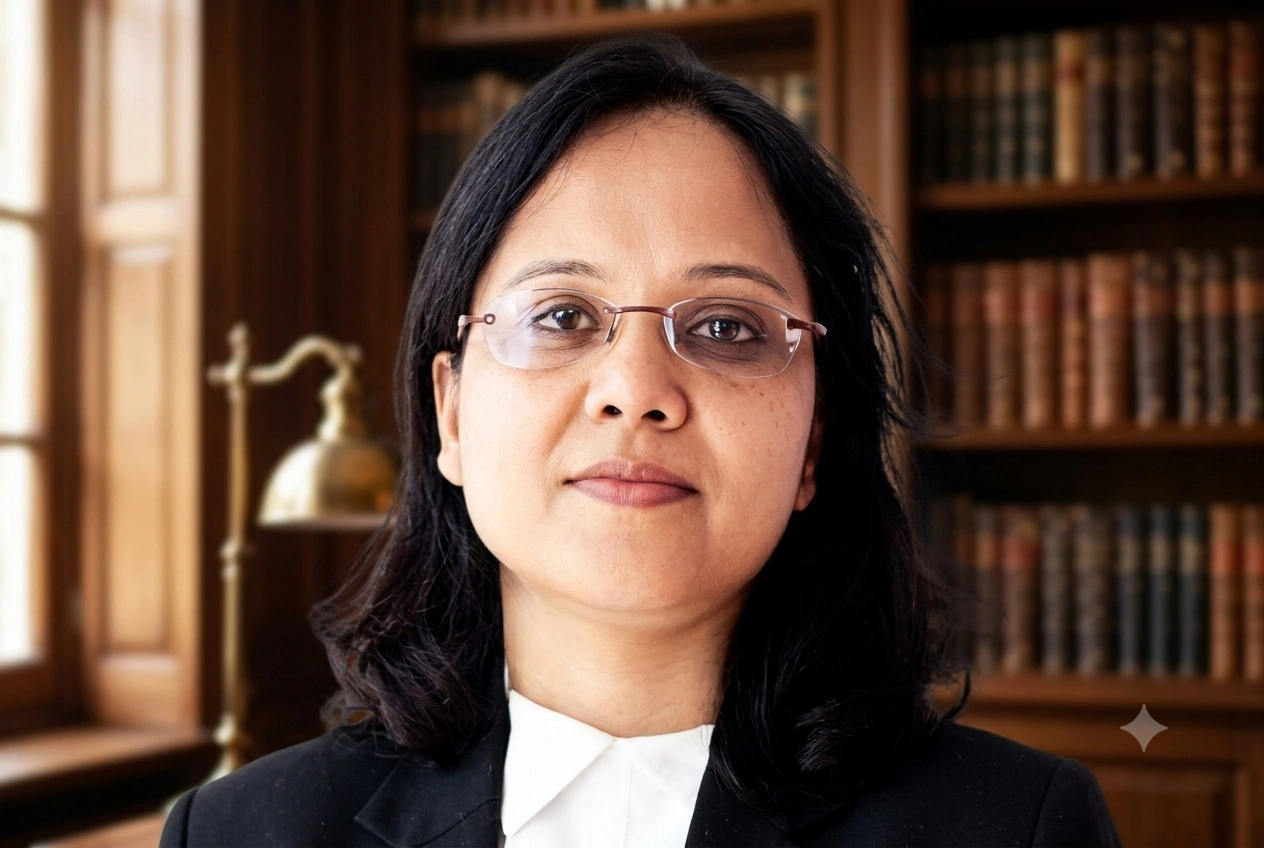
When Additional District and Sessions Judge Tabassum Khan delivered her verdict on 12 June, sentencing 14 men to life imprisonment for the brutal mob lynching of Nazir Ahmad in Madhya Pradesh, India, she was performing the most fundamental duty of a judge:
Upholding the law without fear or favor.
Yet, within hours, she became the target of a torrent of online abuse, communal slurs, rape threats, and death threats — a coordinated campaign that has shaken India’s legal community and raised urgent questions about the safety of judicial officers and the future of minority rights in the country.
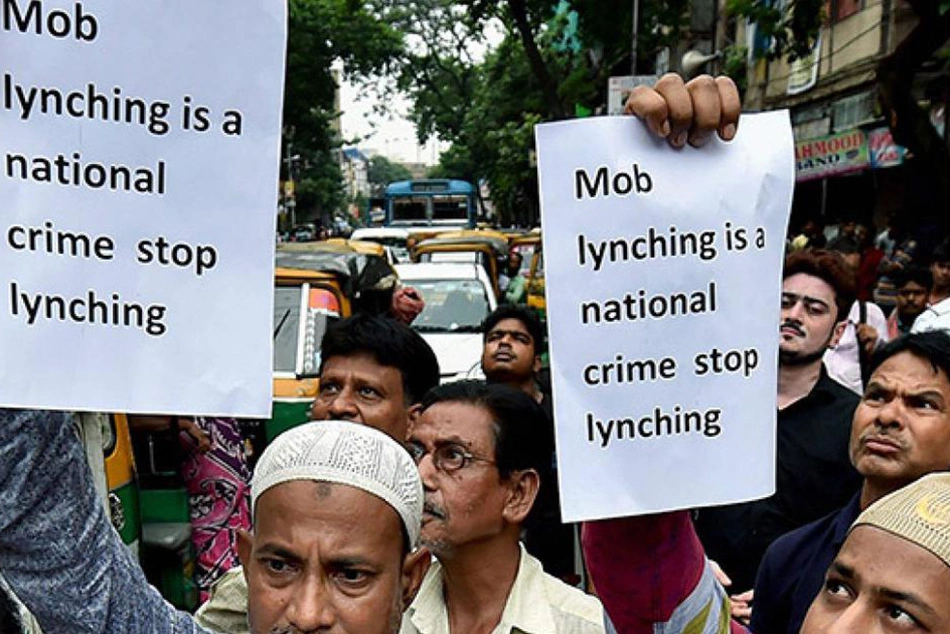
The case itself was stark. In 2022, Nazir Ahmad, a 50-year-old Muslim cattle transporter, was intercepted at night by a group of self-styled gau rakshaks — cow protectors — armed with sticks and iron rods. They dragged Ahmad and his companions from their vehicle and beat them mercilessly on suspicion of smuggling cows. Ahmad later died of his injuries; his companions survived to testify. Judge Khan called it what it was: a clear case of mob lynching.
But the verdict triggered an eruption of rage from cow‑protection groups and Hindutva organizations. Family members of the convicted men protested outside the courtroom, attempting to block the police convoy. Soon after, videos began circulating online showing right-wing influencers hurling communal slurs at the judge, accusing her of bias because she is a Muslim, and issuing explicit threats of rape and murder.
In one widely shared video, a man warned of “bloodshed across the country” unless the convicted men were freed within ten days. The speakers’ faces and social-media handles were visible; the threats remained online for days, attracting thousands of likes and shares.
The attacks were not critiques of judicial reasoning. They were attacks on identity. As former Supreme Court judge Markandey Katju wrote:
“The campaign sought to delegitimize Judge Khan’s authority as a judicial officer by reducing her identity to her religion.”
Khan herself reportedly told Katju that the abuse had traumatized her and made her feel “like she had committed a crime by delivering the verdict.”
India’s leading legal bodies quickly rallied behind her. The Supreme Court Advocates‑on‑Record Association (SCAORA) and the Supreme Court Bar Association (SCBA) condemned the threats and demanded action. SCBA president Vikas Singh warned that “if we allow this to happen, no judge will be able to dispense justice.” The Madhya Pradesh High Court ordered continued police protection for Khan and asked senior officials to explain what steps had been taken to identify those behind the threats.
Yet the incident has exposed far more than the vulnerability of one judge. It has illuminated a deeper crisis in India’s democratic institutions — one that human-rights groups, scholars, and civil‑society organizations have been warning about for years.
A Pattern of Intimidation and Impunity
The threats against Judge Tabassum Khan are not an isolated eruption of anger. They fit into a broader pattern in which cow vigilantism, majoritarian politics, and impunity have combined to create an environment where minorities — especially Muslims — live under constant threat.
Over the past decade, cow-related violence has repeatedly claimed lives. Reuters documented 63 cow‑vigilante attacks between 2010 and 2017, killing 28 people — 24 of them Muslims. Human Rights Watch recorded at least 44 people killed between 2015 and 2018, most of them Muslims. ACLED (Armed Conflict Location & Event Data Project) data shows more than 50 fatalities between 2016 and 2020. Yet convictions have been rare. Only a handful of cases — including the Ramgarh lynching of Alimuddin Ansari, the Alwar killing of Rakbar (Akbar) Khan, and now the Seoni Malwa case involving Nazir Ahmad — have resulted in punishment.
In some instances, convicted killers have been publicly celebrated. In 2018, Union Minister Jayant Sinha garlanded eight men convicted of lynching Alimuddin Ansari after they were released on bail. In 2022, all eleven convicts in the Bilkis Bano gang-rape case were greeted with garlands at a Vishwa Hindu Parishad office. Such acts send a message far louder than any speech: that vigilante violence is not only tolerated but valorized.
This political signaling has consequences. As I lately noted in my Asia One News TV interview:
“Cow vigilante groups feel empowered because the political and social climate has repeatedly signaled that their actions will be tolerated — and sometimes even celebrated.”
When leaders frame cow protection as a sacred duty, vigilante groups interpret this as moral license. When police hesitate to act decisively, impunity becomes expectation. And when extremist networks glorify violence online, mobs feel entitled to challenge the authority of courts themselves.
The Normalization of Anti‑Muslim Hostility
Human‑rights groups have expressed growing concern about the safety of religious minorities, particularly Muslims. The threats against Judge Khan illustrate how deeply anti‑Muslim hostility has been normalized in public discourse.
For more than a decade, since Prime Minister Narendra Modi came to power, India has witnessed a steady rise in hate speech, mob attacks, discriminatory policing, and online radicalization targeting Muslims. What has made this trend more dangerous is the consistent silence from the highest levels of leadership. The Prime Minister has not issued a single unequivocal condemnation of cow‑related lynchings. Ministers have garlanded convicts. Extremist groups have held protests defending killers as “protectors of cows.”
This silence is not neutral. It is a signal. As I said during the interview:
“When the Prime Minister refuses to condemn crimes committed by fellow Hindus against Muslims, that silence becomes a political message. It tells vigilante groups that their actions are tolerated. It tells police that enforcement is optional. And it tells minorities that their safety is negotiable.”
Judge Tabassum Khan’s case shows how this normalization now threatens the rule of law itself. Instead of debating her legal reasoning, critics attacked her identity as a Muslim woman. That is a direct assault on judicial independence. When a judge’s religion becomes grounds for intimidation, minority judges become vulnerable, verdicts become politicized, and courts become targets of majoritarian pressure.
Social Media as a Weapon
Social media played a central role in amplifying threats against Justice Tabassum Khan. Videos containing rape threats, death threats, and calls for nationwide violence circulated widely, attracting thousands of likes and shares. Influencers with large followings framed the convicted killers as heroes and the judge as an enemy of Hindu identity.
Authorities have arrested two individuals and say the cyber cell is monitoring inflammatory content. But enforcement remains inconsistent. As I noted in the interview, “Social media has become one of the most dangerous accelerators of hate in India today. Online abuse is not spontaneous anger — it is a digital ecosystem primed for incitement.”
Without stronger regulation, extremist networks will continue to use digital platforms to intimidate judges, mobilize mobs, and undermine public trust in institutions.
A Threat to Judicial Independence
The threats against Judge Tabassum Khan have sparked a broader debate about judicial independence in polarized environments. Supreme Court advocate Sanjay Hegde argued that the state must do more to protect judges, citing the recent case of former Bombay High Court judge Gautam Patel, who received protection only after ten months of threats and a public‑interest litigation. Hegde wrote:
“The principle cannot bend to rank. It cannot bend to religion. It cannot bend to the political weather around a particular verdict.”
In my interview, I emphasized that “judicial independence cannot survive in an environment where mobs feel entitled to threaten judges, and where political leadership refuses to defend them.” If judges fear for their lives, they cannot uphold constitutional rights. If courts are pressured by extremist groups, justice becomes negotiable.
The threats against Judge Khan are therefore not just an attack on one judge. They are a warning about the direction of India’s democracy.
What Must Change
Looking ahead, India needs a structural reset to protect judicial independence and minority rights.
First, political leadership must speak clearly and unequivocally. Silence from the top has emboldened extremist groups. Condemnation of violence must come from the highest offices.
Second, judges handling communal or mob‑violence cases must receive automatic security. Protection cannot depend on media attention.
Third, police reform is essential. Law enforcement must be insulated from political pressure and held accountable for failing to act against vigilante groups.
Fourth, social‑media platforms must be compelled to remove threats swiftly and cooperate with investigations.
Finally, India must reaffirm its commitment to constitutional equality. Minority rights must be protected not as a concession but as a foundational principle.
A Moment of Reckoning
The threats against Judge Tabassum Khan reveal a nation at a crossroads. Will India allow mob power — emboldened by political silence — to overshadow constitutional power? Or will it defend the institutions that safeguard democracy?
As I said in closing during my interview:
“Threats against a judge are not just threats against an individual — they are threats against the rule of law itself. And when the judge is targeted because of her identity, it becomes a warning to an entire community.”
India cannot afford to ignore that warning. The world is watching. And India must decide fast. The stakes could not be higher.
[The writer, Habib Siddiqui, is Author of several books. His latest work, ‘Modi-fied’ India: The Transformation of a Nation, was published by Peter Lang in 2026.]
Follow ummid.com WhatsApp Channel for all the latest updates.
Select Language to Translate in Urdu, Hindi, Marathi or Arabic