Bangladesh to Join Saudi-Turkiye-Pakistan Makkah Pact?
Bangladesh says it's open to joining the Saudi-Turkiye-Pakistan defence pact, it's not a signature, but it's not nothing either - and for India, it confirms a drift that's been building for two years
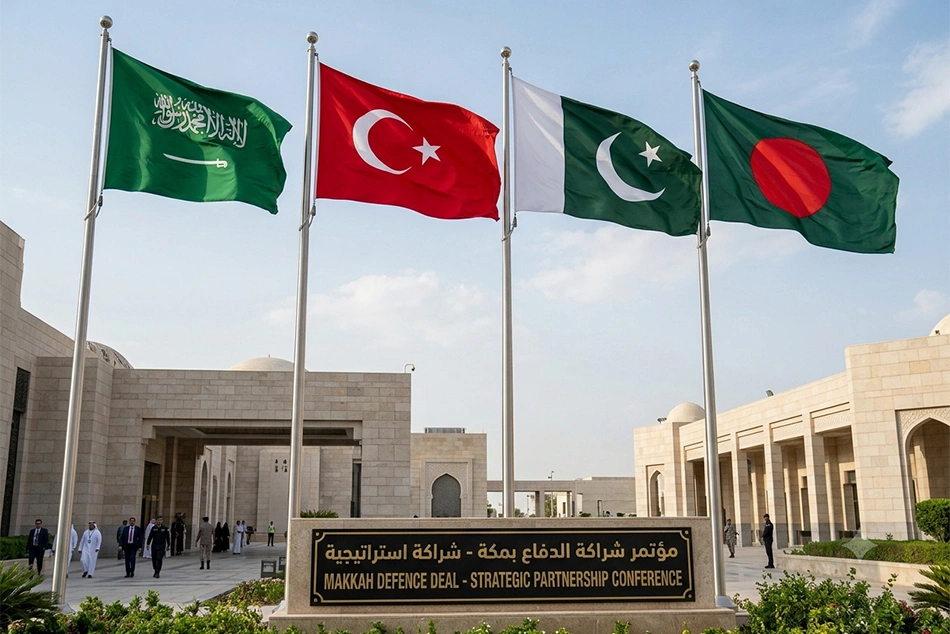
Bangladesh says it's "open" to joining the Saudi-Turkiye-Pakistan defence pact. That word choice is doing a lot of work. It's not a signature, but it's not nothing either - and for India, it confirms a drift that's been building for two years.
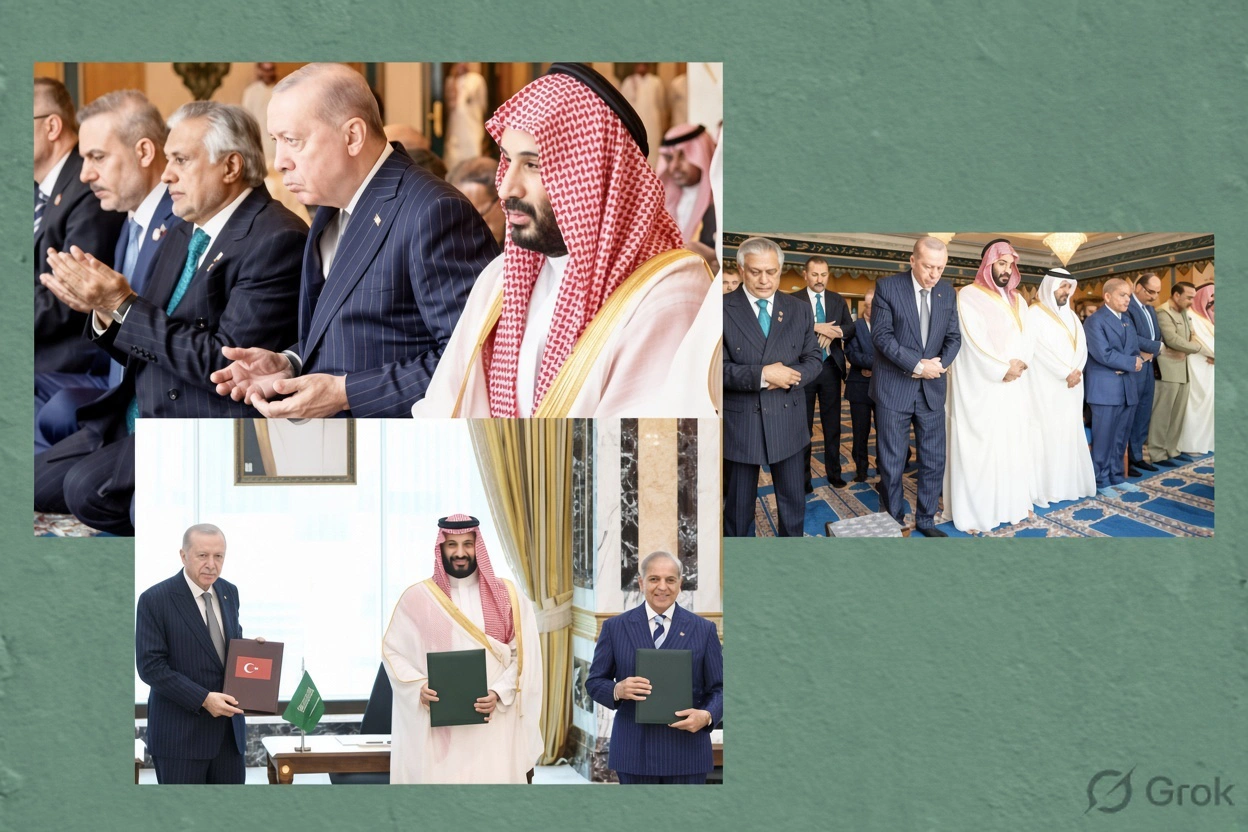
Words matter in diplomacy, and Bangladesh's foreign affairs adviser Humayun Kabir chose his carefully. Asked whether Dhaka would join the Makkah Joint Defence Agreement - the pact Saudi Arabia, Turkey and Pakistan signed on August 7 - Kabir didn't say no. He said Bangladesh would weigh the option "considering its own interests."
That's the language of a country keeping a door ajar, not one shutting it.
The pact itself is stark. Saudi Arabia, Turkey, and Pakistan committed to treating an attack on one as an attack on all - an Article 5 clone, built on top of the Saudi-Pakistan Strategic Mutual Defence Agreement signed last September. Egypt has been debating the idea without committing, wary of its own entanglements with Greece and Cyprus. Bangladesh is now the second country to signal interest publicly. For a bloc barely two weeks old, that's a faster gravitational pull than anyone in Delhi expected.
None of this happened in isolation. Turkiye's footprint in Bangladesh has been growing since well before the Makkah Pact existed. Ankara is now the fourth-largest supplier of military equipment to Dhaka. Late last year, Pakistan's army began training Bangladeshi personnel - the first such arrangement since 1971, a detail that carries obvious weight in a country whose founding war was fought against Pakistan.
Also Read: Makkah Defence Pact: Should India be Alarmed?
Turkish intelligence has reportedly financed renovations at Jamaat-e-Islami's Dhaka office and arranged visits for Islamist figures to Turkish arms facilities. Whatever the specifics, the pattern is unmistakable: Ankara has spent two years building relationships in Dhaka that a defence pact simply formalises.
This is why Indian commentary has turned sharply toward Turkey as the more urgent problem, rather than treating Pakistan as the sole variable. Some analyst’s framing - that Turkey is becoming "the new Iran" in South Asian discourse - captures a shift in how Delhi's strategic community talks about Ankara: not as a distant NATO member with an independent streak, but as an active player reshaping India's eastern neighbourhood. That's a new category of concern, and it doesn't map cleanly onto the India-Pakistan playbook Delhi has run for decades.
The reason it stings more than past irritants is geography. Pakistan is to India's west, across a border India has spent fifty years learning to manage - through deterrence, through diplomacy, through sheer familiarity.
Bangladesh is to the east, wrapped around India's most vulnerable stretch of territory: the Chicken's Neck corridor connecting the northeast to the rest of the country, and a belt of insurgency-prone states that have depended on Dhaka's cooperation to stay quiet. India didn't build serious contingency planning for that flank turning unfriendly, because for fifteen years under Sheikh Hasina, it didn't have to. Hasina's ouster in August 2024 removed that assumption overnight.
What's emerged since is not a formal alliance against India - nobody involved describes it that way, and the pact's own language insists it isn't directed at any state. But intent and effect aren't the same thing. Whether or not Ankara, Islamabad and an interim government in Dhaka are coordinating against India specifically, the practical result is a security architecture on India's eastern border that India didn't design, doesn't control and can't easily counter with tools built for a different era.
Delhi's response to Makkah Deal so far has been muted, and that restraint is deliberate rather than passive. Louder alarm would hand Dhaka and Ankara a propaganda win, and validate the "encirclement" narrative that Pakistani commentary is already pushing.
Quieter diplomacy preserves options: continued engagement with Bangladesh's interim government, reinforced ties with Gulf states that have their own reasons to hedge against an assertive Ankara, and - as analysts have noted - closer coordination with Israel, which shares India's discomfort with a Sunni-identity bloc gaining institutional form.
A reported call between Modi and Netanyahu around this period wasn't routine; both countries are recalculating around the same shift.
Also Read: Three Flags, One Shield: Inside The Makkah Pact
There's also a case for not overreacting. The Makkah Pact's substance remains thinner than its language. NATO's Article 5 works because it constitutes integrated command structures, joint exercises, and seven decades of institutional trust.
Saudi Arabia, Turkey, and Pakistan have none of that. They have three different threat perceptions - Riyadh worried about Iran, Islamabad fixated on India, Ankara focused on the eastern Mediterranean -brought together more by Sunni solidarity than by a common enemy.
Pacts built on shared identity rather than shared threat tend to fray when a real crisis tests them. Egypt's hesitation to join is itself a signal that regional players see the limits here, not just the promise.
But India can't plan around a pact staying weak. It has to plan around what happens if Bangladesh formally signs on, if Turkish arms sales to Dhaka deepen further, if Pakistani military trainers become a permanent fixture rather than a one-off gesture. Each of those, individually, is manageable. Together, they describe an eastern flank that has quietly stopped being a settled question.
The larger lesson is about India's own theory of its neighbourhood. For years, Delhi's regional strategy assumed Pakistan would remain the primary hostile actor and that everyone else - Bangladesh, Nepal, Sri Lanka - would stay within India's gravitational pull by default, bound by geography and economic dependence.
That assumption is now visibly cracking. Smaller states are discovering they have other suitors, and those suitors - Turkey chief among them - are willing to invest political capital to become one. Kabir's carefully hedged answer isn't a declaration of alignment. It's a country testing how much leverage it can extract from having options, which is precisely what should worry Delhi more than any formal signature would.
There's a wider pattern here too, one India's West Asia policy has been slow to absorb. Delhi's Gulf strategy has leaned heavily on the UAE and Israel, run largely through the I2U2 grouping with the US. That framework assumed the Gulf's centre of gravity would stay roughly where it has been for a decade.
The Makkah Pact suggests otherwise. Saudi Arabia is now co-authoring a defence architecture with Turkey and Pakistan - two countries India has historically kept at arm's length - which means India's energy security, its diaspora interests, and its trade routes all run through a region that just got more complicated without India as a regional power.Economic partnership isn't the same as strategic relevance, and the gap between the two is now harder to ignore.
India's response can't just be counter-messaging or muted diplomacy. It requires treating Bangladesh, and the wider West Asian realignment behind it, as a live strategic problem rather than a passing irritant.
That means deeper security engagement with Gulf partners beyond the UAE-Israel axis, sustained outreach to Dhaka's interim government instead of waiting for elections to sort things out on their own, and a clear-eyed read of Turkey's ambitions rather than folding them into the familiar Pakistan story. The region isn't waiting for Delhi to catch up, and neither, it seems, is Bangladesh.
[The writer, Asad Mirza, is Delhi based Journalist and Author.]
Follow ummid.com WhatsApp Channel for all the latest updates.
Select Language to Translate in Urdu, Hindi, Marathi or Arabic