How The Makkah Pact should be judged?
The Makkah Defence Pact signed between Saudi Arabia, Turkiye and Pakistan should be judged by a different set of indicators: whether it prevents crises from escalating, protects civilians and commerce, improves transparency, keeps military commitments proportionate and leaves space for diplomacy
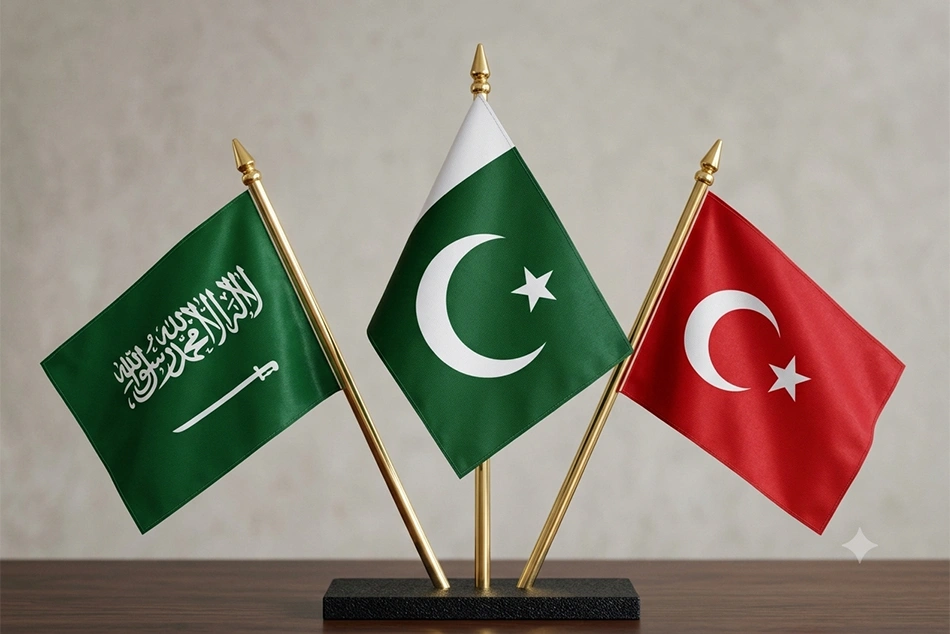
The Mecca Joint Defence Agreement, signed by Saudi Arabia, Türkiye and Pakistan on 7 August 2026, has been presented as a step toward collective deterrence and greater regional ownership of security. That ambition deserves serious attention. For too long, Middle Eastern security has been shaped by external military guarantees, great-power rivalry and repeated wars whose costs have been borne most heavily by civilians.
But strategic autonomy is not automatically progressive simply because it is regional. A security arrangement can reduce dependence on an outside power and still deepen militarisation, expand arms spending or pull member states into conflicts their publics never chose. The real test of the Mecca Pact is therefore not whether it becomes more NATO-like. It is whether it helps prevent war.
Regional ownership is not enough
The three members bring substantial capabilities. Saudi Arabia has financial resources and strategic geography. Türkiye has a large military, NATO experience and an expanding defence industry. Pakistan contributes a major armed force, long defence ties with Riyadh and nuclear capability. The pact’s collective-defence clause gives these assets a new political framework.
Its institutions are also beginning to take shape. A Strategic Political and Defence Committee held its first meeting in Istanbul on 31 August. That makes questions of doctrine, intelligence, logistics and interoperability more immediate. Yet military coordination should not become an end in itself. Institutions designed only to make force easier to mobilise can create their own pressure to act.
A more responsible regional architecture would give equal weight to restraint. The pact needs mechanisms for consultation before escalation, mediation during crises and lawful disengagement when a member believes military action would be disproportionate. Strategic autonomy means retaining the ability to say no, not merely acquiring new partners with whom to say yes.
Put civilian protection before alliance prestige
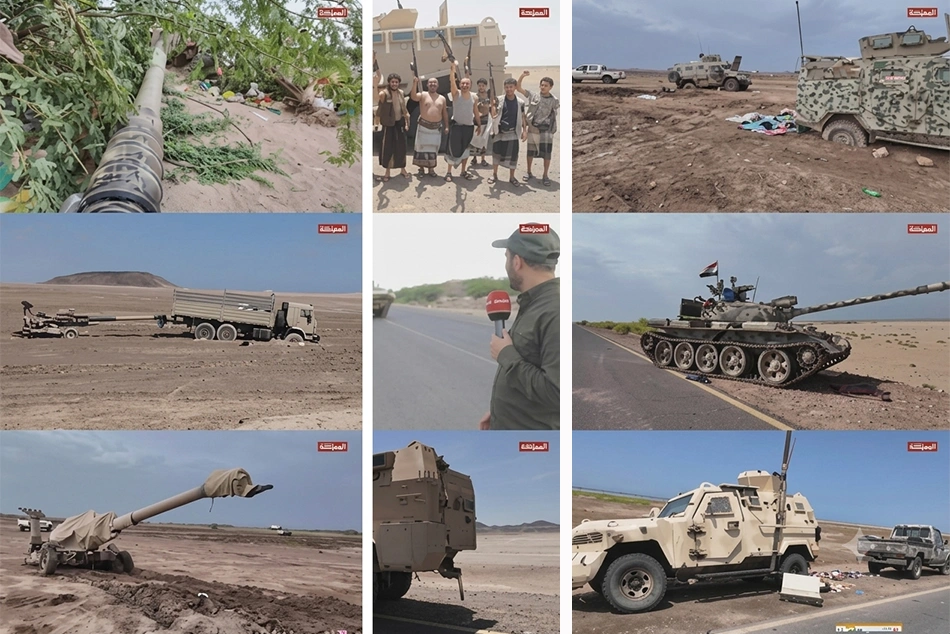
The agreement comes at a time when the Red Sea, Gulf and wider Middle East are already marked by missile and drone attacks, disrupted shipping, damaged infrastructure and civilian insecurity. Governments understandably want to protect ports, energy facilities and sea lanes. But those goals can be pursued defensively without turning every security incident into a test of alliance credibility.
The members should publicly define what counts as an armed attack under the pact and what forms of assistance may follow. Any move from defensive support to offensive operations should require a separate political decision. Rules of engagement should incorporate international humanitarian law, civilian-protection obligations and proportionality. Intelligence sharing should be subject to safeguards against its use for unlawful targeting or domestic repression.
Civilian oversight is equally important. Parliaments and the public should know, at least in broad terms, what financial commitments, deployments and defence-industrial projects are being undertaken. Secret clauses may sometimes be necessary in military agreements, but secrecy cannot become a substitute for democratic consent. A pact that claims to provide security must be accountable to the societies it is meant to protect.
Human security should be the measure of success
The debate over regional security often treats deterrence as if it were separate from ordinary life. It is not. Every escalation in the Gulf or Red Sea can raise insurance costs, disrupt food and fuel supplies, threaten migrant workers, damage ports and divert public money toward emergency military spending. For millions of people, security is experienced through prices, jobs, electricity, mobility and physical safety long before it is measured through missiles or military exercises.
That is why the Makkah Pact should devote part of its cooperation to non-offensive capabilities: maritime search and rescue, disaster response, protection of civilian shipping, early-warning systems for critical infrastructure, cyber defence, demining, medical support and crisis hotlines. These forms of cooperation can build trust and capacity without creating the same risks of escalation.
Saudi Arabia, Türkiye and Pakistan also have different relationships with Iran, the United States, China, India and other regional actors. Those differences are often portrayed as a weakness. They could instead become a restraint against bloc politics if members preserve diplomatic ties across rival camps and resist pressure to turn the agreement into an exclusive strategic identity.
Autonomy should create room for peace
The strongest argument for the Mecca Pact is that states should have more control over their own security choices. But autonomy is meaningful only when it expands political options. If it merely replaces dependence on one security patron with dependence on a new military bloc, the region will have changed partners without changing its underlying logic.
The pact should therefore be judged by a different set of indicators: whether it prevents crises from escalating, protects civilians and commerce, improves transparency, keeps military commitments proportionate and leaves space for diplomacy. More exercises, more weapons and more committees may demonstrate activity. They do not by themselves demonstrate security.
A regional security order worth building is one in which governments can cooperate without making permanent enemies, defend themselves without normalising endless mobilisation and strengthen autonomy without sacrificing accountability. If the Mecca Pact moves in that direction, it could become a useful experiment. If it becomes another vehicle for bloc rivalry and military prestige, it will reproduce the insecurity it claims to solve.
[The writer, Kawsar Mia, is a Lecturer in Civics and Good Governance at Cosmopolitan College, Dhaka, Bangladesh. His writing focuses on governance, foreign policy, regional geopolitics and the strategic choices of smaller and middle powers. He can be reached at b180104019@ihc.jnu.ac.bd.]
Follow ummid.com WhatsApp Channel for all the latest updates.
Select Language to Translate in Urdu, Hindi, Marathi or Arabic