Maulana Abul Kalam Azad's Vision of Undivided, Plural India
Had India been built according to Maulana Azad’s ideals, communal politics in the South Asian subcontinent today would not have had the slightest trace.
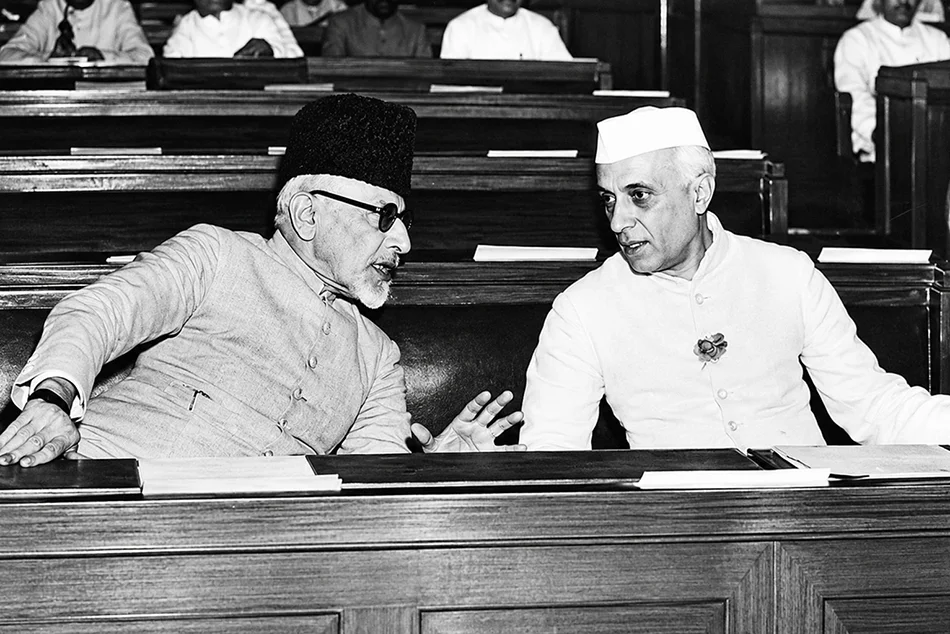
Humble greetings on November 11, the 138th Birth Anniversary of Maulana Abul Kalam Azad.
Perhaps the first scholar in the 1,400-year history of Islam to attempt an interpretation of the Holy Quran in the light of modernity was one of the followers of Vidyavachaspati, ‘Ummatul Wahida’ (devotee of the One God) — Maulana Abul Kalam Azad.
Birth and Early Education
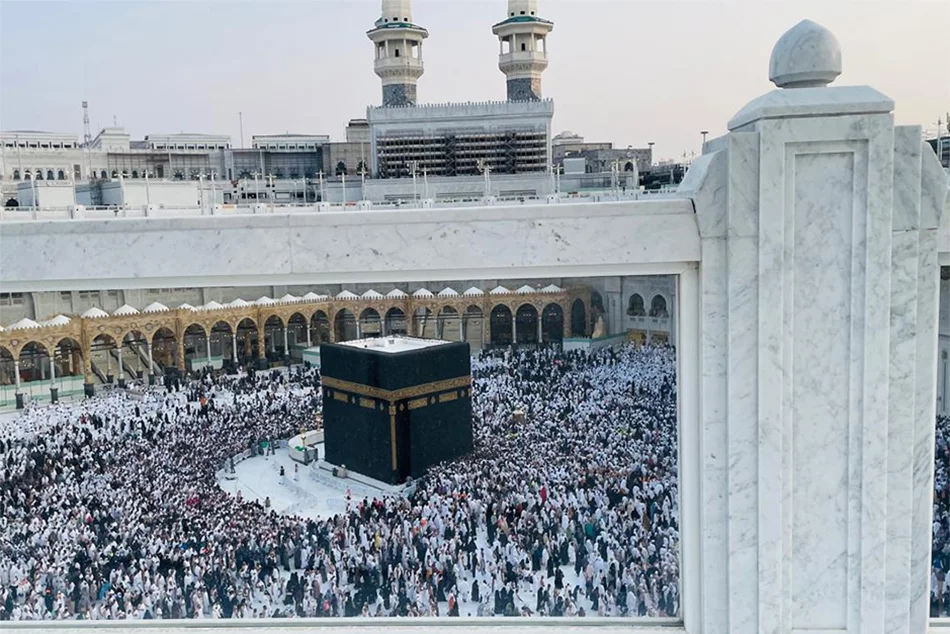
Maulana Abul Kalam Azad was born on November 11, 1888, in the holy Muslim city of Makkah. His father, Maulana Khairuddin, had participated in the freedom struggle of 1857. After the failure of that struggle, and out of his dislike for British rule, he left India and settled in Makkah, Saudi Arabia. Some of his disciples founded a religious institution in 1867 in a small village called Deoband in Uttar Pradesh. It began as a madrasa and eventually grew into one of the largest institutions of its kind, now known as Darul Uloom, a university. While staying in Makkah, Maulana Khairuddin continued to guide the religious institution at Deoband. This institution also made a significant contribution to India’s freedom struggle.
According to the customs of Makkah, the child born on November 11 was given two names:
- Mohiuddin Ahmed, as the future heir to the Muslim seat of Calcutta
- Firoz Bakht.
Maulana Azad himself chose the name Azad for his writings.
Maulana Azad's education in Makkah followed traditional Muslim methods. Being naturally gifted, he attained exceptional scholarship in Muslim theology and earned a reputation across Arabia. He was given the title of Vidyaparangat, meaning Vidyavachaspati, and came to be known as Abul Kalam. At that time, he was 18-years old. As a result, both his childhood names gradually faded into oblivion, and he came to be known solely as Maulana Abul Kalam Azad.
Maualana Azad's Political Journey
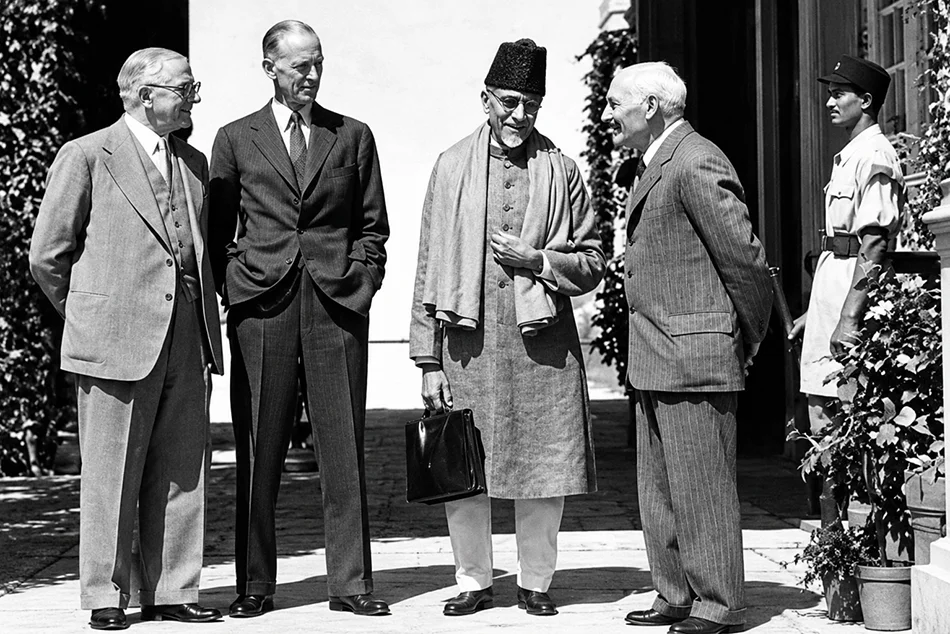
At the persistent request of the followers of the Muslim seat of Calcutta, Maulana Khairuddin returned to India with his son. By then, the Indian National Congress had already been established in 1885, and the Deoband institution had enjoyed the wholehearted support of the Congress from its very beginning. For this reason, Maulana Azad naturally associated himself with the Congress upon returning to India.
After returning to India, he received a modern education and mastered Bengali, Hindi, Urdu and English, while Arabic and Persian came naturally to him. In 1908, at the age of twenty, he travelled to Arabia, Egypt, Turkestan, Iraq and Iran.
In 1912, with the aim of awakening the public, he started a magazine called Al-Hilal in Calcutta. Reading this magazine was the very reason Frontier Gandhi Khan Abdul Ghaffar Khan first joined the Indian independence movement. Maulana Azad wrote powerfully in Al-Hilal against British rule, drawing upon verses from the Quran. As the magazine’s readership grew into the thousands, the British arrested Maulana Azad and banned Al-Hilal. After his release from prison, he started another magazine called Al-Balagh.
On December 23, 1923, he was elected president of the Delhi Session of the Congress. At that time, he was just 35 years old. Within eleven years, between 1912 and 1923, he had become one of the most exceptionally popular political leaders.
Maulana Azad's Writings on Religious Scriptures
Maulana Azad undertook a revolutionary analysis of religious scriptures. Primarily as a commentator on the Holy Quran, he published his book in 1930. Because of this, clerics trapped in bigotry accused him of three crimes:
- Bid’at
- Irtikam
- Irtidad
The punishment for any one of these three crimes was stoning to death. And this happened in 1930.
The reason Maulana Azad was subjected to such a harsh punishment was that, three hundred years after the death of Prophet Muhammad — namely in 1933, the authorised Quran had been compiled and published. To those who claimed that it was an unalterable, perfect divine book, Maulana Azad pointed out that Ijtihad and Qiyas, meaning rational thinking, had a place in Islam.
Through logic and linguistics, he established that temporality, religious harmony and pure humanity were the core foundations of the Holy Quran. Ideas such as Jihad, Kafir and Dar al-Harb, he argued, were products of the selfish and corrupt politics of that era. Thus, 1,300 years into Islamic history, Maulana Azad emerged as the first Islamic scholar to advance such an interpretation.
Also Read: Maulana Abul Kalam Azad - Freedom fighter, Journalist, Educationist and Islamic Scholar
According to Maulana Azad, Hadith is a human commentary and can contain errors. Three hundred years later, he argued, one was not bound to accept the meaning of the Holy Quran as it had been understood during the time of Prophet Muhammad. In this way, he dealt a tremendous blow to the entire Islamic tradition.
His principal argument was that temporality must be taken into account. He maintained that it was entirely wrong to insist on applying the Quran today in exactly the same way in which it had emerged from the circumstances of the Arabian desert at the beginning of the 7th century (610 AD). More or less, the same argument applies to the scriptures of all religions.
Maulana Azad interpreted the Quran in the context of ‘Ummatul Wahida’. No one should be forced to become a Muslim. Establishing a multi-religious government, bringing an end to old inhuman practices, respecting women and slaves, abolishing the system of usury and ensuring equal justice for all were the foundations of the secular and democratic Islam of Prophet Muhammad’s time.
Creating and sustaining a multi-religious government, ‘Ummatul Wahida’, is the essence of true religion. That, according to Maulana Azad, was the true meaning of the Holy Quran. This is what he wrote in his commentary on the Holy Quran. For this interpretation, radical clerics had sentenced him to death by stoning ninety years ago.
Maulana Azad's Opposition to Partition
Maulana Azad strongly opposed the creation of Pakistan. He believed that creating separate countries for Hindus and Muslims on the basis of religion was wrong in every respect. He wanted an undivided India to serve as an experiment in the creation of a multi-religious ‘Ummatul Wahida’. He expected this vision to incorporate modernity, science and pure religiosity, rather than being bound by Hadith.
Had India been built according to Maulana Azad’s ideals, communal politics in the South Asian subcontinent today would not have had the slightest trace. The possibilities of cheap popularity-seeking emotional triggers such as Vande Mataram, temple-mosque disputes, triple talaq and Waqf properties would not have remained.
In this year, when we celebrate the 80th year of our independence, how should we pay true tribute to Maulana Azad on his 138th birth anniversary? It is by studying the literature he wrote, including India Wins Freedom, Tazkira, Ghubar-e-Khatir, Qaul-e-Faisal, Dastan-e-Karbala and his commentary on the Holy Quran, and by establishing a council for Hindu-Muslim unity like the one he founded in 1924.
Today, such a council is needed more than ever. For the last forty years, the focal point of our country’s politics has consistently been communal polarisation and the incitement of Hindu-Muslim sentiments.
Also Read: Pakistan, politically incorrect solution of a communal problem
If a multi-religious country like India begins walking the path of ‘Ummatul Wahida’ as we mark the 80th anniversary of independence, we will succeed in truly achieving the goal of freedom by the centenary of our country, twenty years from now.
Maulana Abul Kalam Azad passed away following a heart attack on February 22, 1958, at the age of 70. After the Independence, he served continuously as India’s Education Minister for ten years. He undertook the historic task of establishing the institutions that include the present-day IITs, the UGC and world-class scientific institutions in Bengaluru, and ensuring that they had adequate resources.
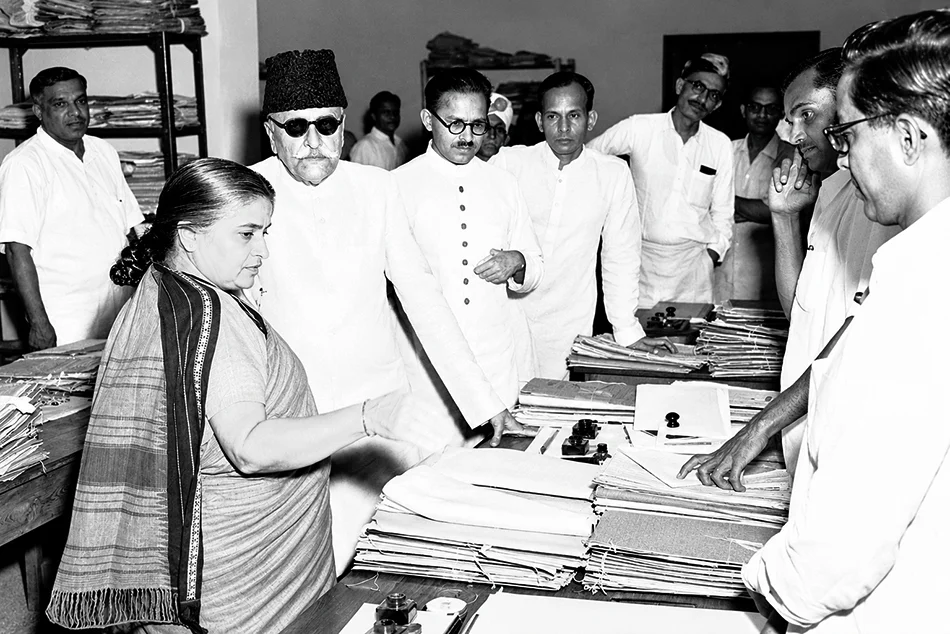
For this reason, his birthday, November 11, is celebrated as National Education Day.
If people genuinely dream of building an India based on Maulana Azad’s vision of ‘Ummatul Wahida’, they must create an atmosphere in which people of every caste, religion and gender living in India feel that this country belongs to all of us.
That is possible only through an atmosphere of love, mutual harmony and brotherhood, not through the force of lathis and sticks or modern weapons. When we teach a small child at home with love and affection, the child learns something. So, if we use force against a population that constitutes a significant one-fourth of society, what will be the impact?
Thus, today, on the occasion of his 138th birth anniversary, we must pay proper tribute to Maulana Azad. Otherwise, what will happen to his dream of an undivided India?
[The writer, Dr. Suresh Khairnar, is Ex-President Rashtra Seva Dal. The views expressed here are the author's own. Some of the comments made here, especially about Maulana Azad's writings on religious scriptures and understanding of the Holy Quran, require further authentication and deliberation.]
Follow ummid.com WhatsApp Channel for all the latest updates.
Select Language to Translate in Urdu, Hindi, Marathi or Arabic