Stage Set for Next Phase of War Against Iran?
Israeli and American remarks in New York signal an emphasis on readiness and deterrence, not a publicly announced decision to attack Iran.
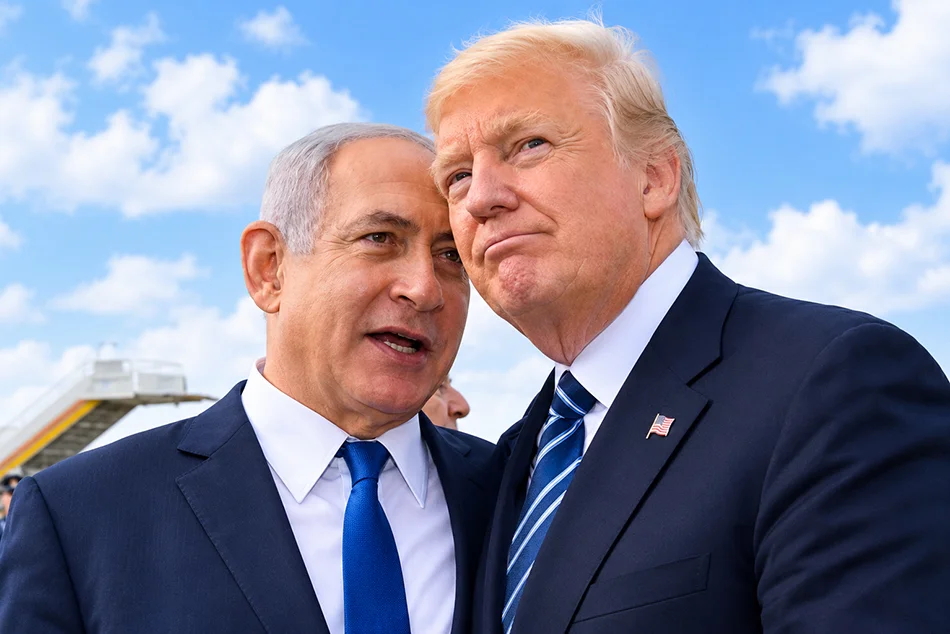
Israeli and American remarks in New York signal an emphasis on readiness and deterrence, not a publicly announced decision to attack Iran. Read together, they point to a volatile mix of military preparation, diplomatic pressure and regional risk, with consequences extending beyond the Middle East to energy security, shipping and India’s strategic balancing.
Israeli-American preparations for a possible renewed war with Iran are intensifying, as reports say Benjamin Netanyahu has called Donald Trump daily in recent days urging renewed strikes, while Washington weighs diplomacy and pressure. Remarks at the Israel Hayom Summit in New York underscore readiness, but do not confirm an imminent attack.
The “Israel Hayom Summit” is a newspaper-organised conference, not a government or military planning forum. Its second New York edition was held in Manhattan on November 11, bringing together Israeli and American political, security and community figures to discuss bilateral relations, regional security and diplomacy. Boaz Levy, chairman of Israel Aerospace Industries, spoke in an interview with the newspaper Israel Hayom; his comments represent his assessment and do not constitute an official Israeli decision to resume hostilities.
The Times of Israel and Axios separately reported that Netanyahu pressed Trump in a recent call to strike Iran soon, citing Israeli and US sources.
Meanwhile, Israel Aerospace Industries (IAI) chairman Boaz Levy told Israel Hayom at its November 11 summit that Israel must prepare for another war with Iran, saying the question was “when,” not “if.”
What the Statements Say, and What They Do Not
Levy cited the Arrow missile-defence system’s performance against Iranian barrages, claimed a 92% interception rate, and said Israel and the United States were expanding interceptor production and seeking higher-altitude interception capabilities. Levy also described an Israeli satellite guiding a fighter pilot in real time, presenting space-based systems as increasingly important to military operations. His comments are significant, but they are those of a defence-industry leader, not an Israeli government announcement of a strike plan.
The American remarks at the same summit were more political. Israel Hayom reported that US Ambassador to the UN Mike Waltz described Iran’s regime as weaker than ever and said the Abraham Accords were expanding. In a separate September interview with Al-Monitor, Waltz said the door remained open for Iran to return to negotiations and argued that time favoured Washington. Together, these comments frame pressure and diplomacy as concurrent approaches; they do not amount to a public US commitment to launch another attack.
That distinction matters amid reports of military preparations. NPR reported in October, citing a person briefed on US-Israeli war planning, that the two countries were preparing for a possible attack after the US midterm elections. The report also said the force buildup could be intended to pressure Tehran into a deal. The claim was attributed to an unnamed source, not announced as official policy. Levy’s remarks reinforce the sense of long-term readiness, but do not independently confirm an imminent operation or reveal its objectives.
Regional Security: Deterrence, Escalation and Miscalculation
The first regional implication is that missile defence is being treated as an enduring requirement, not a temporary response. Levy’s description of interceptor production and upgrades suggests Israel expects Iran’s ability to launch ballistic missiles to remain central to future security planning. Improved interception could strengthen deterrence by reducing the expected damage of an attack.
But it cannot guarantee protection: even a high interception rate leaves the possibility of impacts, while the cost and availability of interceptors can become constraints during prolonged or repeated attacks. The 92% figure is Levy’s claim as reported by Israel Hayom, not independently verified data.
The broader danger is a security dilemma. Preparations Israel describes as defensive, more interceptors, better sensors and space-enabled coordination, may be interpreted in Tehran as groundwork for renewed offensive action. Iran could then seek to restore deterrence through its own military preparations or pressure on regional shipping and infrastructure. The result could be a cycle in which each side says it is preventing the next attack while making the other side more fearful of being struck first.
Waltz’s remarks that Iran is weakened may also carry a risk if interpreted as evidence that coercion is working and should be intensified. Conversely, the stated openness to talks leaves room for diplomacy. The strategic choice is not simply “strike or negotiate”: military readiness can underpin negotiations, but it can also narrow the space for compromise if leaders publicly present war as inevitable. Recent reporting on the conflict’s maritime and economic effects makes the costs of miscalculation especially plain.
Any renewed confrontation could involve more than Israel and Iran. NPR reported that Iranian officials had warned of retaliation against US interests and infrastructure in countries participating in a conflict. Such threats raise the exposure of Gulf states hosting US forces, as well as commercial shipping and energy infrastructure. The Center for Strategic and International Studies has described the Strait of Hormuz as carrying roughly a quarter of global oil flows and documented significant disruption to shipping during the conflict. A renewed crisis around the waterway could transmit military escalation into global energy markets.
Israel-US Cooperation: Deeper Integration, Shared Risks
Levy’s emphasis on equal US-Israeli funding for Arrow cooperation presents missile defence as a shared industrial and strategic project. His account of satellite information reaching a fighter pilot’s cockpit also points to closer integration between space-based sensing and military operations. If such capabilities continue to develop, cooperation may extend beyond hardware to data, communications, research and operational coordination.
The summit’s discussion of the US Golden Dome initiative further places Israeli systems within a broader conversation about missile defence cooperation, though Levy’s remarks do not establish a specific agreement or deployment.
This partnership has two sides. Shared development may spread costs, increase production capacity and improve interoperability. But it can also make Washington more directly implicated in an Israeli-Iranian confrontation, whether through defence support, intelligence cooperation or regional force deployments.
The distinction between helping Israel intercept missiles and participating in offensive action would therefore be politically and strategically consequential.
The American messages reported at the summit underline that policy tension. Waltz’s assessment that Iran is weakened signals confidence in pressure; his earlier statement that negotiations remain possible signals a diplomatic alternative.
Neither resolves the question of what Washington would support if Israel sought renewed military action. NPR’s report of preparations, alongside its note that they could be intended to press Iran toward a deal, illustrates why readiness should not be mistaken for a final decision.
India: Energy Exposure and Diplomatic Balancing
For India, the most immediate concern is not the rhetoric itself but the risk of renewed disruption. India is a major energy importer, and its exposure to Gulf supplies and the Strait of Hormuz makes instability there economically consequential.
The Atlantic Council reported that before passage restrictions began in March, about 45% of India’s crude imports, half its LNG imports and 90% of its LPG imports passed through the strait. It also described India as the world’s third-largest oil importer and a major refiner and exporter of petroleum products. Higher oil prices or shipping disruption could therefore affect domestic costs as well as trade.
A renewed US-Israeli campaign would also complicate New Delhi’s diplomacy. India has significant interests in relations with the United States, Israel, Iran and Gulf Arab states. It would likely face pressure to support de-escalation and protect trade routes while avoiding alignment that could damage ties with any of these partners.
The precise diplomatic response would depend on the scale of hostilities, the parties involved and whether shipping or Indian nationals were directly affected.
The conflict also highlights the limits of short-term supply substitution. Atlantic Council analysis points to the potential for expanded US energy exports to support India’s diversification, while stressing the value of long-term cooperation
But alternative suppliers and routes cannot remove the price effects of a global supply shock overnight. India’s resilience depends on diversified sourcing, adequate reserves and secure maritime passage, not solely on one bilateral relationship.
The clearest reading of the New York remarks is therefore preparedness, coupled with strategic messaging, not a confirmed timetable for attacking Iran.
Levy described the defence industry’s expectation of future conflict; Waltz presented a weakened Iran and an open door to negotiations.
Whether those positions reinforce deterrence or accelerate escalation will depend on decisions not disclosed at the summit: the terms offered in diplomacy, the limits set on military action and the steps taken to protect regional shipping and civilian infrastructure.
[The writer, Asad Mirza, is Delhi based Journalist and Author.]
Follow ummid.com WhatsApp Channel for all the latest updates.
Select Language to Translate in Urdu, Hindi, Marathi or Arabic