Conf emphasising authentic sources, unbiased writing of history opens in Bhopal
A two-day conference on history began today i.e. Saturday November 14, 2026 at Saifia College in Madhya Pradesh capital Bhopal.
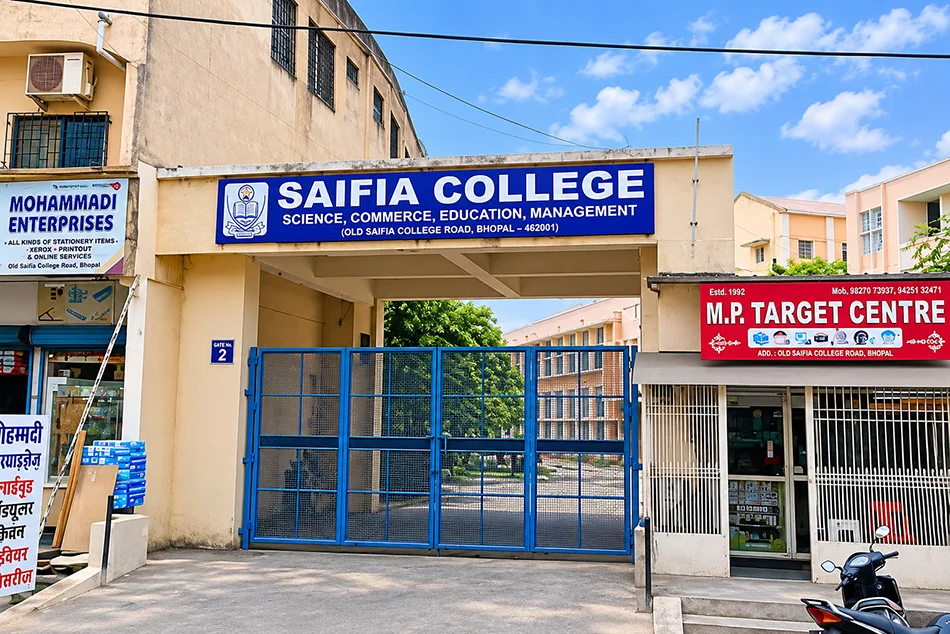
Bhopal: A two-day conference on history began today i.e. Saturday November 14, 2026 at Saifia College in Madhya Pradesh capital Bhopal.
Historians, academics, and intellectuals from various fields shared their views on the true nature of Indian history, the authenticity of historical sources, impartiality in historical writing, and the ways of presenting history in the present era.
Speakers emphasized that for the progress of any country and society, it is crucial to understand its history in the correct perspective and pass it on to future generations.
Emphasis on a fresh understanding of history and authentic sources
Convener of the conference, Farooq Jami Sahib, stated that the objective of this conference is to highlight aspects of the country's nearly 1,000-year history that have not received adequate attention. He added that efforts are being made to write and present history in a new way in the current era. Historical events are being distorted through films and social media, creating misconceptions in society.
He stated that the study of history should also take into account available ancient written material and various historical sources. Until now, history writing has relied heavily on Persian sources. James Smith Henry's periodization and interpretations of medieval history also need to be reconsidered. He stated that when prevailing beliefs are re-examined based on historical evidence, many new facts and interpretations emerge. Instead of focusing too much on conflicts and struggles in medieval history, the social, educational, and cultural contributions of that period should also be highlighted. Even on topics like the destruction of Nalanda University, a comparative and critical study of various sources is essential. He stated that understanding history requires an approach based on authentic sources and evidence.
History provides society with identity and future direction
One of the speakers, Athar Habib Sahib, said that knowing a country's history is crucial for its progress. Current strategies determine future direction. To build a successful society, we must take a close look at our history.
He stated that history is not merely a record of past events, but the collective memory of human civilization. Nations that forget their history gradually lose their identity. India is a prime example of this, where, despite the influence of diverse cultures and traditions, the civilizations, customs, and cultural traditions of all religions still exist. This diversity can serve as an example for the entire world.
The need to move beyond the communal narrative of history
Shadab Musa, National Convener of the Indian History Forum, stated that the ongoing debate regarding Indian history poses a significant challenge that will impact the country's future. History is a society's collective memory, through which it constructs its identity.
He explained that in 2024, a decision was made to work with historians to establish objective parameters, specifically for medieval history. He noted that today, misleading historical information is being disseminated through various mediums, from WhatsApp forwards to social media reels and film trailers. A mixture of incomplete facts and fiction is being presented as history. He also expressed concern over the removal of certain history topics from NCERT textbooks.
Shadab Musa stated that it is extremely dangerous to foster notions based on hatred and communalism in the minds of the younger generation. Citing the example of Victoria House, he said that despite the contributions of people from different religions in the 1857 War of Independence, the contribution of the Muslim community has not been adequately highlighted.
He said that the removal or limitation of history from schools, educational institutions, and universities is worrying. There is a huge gap between the research available in libraries and the information available to the general public. The Indian History Forum aims to bridge this gap. To do this, history must be studied without a communal perspective. He said that historical facts must be brought to society's attention through research, seminars, and conferences.
History is a trust, it must be passed on to the next generation impartially
In his address, Dr. Hamid Beg Sahib stated that knowledge of true history is one of the most important topics of discussion in India today. He questioned why different narratives of history are created and what are the motives and consequences behind them. He said that sometimes, attempts are made to impose a particular narrative on society to maintain power and dominance.
He said that if the Muslim community calls for highlighting its historical contributions, sacrifices, and role in the country's development, it is not just the responsibility of Muslims, but the collective responsibility of every section of the country to work together to bring India's glorious history to the fore.
Dr. Beg said that history is a trust and should be passed on to the next generation without discrimination or prejudice. No one's thoughts and ideas should be forcibly dominated. Children should be told about the contributions their ancestors made to the country's progress so that they can play their role in it with a positive mindset.
He said that changing the names of cities, roads, and buildings or attempting to erase historical monuments cannot be a measure of national progress. He also expressed the need to control tendencies that damage religious sites and harbor discriminatory thinking.
He further stated that the patriotism of those who consider this country their home should not be judged on a single criterion. Repeatedly demanding proof of loyalty from Muslims, pressuring them to utter specific words, or questioning their patriotism is not the path to national progress. The nation's development is possible only through mutual trust, respect, equality, and the recognition of a shared heritage.
Research and dialogue will reveal the true nature of history
Speakers at the conference unanimously emphasized that history should not be limited to the perspective of any one community, ideology, or power. Historical events should be evaluated based on authentic documents, archaeological evidence, literary sources, and unbiased research.
The two-day conference aims to promote serious academic dialogue on various aspects of history, factually examine prevailing notions, and disseminate the country's shared cultural heritage to the new generation.
Follow ummid.com WhatsApp Channel for all the latest updates.
Select Language to Translate in Urdu, Hindi, Marathi or Arabic