Tolstoy’s Engagement with Islam and Prophet Muhammad
Leo Tolstoy’s engagement with Islam was neither a concealed conversion nor a decorative flourish in his quarrel with the Russian Orthodox Church
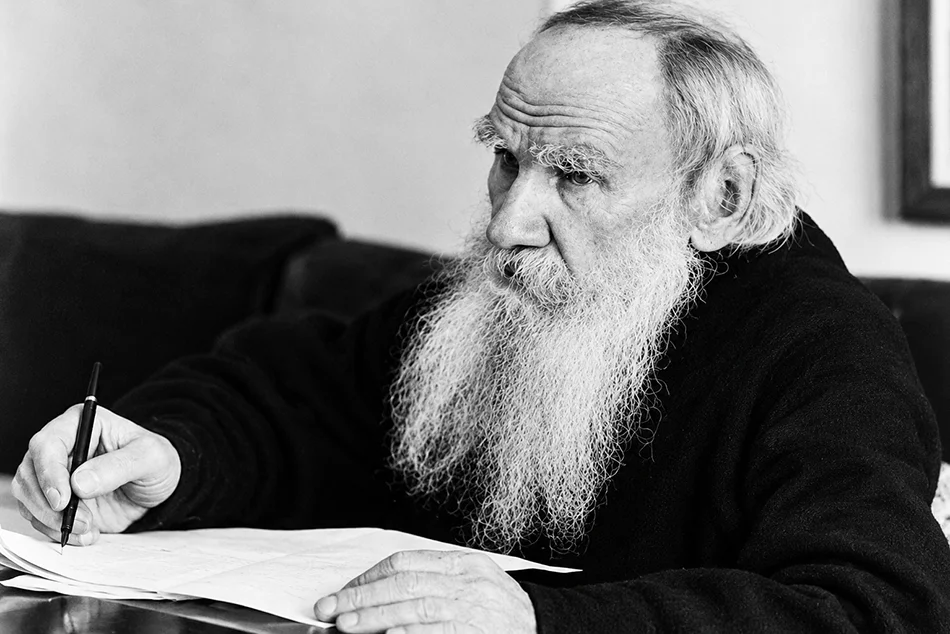
Tolstoy’s engagement with Islam was neither a concealed conversion nor a decorative flourish in his quarrel with the Russian Orthodox Church. It was a sustained, partial and documented moral convergence. Formed in the lecture rooms of Kazan and the war zones of the Caucasus, sharpened by his break with ecclesiastical Christianity, and tested in correspondence and editorial work, the encounter reveals a European aristocrat who recognised in the Prophet Muhammad a reformer of the poor and the despised, and in Islam an ethic of justice and mercy set against the alliance of throne, altar and army.
This paper reconstructs the verified record, separates it from circulating attributions of doubtful provenance, marks the clear limits of the convergence, and reads the whole through the lens of Islamic liberation theology. In that tradition, tawhid (Oneness of God or monotheism) refuses every human lordship, right practice outranks self-congratulation, and solidarity with the oppressed is the test of faith.
The argument has three parts. First, Tolstoy’s Islam was real but bounded: lifelong, sympathetic and increasingly serious, culminating in his selection and publication of Prophetic sayings, yet never a conversion and always filtered through his rationalist, ethical reading of the Gospels. Second, much of what circulates today as “Tolstoy on Islam” rests on quotations whose provenance cannot be verified; a responsible account must distinguish the documented record from the folklore that has grown around it. Third, the documented record is more interesting than the folklore.
Tolstoy’s Muhammad is a moral teacher who refused priestly mediation and divine pretension; Tolstoy’s Islam is an ethic of justice and mercy. That is precisely the terrain on which Islamic liberation theology stands. Tolstoy can therefore be read neither as a trophy convert nor as a mere curiosity, but as a witness from within the Russian empire who recognised, in the figure of the Prophet, a moral revolution on behalf of the oppressed, while remaining, in his absolute doctrine of non-resistance, a difficult and instructive interlocutor for any theology that takes struggle seriously.
Method and Standpoint
Three scriptural anchors recur. The Quran promises to favour those who were oppressed in the land and to make them leaders and inheritors (Quran 28:5). It asks why believers would not fight in the cause of God and of the oppressed men, women and children who cry out for deliverance (Quran 4:75). It demands that believers stand firmly for justice, even against themselves, their parents and their kin, and not let hatred of a people lead them into injustice (Quran 4:135; 5:8).
When this paper speaks of the spirit of liberation theology it means this complex of texts and commitments, and it deliberately takes the standpoint of the poor, the colonised and the persecuted as an epistemic starting point.
This standpoint shapes the reading of Tolstoy. A liberationist approach is not interested in recruiting a famous name to prove Islam’s superiority. It asks three questions. Where did Tolstoy stand in relation to the structures of imperial and ecclesiastical power that oppressed Russia’s peasants and Muslims alike? What did he recognise in the Prophet that corresponded to his own critique of those structures? And what can Muslims learn, critically, from the places where he disagreed with them, particularly on violence?
Edward Said’s analysis of Orientalism further requires that admiration be examined as carefully as contempt, since both can treat the East as an object for the European observer. Tolstoy’s Islam must therefore be read with suspicion as well as gratitude. The integrity of the narrative is itself a liberationist concern: a theology that rests on unverified quotations is a theology built on sand, and the oppressed deserve better foundations.
Kazan, the Caucasus and the Formation of a Sympathy
Tolstoy’s first formal contact with Muslim learning came in 1844 at Kazan University, a city on the Volga with a large Tatar Muslim population and one of the principal centres of Oriental studies in the empire. He entered the faculty of Oriental languages, where Arabic and Turkish-Tatar were taught, before transferring to law the following year, and he left without a degree.
The episode is short and its direct intellectual yield modest, yet it is symbolically significant. The future novelist began his adult education in a city where the Orthodox cathedral and the mosque stood within sight of one another, and where the empire’s Muslim subjects were not exotic travellers’ tales but neighbours, servants and teachers. Popular accounts sometimes inflate this episode into evidence of fluency and deep early knowledge. The biographical record supports only a more modest claim: exposure, curiosity and some linguistic training, interrupted.
The more consequential encounter was military. In 1851 Tolstoy followed his elder brother to the Caucasus and joined an artillery brigade. He remained there, on and off, until 1854. These years supplied the material for The Raid, The Cossacks and, half a century later, Hadji Murat. They also made him a participant in the conquest.
The Russian advance into Chechnya and Dagestan, resisted by the Muslim highlanders under a succession of imams culminating in Shamil, was one of the longest and most brutal colonial wars of the nineteenth century. Tolstoy served in the force that burned villages, cut forests and starved out mountain communities.
Scholars of Russian literature and empire have shown how the Caucasus functioned in the Russian imagination as a space of romantic projection: the noble but savage mountaineer, the fierce Muslim fighter, the sublime landscape that awaits civilising force. Tolstoy’s early fiction participates in these tropes while also straining against them.
In The Raid the narrator is struck by the disproportion between the beauty of the mountains and the senseless killing in the foreground. In The Cossacks the young nobleman Olenin is humbled by the vitality of the highland world. The Muslim Chechen remains an Other, but he is no longer a mere target.
Tolstoy therefore came to Islam through a particular door: he met it first as the faith of a people whom his own state was destroying. The root of his sympathy is already liberative. It was formed under the sign of injustice, long before it acquired a theology.
Russian Muslims such as Ismail Gasprinsky sometimes accepted the empire’s language of the Russian as the older brother and the Muslim as a child needing instruction. Tolstoy, so far as the surviving letters show, never addressed a Muslim in that tone. His later letters to Muhammad Abduh and Mufti Muhammad Sadiq are letters between equals; his courtesy had a politics that deserves to be recorded as such.
Crisis, Gospel and Excommunication
Around the time he finished Anna Karenina, Tolstoy fell into a profound crisis of meaning, narrated in A Confession. A man of fame, wealth, family and health found himself unable to answer a single question: what will come of what I do today and tomorrow, what will come of my whole life?
He looked in turn to science, philosophy and the lives of the wealthy and learned, finding none, and finally turned to the faith of the Russian peasants. The resolution he reached was not a return to church doctrine but a radical reduction of Christianity to an ethical core.
In What I Believe and in his translation and harmonisation of the Gospels he argued that the heart of Jesus’ teaching is found in the Sermon on the Mount, particularly the commandment not to resist evil by violence, and in a handful of related precepts: do not be angry, do not lust, do not swear oaths, do not resist the evildoer by force, and love your enemies. Everything in the church’s theology that went beyond these precepts he came to regard as a later accretion serving the interests of power.
The Holy Synod formally excommunicated him in February 1901. Tolstoy’s reply accepted the substance of the charge: he did reject the Trinity, the divinity of Christ, the Virgin birth, original sin, the sacraments and the whole apparatus of priestly mediation. He affirmed belief in God, in the Spirit of love, and in the law of Christ understood as the Sermon on the Mount. The break was one of conscience, not caprice.
Two features of this crisis matter for what follows. First, Tolstoy’s “Islam” is a relational idea, defined against Orthodoxy with its icons, sacraments and Trinity, and it shifts with the target of his criticism. Second, his critique of ecclesiastical power has a Quranic parallel that Muslim readers will recognise.
The Quran reproaches communities that took their scholars and monks as lords besides God (Quran 9:31) and insists that Jesus was a messenger and not one of a divine three (Quran 4:171; 5:116–17). Tolstoy and the Quran meet on this ground more securely than on any other.
It is essential to understand this position clearly, because it determines everything Tolstoy would later say about Islam. He read other religions with the same lens he applied to Christianity. His question was not whether a tradition’s metaphysical claims were true—a question he considered largely unanswerable—but whether its core moral teaching led human beings towards love, humility and justice, and whether its institutions had distorted that teaching to serve the strong.
He accepted the existence of God as the source of life and the moral law, but his God was not a person who intervenes in history, and he was suspicious of miracles, dogmas and revelation in any literal sense. In this respect his stance towards the Quran and the Prophet was always more Kantian or Unitarian than Islamic, even when his admiration was real.
The Sayings of Muhammad
The most solid documentary basis for Tolstoy’s engagement with the Prophet is a small book and its Russian offspring. In 1905 the London publisher Archibald Constable issued The Sayings of Muhammad, a selection of prophetic traditions translated and arranged by the Bengali scholar Abdullah al-Mamun Suhrawardy as part of the Wisdom of the East series.
Suhrawardy, later a member of the Indian Legislative Assembly and knighted in 1931, was then a young academic. The volume drew the attention of readers far outside Muslim circles. Reference sources record that its publication prompted a correspondence between Suhrawardy and Tolstoy, and that, according to one of Tolstoy’s daughters, a copy of the Sayings was found in the pocket of the overcoat he was wearing when he died.
Out of this encounter came Tolstoy’s own project. In 1908 he read the Suhrawardy volume and selected from it a body of sayings that he judged suitable for the Russian common reader. The booklet appeared in October of that year through Posrednik, the publishing house he had co-founded in the 1880s with Vladimir Chertkov to bring cheap, morally serious literature to the peasantry.
The title under which it appeared translates as Sayings of Muhammad Not Included in the Koran. The title betrays a certain imprecision, since the sayings are hadith, distinct from the Quran as divine revelation, and Tolstoy seems not to have fully absorbed that distinction. Nevertheless, the intention is clear: to put before Russian readers those prophetic maxims that resonated with his own moral sensibility.
Posrednik’s choice to publish the booklet deserves reflection. The press existed to circulate texts in a form that peasants and workers could buy and understand, and its catalogue was a counter-canon to the official religious and patriotic literature of the empire. To place the sayings of the Prophet of Islam in that catalogue, in the years after Russia’s defeat by Japan, the revolution of 1905 and the repression that followed, was a quiet but pointed act. It told Russian readers that wisdom did not belong to one confession, and it did so at a time when the empire’s Muslim subjects were being treated as objects of suspicion and missionary pressure.
The sayings Tolstoy preferred emphasise brotherly love, the dignity of labour, kindness, forgiveness and the primacy of conduct over profession. These are the sayings on which a Muslim liberation theology would also build.
The Prophet who said that the believer is not one who eats his fill while his neighbour goes hungry, and who bound the rich to the poor by the obligation of zakat, is a Prophet whose words Tolstoy could read without having to translate them into a different politics. By setting aside what he could not test by conscience and keeping what answered to the Sermon on the Mount, Tolstoy performed with the hadith literature what he had performed with the Gospels.
A Muslim modernist and a Christian dissenter, working in two languages, arrived by independent routes at a moral selection of the Prophetic record.
The introduction to the Russian collection, signed with the initials N.G. and issued under Tolstoy’s editorship, describes the essence of Islam as the unity of God, the loving and just character of God, the transience of the world, and a love of God expressed in prayer, help and forgiveness.
It also contains two passages that Muslim authors rarely quote. The first treats Muhammad’s prophethood psychologically: he believed so strongly in his message that he came to the conclusion that he was a prophet charged with destroying false beliefs. The second says that Muhammad’s zealous followers, angered by idolatry, began to use him as an instrument for converting people by force, and that this violence explains why Islam met resistance from peaceable Buddhists and Christians.
Both passages are important because they show the limits of the convergence. The first is the standard move of nineteenth-century rationalist biography. A Muslim cannot accept it, because the Quran presents revelation as coming from outside the Prophet (Quran 53:3–4), but it is not a polemic.
The second can be answered with history: the spread of Islam owed far more to preaching and example than to compulsion, and the Quran itself declares that there is no compulsion in religion (Quran 2:256). Honesty also requires the concession that early Muslim history includes wars, and that Tolstoy’s judgement falls equally on every religion, including the Church that excommunicated him.
What Tolstoy Admired
The pattern of Tolstoy’s admiration can be organised under four headings.
- First, monotheism without mystery. Tolstoy found the doctrine of the Trinity incomprehensible and an offence against reason. Islamic tawhid struck him as clearer and more honest. In a liberationist register, however, tawhid has a significance that goes beyond clarity. The declaration that there is no god but God is first of all a negation: it negates every false sovereignty, whether of Pharaoh, Croesus or the priest, and in that negation the human person is released from servitude to other humans.
Tolstoy, who had spent decades arguing that no tsar, bishop or general could command a Christian’s conscience, would have recognised the logic even if he did not use the vocabulary.
- Second, the absence of a sacramental priesthood. Sunni Islam in particular has no ordination that makes a person an indispensable channel of grace, and no institution equivalent to the Synod that could excommunicate a believer from the community of salvation. The Quran’s own criticism of religious leaders who devour the wealth of the people (Quran 9:34) supplied an internal precedent for the anticlericalism that he voiced.
For liberation theologians the lesson is double: the tradition contains a standing critique of clerical privilege, and that critique must be applied to Muslim establishments as honestly as Tolstoy applied it to his own.
- Third, justice. The Quran commands believers to be steadfast in justice, even against themselves and their families (Quran 4:135), and it frames the care of orphans, the feeding of the hungry and the freeing of the enslaved as the steep path that distinguishes true piety (Quran 90:11–16; 107:1–7).
These passages correspond closely to the preoccupations of Tolstoy’s late fiction and journalism, in which the plight of peasants, prisoners, conscripts and the landless is the criterion by which institutions are judged. When a thinker with those commitments reads a prophetic tradition that forbids usury, commands almsgiving and denounces the hoarding of wealth, the resonance is not accidental.
- Fourth, self-discipline and moral purification. In his later decades Tolstoy gave up meat, tobacco and alcohol, took to physical labour and pressed on his family the simplicity of life he believed the Gospel required. The Islamic discipline of Ramadan, in which the wealthy feel hunger and the poor are remembered, must have seemed to him a practical instance of the moral life: a liturgy that disciplines the self for the sake of others rather than elevating the self before God.
A liberation theologian would add that the discipline of the fast is also a school of solidarity.
Taken together, these four admirations describe a Tolstoy who read Islam through his own critique of power and not as a system of metaphysics. He is drawn to what in Islam is anti-hierarchical, anti-idolatrous and ethically demanding.
He is almost silent on the features that Muslims themselves would put first: the status of the Quran as the speech of God, the finality of the Prophet’s mission, and the structure of prayer and law. This asymmetry simply marks the boundary between his Islam and the Islam of believers.
An Audit of Attributed Quotations
No discussion of Tolstoy and Islam can avoid the quotations that circulate in articles, speeches and social media. One statement beloved of Muslim websites, that Islam is the final stopping point of any rational person, is reported by experts on Tolstoy’s work not to occur in any of his writings. Another, that Muhammad “has always been standing higher than Christianity” and that there is “no mystery or secret in it,” appears without dated source.
A third calls the Prophet one of the greatest reformers in history. A further, more vivid statement claims that Muhammadanism stands incomparably higher than the worship of the cross, and that if a person had the right to choose, every sane person would without hesitation choose the one God and his Prophet.
The closest verifiable source for the most famous line is the letter of 15 March 1909 to Elena Vekilova. There Tolstoy says that in its outward form Islam stands higher than the Orthodox Church, and that a sensible person forced to choose between the two would prefer a faith with one God and his Prophet to the Trinity, redemption, sacraments, saints and icons.
The circulating English line is best understood as a compressed and re-translated echo of that passage. The difference is not trivial. Tolstoy compares Islam with Orthodoxy, not with the teaching of Christ, which he placed above every institution.
A simple rule applies. A statement is verified when it can be traced to a dated letter, diary entry or edited text cited by a scholar. It is reported when a scholar cites it from a secondary compilation or a witness. It is circulating when no such trail is found.
The verified record shows a man who was cordial to Muslim correspondents, deeply interested in the Prophet’s moral sayings, ironic about his own “Mahometan” label, and unwilling either to convert or to hide his reservations.
Claims that Russian secret agencies hid a treatise, or that Tolstoy secretly converted and wished a Muslim burial, lack documentary support. He was buried in a simple grave in the woods at Yasnaya Polyana, without religious rites, in accordance with his own wishes.
The integrity of the narrative is itself a liberationist concern. Muslim communities have been burned by trophy narratives that substitute celebrity endorsement for justice. A Tolstoy who is accurately described—an independent moral thinker with real admiration for the Prophet and real differences from the tradition—is a better partner in struggle than a Tolstoy of legend.
Hadji Murat: Islam, Empire and the Dignity of Resistance
Hadji Murat, written between 1896 and 1904 and published only in 1912 after Tolstoy’s death, is the largest piece of evidence for his attitude to Muslims because it does not argue; it dramatises.
Its hero is an Avar commander who, to avenge himself on the imam Shamil, makes an uneasy alliance with the Russians he had been fighting. The famous frame is the thistle: the narrator notices a Tartar thistle crushed by a cart wheel that has risen again, still alive, and the image reminds him of Hadji Murat. The thistle is a figure of stubborn life in the face of crushing force.
Tolstoy’s depiction of the Muslim highlanders refuses caricature. Hadji Murat is courageous, devout, shrewd and tender towards his family. The mountain villagers live ordinary lives of hospitality, prayer and work. The Russian soldiers are not heroes but frightened, bored, often cruel young men following orders.
The most shattering section depicts a Russian raid on a Chechen village: soldiers destroy the settlement, foul the well, defile the mosque and drive out the survivors. Tolstoy narrates the aftermath with the pitiless clarity of a man who had once been part of such raids.
The portraits of Tsar Nicholas I and Imam Shamil, set side by side as two rulers who govern by fear, make it clear that Tolstoy’s target is not one religion or one nation but the structure of domination wherever it appears.
A liberationist reading must be honest about the novella’s ambivalence. Tolstoy does not idealise the Muslim imamate. Shamil is portrayed as a hard and suspicious ruler whose authority rests on religion and fear in equal measure.
The asymmetry of power nevertheless matters morally. The Russians are the invaders, the highlanders are defending their homes, and Tolstoy’s sympathies are plainly with the latter, even as he refuses to sanctify the form their defence takes.
The Islam in the book is the Islam of daily conduct—the form of Islam that Tolstoy thought most worth admiring and with which his own theology had least difficulty. What he offers is respect without appropriation, which is more than most of his contemporaries offered and less than the websites claim.
Muslim Interlocutors
In the spring of 1904 Tolstoy received a letter from Muhammad Abduh, then Grand Mufti of Egypt. Tolstoy replied on 13 May 1904 that although the Mufti was of a different faith from the one in which he had been born, they shared one faith, for faiths are many but the true faith is one: to acknowledge God and his law, to love one’s neighbour and to do to others as one would be done by.
All true religious principles flow from this, and they are the same for Jews, Brahmins, Buddhists, Christians and Muslims. The more religions are loaded with dogma, precept, miracle and superstition, the more they divide people; the more they are purified, the closer they come to the common unity of humankind.
Abduh had been imprisoned and exiled for his support of the Urabi movement and returned to become the leading figure of Islamic modernism. The mutual recognition of two dissenters, each attacked by the authorities of his own religion, is part of what the correspondence means.
Tolstoy’s formula echoes the Quran’s own account of religious plurality: for each community God appointed a law and a way, and the communities are told to compete in good works (Quran 5:48).
The difference lies in the status of the particular. For Tolstoy the outer forms of religion were accretions that obscured the core. For the Quran the diversity of laws is itself willed. A universalism that dissolves particular traditions tends in practice to favour the one tradition that already controls the language of universality. A pluralism that respects the integrity of each law and way, while holding all to account for justice, protects minorities.
The correspondence with Mufti Muhammad Sadiq of Qadian is equally revealing. Tolstoy replied that proofs of the death of Jesus and the discovery of his tomb were useless because no reasonable person believes in resurrection, that he had no interest in the claims made for Mirza Ghulam Ahmad, and that humanity needed no Messiah but only reasonable religious teaching.
In a second letter he agreed that the greatest evil of the age was the absence of true religion, and added that every person with a religious feeling must communicate it to neighbours by all means, especially by a good life. This verified sentence is the best commentary on the circulating claim that a good religion should be shown through action.
Russian Muslims responded warmly. Tolstoy’s rejection of rational civilisation in favour of the peasant commune would have set him at odds with the reformist jadids and closer to the traditionalists, yet the spectacle of the empire’s most famous writer taking the Prophet seriously was heartening.
The contrast with his reaction to the Babi and Baha’i movements is instructive: he tested every religious movement by one standard—does it make people more loving and more reasonable?—and Islam, in the forms he met, passed that test better than most.
Limits and Dissonances
The convergence stops at several decisive points.
On the person of Jesus, Tolstoy and the Quran agree in denying divinity, yet the grounds differ and the affirmations diverge. Tolstoy rejected the virgin birth and resurrection; the Quran affirms both and the signs given to Jesus. More fundamentally, the Quran presents itself as revelation brought by an angel; Tolstoy’s introduction explains Muhammad’s conviction as a psychological process.
On ritual, Tolstoy found abstract disciplines of self-restraint appealing, but there is no evidence that he regarded Muslim prayer, fasting, zakat or pilgrimage as binding. For Muslims these are not an outward shell around an ethical kernel but disciplines of solidarity. A liberation theology that prized ethics but neglected worship would drift towards the Tolstoyan reduction that Muslims have good reason to resist.
On armed struggle the tension is sharpest. Tolstoy’s non-resistance is absolute. The Quran permits fighting against oppression, to protect monasteries, churches, synagogues and mosques (Quran 22:39–40), and calls believers to defend the helpless (Quran 4:75), while tightly bounding the permission and forbidding transgression of limits.
Esack reads jihad as a struggle for justice that may, in extremity, become armed, while insisting on its ethical limits. The tension is lived in Hadji Murat itself, where a writer who condemned all violence gave his last and warmest portrait to a warrior.
Both the absolute refusal of violence and the refusal to deny the oppressed the right of defence are serious; neither should be silenced in the name of the other.
On women and marriage, Tolstoy’s praise of the Muslim ideal of monogamy with polygamy as a concession echoes a modernist tradition that reads the Quranic condition of justice between wives as making polygamy exceptional. It also deserves limits. Tolstoy was a poor guide on women, and the praise rested on a comparison with the double standards of Christian Russia, not on the experience of Muslim women. Muslim women’s own readings of the Quran are the authorities here.
Finally, there is the Orientalism question. Tolstoy’s “Islam” was in part a bundle of qualities he found lacking in the Russian aristocracy: simplicity, closeness to the earth, an inner life, freedom from ritual. The Islam of the madrasa, the mosque courtyard and the law court appears little in his writings.
Yet the letters to Abduh and Sadiq, the Sayings, and the warm response of Russian Muslims are evidence for a more complicated picture than pure domination. Tolstoy’s Islam was both a mirror and a window.
Nonviolence and Afterlife
The most consequential afterlife of Tolstoy’s thought lay in India. On 14 December 1908 he wrote A Letter to a Hindu to Tarak Nath Das. Gandhi wrote to him on 1 October 1909 asking permission to reprint it; Tolstoy agreed; in 1910 Gandhi named his settlement near Johannesburg Tolstoy Farm.
Tolstoy’s argument was that Indian subjection was sustained by Indian cooperation, and that love, not force, was the remedy. He did not tell Indians to submit; he told them to withdraw their cooperation from a system that could not survive without it.
In the Caucasus the tradition took the form of Kunta-Hajji Kishiev, a Qadiri shaykh known as an ideologue of nonviolence and passive resistance. Tolstoy cited him more than any other Muslim leader. Claims of direct personal contact remain unproven.
What can be said is that Tolstoy and Kunta-Hajji, independently, reached comparable positions, and that Muslims who wish to claim a tradition of nonviolence do not need Tolstoy to authorise it. The chain from Kunta-Hajji to Tolstoy to Gandhi is a reminder that nonviolence in the modern world has been a conversation across religions.
A Muslim liberation theology that wishes to take nonviolence seriously should do so without embarrassment about its sources, for the Quran itself instructs believers to stand firm for justice even against their own inclinations (Quran 5:8).
There is also a warning. Nonviolence chosen by the oppressed as a strategy of dignity is not the same thing as non-resistance preached to the oppressed by those who oppress them. Tolstoy himself understood this, which is why A Letter to a Hindu is a call to non-cooperation and not to obedience.
A Liberationist Reading
A liberation-theological reading of the Tolstoy encounter has five movements.
- The first concerns tawhid. What Tolstoy admired in Islam is not a doctrine in the abstract but an anti-idolatrous politics. The Quran’s invitation to the People of the Book to come to a common word—that we worship none but God and take no human being as lord (Quran 3:64)—is precisely the ground on which Tolstoy and Abduh met.
- The second concerns solidarity. Esack’s central claim is that interreligious solidarity against oppression is not an optional extra but a condition of faithful interpretation. Tolstoy is an unlikely but real ally by this measure. He condemned the Caucasian war from the inside, defended the persecuted, wrote to Muslim and Hindu correspondents as equals and was himself excommunicated for refusing to bless the state. The proper response of Muslims is not to count him as a convert but to stand with him where he stood with the oppressed, and to learn from him where his courage exceeded ours.
- The third concerns right practice. The Quran asks why believers say what they do not do (Quran 61:2–3) and says that righteousness is not a matter of turning one’s face east or west but of believing and giving to kin, orphans, the poor and the traveller, and freeing slaves (Quran 2:177).Tolstoy’s remark that religion is communicated especially by a good life is a restatement and a standing rebuke to any community whose claims about itself outrun its conduct.
- The fourth is a warning about the certificate. Treating Tolstoy’s admiration as a verification of the Prophet’s greatness by a prestigious European is a symptom of the hierarchy in which the West’s judgement counts for more than the East’s own.
The Prophet needs no certificate from a Russian count. Treating Tolstoy as a fellow seeker, one who saw some things clearly and others dimly, is both more truthful and more dignified.
The fifth is the hermeneutics of critique. A liberation theology that fears no criticism can hear Tolstoy’s remark about early Muslim zeal as a challenge, not an insult. It sends us back to the Quran’s insistence on freedom of conscience and to the long record of Muslim rulers who protected non-Muslim communities—and also to the record of those who did not.
The test of a confident faith is that it can say “thank you” to such critics. The same discipline applied to the sayings attributed to Tolstoy would have spared Muslim websites some embarrassment, and would better reflect the Quranic command to verify a report before acting on it (Quran 49:6).
Leo Tolstoy never became a Muslim, and the evidence does not suggest that he wished to. What he did was more unusual and, in its way, more instructive.
A Russian aristocrat who had fought in the conquest of the Muslim Caucasus, he underwent a spiritual crisis that led him to reject the church of his birth, was excommunicated for it, and came in his final years to regard the Prophet Muhammad as one of the great moral teachers of humanity.
He read the sayings of the Prophet in Suhrawardy’s English volume, selected from them for Russian peasants, and had a copy, according to his daughter, in the pocket of the overcoat he wore when he died. He wrote a great novella of Muslim resistance to empire, and he corresponded with Muslim reformers and with Gandhi, whose adoption of his non-violence would reshape the twentieth century.
For Islamic liberation theology this record offers three things. It offers an ally, in the sense of a conscience from within the dominant culture that sided with the oppressed and refused to bless the war. It offers a challenge, in the form of an uncompromising doctrine of non-violence that demands a harder account of when and how resistance may be justified. And it offers a warning, in the form of the unverified quotations and the apologetic habits that surround his name, that the cause of the oppressed is not served by embellishment.
The Muslim reader who encounters Tolstoy should neither claim him nor dismiss him. The appropriate response is a sober gratitude, together with a recommitment to the work of justice that the Prophet’s sayings, in Tolstoy’s own selection, so clearly commend.
The question of what Tolstoy thought of Islam and the Prophet therefore has a layered answer. He thought Islam’s God simpler and more reasonable than the Trinity, its community more serious than the Orthodox Church of his day, its Prophet a great moral teacher and reformer, and its sacred law and history subject to the same criticism as every other.
He did not think it revealed in the sense Muslims mean, and he did not join it. Those who say less misrepresent his sympathy; those who say more misrepresent his honesty.
Where Muslims have let religion become the instrument of a throne, a sect or a sword, Tolstoy’s critique of Orthodoxy applies to them as well. Where they have stood with the oppressed, practised what they preached and met violence with dignity, they have shown what he saw in Hadji Murat and Kunta-Hajji.
The Prophet needs no endorsement from Yasnaya Polyana, but the Muslim community, which is accountable to the Quran, would do well to heed what its visitor saw.
Bibliography
Suhrawardy, Abdullah al-Mamun. The Sayings of Muhammad. London: John Murray, 1905.
Tolstoy, Leo. A Confession and Other Religious Writings. Translated by Jane Kentish. London: Penguin, 1987.
Tolstoy, Leo. Hadji Murat. Translated by Hugh Aplin. Richmond: Alma Classics, 2012.
Tolstoy, Leo. The Kingdom of God Is Within You. Translated by Constance Garnett. Mineola, NY: Dover Publications, 2006.
[The writer, V.A. Mohamad Ashrof, is an independent Indian scholar specializing in Islamic humanism. With a deep commitment to advancing Quranic hermeneutics that prioritize human well-being, peace, and progress, his work aims to foster a just society, encourage critical thinking, and promote inclusive discourse and peaceful coexistence. He is dedicated to creating pathways for meaningful social change and intellectual growth through his scholarship. He can be reached at vamashrof@gmail.com.]
Follow ummid.com WhatsApp Channel for all the latest updates.
Select Language to Translate in Urdu, Hindi, Marathi or Arabic