Africa is Calling. Will Humanity Respond?
Africa is a continent which has been, and remains, the scene of one of the most heinous acts of plunder in human history, and this plunder did not end with any particular historical era; rather, it persisted and evolved, becoming an open wound in the history of humanity
The pages of history are stained with blood, written in the ink of greed and avarice, and recounting long chapters of pain and suffering. At the forefront of this tragic history stands an ancient continent, a land whose depths hold immeasurable treasures and whose soil has witnessed the rise of civilizations rooted deep in the sands of time. This is Africa, a continent that has been, and remains, the scene of one of the most heinous acts of plunder in human history. This plunder did not end with any particular historical era; rather, it persisted and evolved, becoming an open wound in the history of humanity.
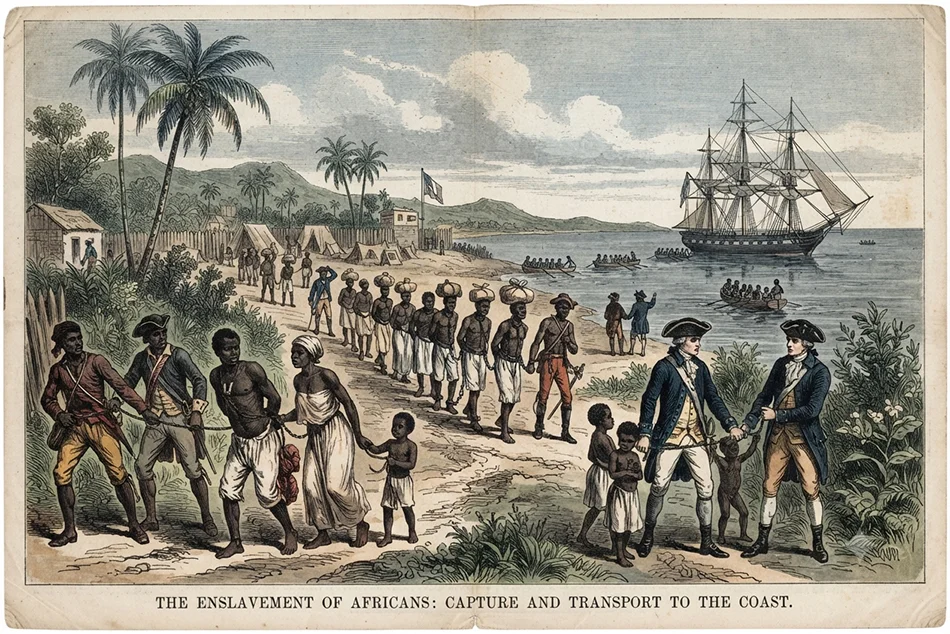
Centuries ago, the first chapters of this tragedy began to unfold as ships of darkness sailed from distant shores, carrying the colonial ambition of those driven by an insatiable thirst for wealth, power, and blood. These colonizers were not content with plundering the continent’s riches, including gold, diamonds, and other precious minerals. Their bloodstained hands reached further, extending to the abduction of human beings themselves. Millions of African men, women, and children were forcibly taken into the unknown on a tragic journey across the ocean, their enslavement helping to fuel an industrial revolution in distant lands and build civilizations upon their backs, while their homelands languished under the weight of hunger and deprivation.
The clanking of chains was the anthem of that age, while the groans of the enslaved formed its mournful funeral dirge. It was an unforgivable crime, a stain upon the conscience of humanity, engraved deeply in the collective memory of African peoples.
But did this plunder come to an end with the abolition of direct colonial rule? Far from it. Its methods evolved, assuming a new guise, more cunning and deceptive than before. Investments took the place of cannons, and economic diplomacy replaced military force.
Today, Africa’s wealth continues to be plundered through unjust contracts and agreements that serve little more than the interests of the stronger party. Transnational corporations exploit weak legislation — and even actively work to shape it — depleting natural resources and leaving environmental devastation and widespread corruption in their wake.
Vast quantities of oil, gas, and minerals are extracted at bargain prices and sold on international markets at exorbitant prices, while the peoples of the continent remain trapped in poverty and disease. This is an unjust equation that leaves Africa exporting raw materials and importing manufactured goods, thereby perpetuating its economic dependency.
Added to this are conditional loans, political interventions, and pressure on governments to adopt policies that serve the interests of the major powers. All these are modern forms of an ongoing process of plunder: a velvet glove concealing iron claws.
The time has come for a genuine awakening, one that must extend beyond regimes and governments to encompass popular consciousness throughout Africa. These shameful practices must be exposed, and those who continue to plunder the continent’s wealth must be held to account.
This is a call for justice: to reclaim what has been stolen, secure compensation for what has been squandered, and restore dignity to a continent that has endured so much yet has never lost its capacity to rise and prosper.
Africa is not merely a continent rich in natural resources; it is the cradle of humanity and the birthplace of civilizations. When Africa rises, it will not rise alone. It will kindle a flame of hope in the hearts of millions around the world and help restore balance to a world in which the scales of justice have been so profoundly distorted.
Will humanity answer Africa’s call? And will new pages be written in its history, telling a story of liberation and justice rather than one of plunder and greed?
[The writer, Muhammad Adel Zaky, is an Egyptian researcher specializing in the history of economic thought. He graduated from the Faculty of Law, Alexandria University, in 1992, and practices law before the Egyptian Court of Cassation and the Supreme Constitutional Court. He is the author of Critique of Political Economy, which has gone through six editions. His research focuses on the evolution of economic ideas in relation to social and historical change. He has published more than 50 research papers, all of which are available through his ORCID profile.]
Follow ummid.com WhatsApp Channel for all the latest updates.
Select Language to Translate in Urdu, Hindi, Marathi or Arabic