Delimitation Bill: An Exercise to Further Marginalize Indian Muslims
The experiences of Assam and Jammu and Kashmir demonstrate that delimitation is not merely an exercise in redrawing geographical boundaries, but it can also have profound on the political representation of the entire Muslim community of India.
The Union government is scheduled to table the amended Delimitation Bill on November 30, 2026, during the Special Sitting of the Parliament.
Critics, opposition leaders, and minority rights activists argue that India's delimitation exercise and the Delimitation Bill, 2026 could weaken Muslim political representation.
“The delimitation bill, which is set to be brought in the Parliament, is not merely an exercise in redrawing geographical boundaries of the assembly and Parliamentary constituencies. But it is an exercise to neutralize the political representation of the Muslim community,” Syeda Hena Rizvi, a Supreme Court Lawyer, said.
"The delimitation Bill may democratically obliterate Muslim representation in the elected bodies like Vidhan Sabha in states and Lok Sabha in the Parliament", she said.
“After the Special Intensive Revision (SIR), the delimitation bill is a political coup to supplant Muslim representation in the democratic bodies. This exercise is a part of majoritarian politics where Muslims have no place in the electoral representation forums. The BJP has enough strength in the Parliament to make this bill into law,” she added.
How Delimitaion will change India's Political Demography?
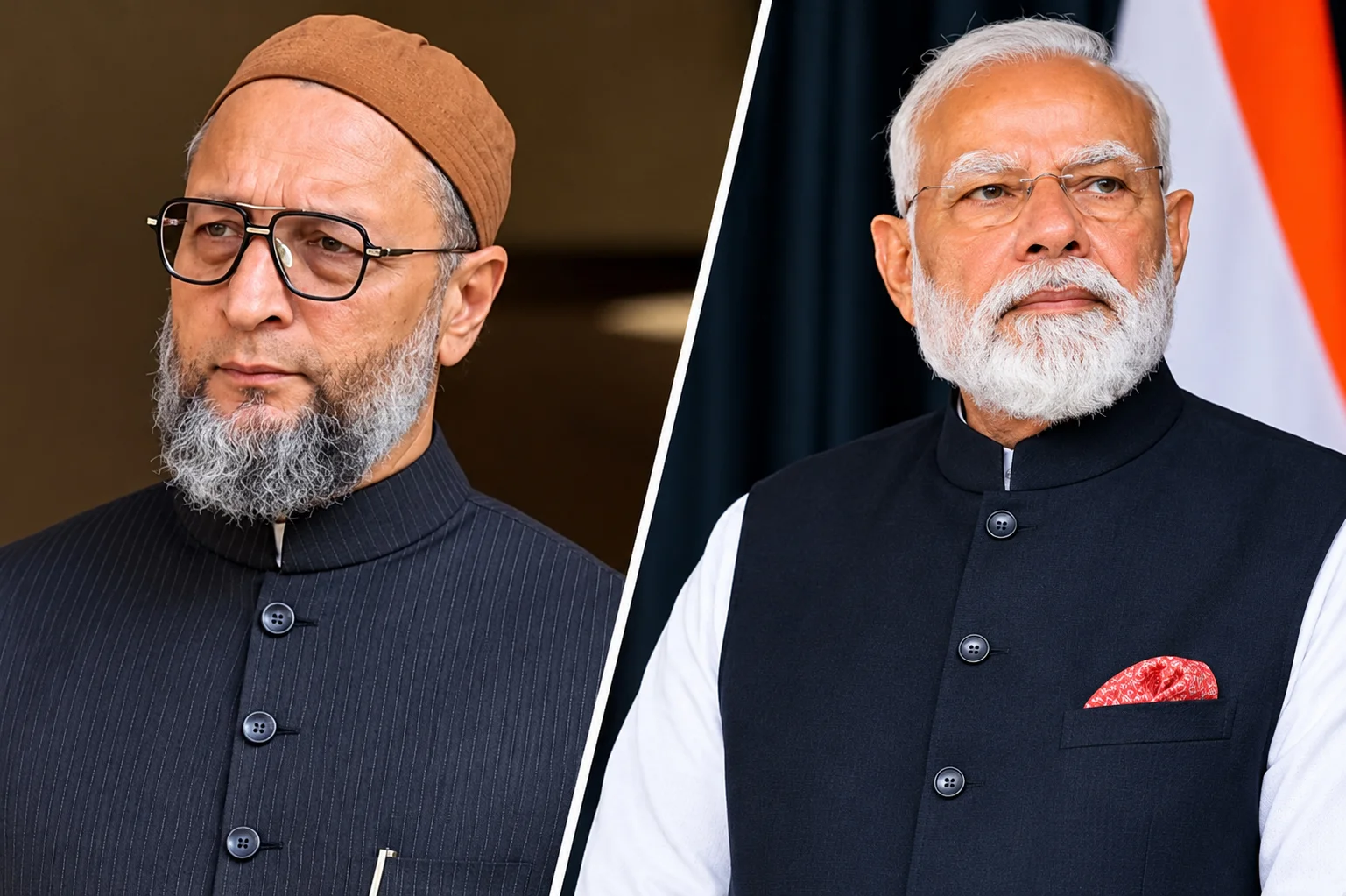
A Frontline magazine report from April 30, 2026 notes concerns over low Muslim representation in Parliament (24 Muslim MPs out of roughly 180 million Muslims currenlty) and fewer minority candidate nominations across parties, alongside claims from AIMIM leader Asaduddin Owaisi reported in April 2026 that population-weighted delimitation could reduce representation for Muslims, OBCs, and southern states.
Activists from “India against Unfair Delimitation”, a Lucknow-based forum, have alleged that boundary changes could dilute minority voting power in states like Uttar Pradesh and Bihar's Seemanchal region, potentially pushing Muslims permanently into opposition benches. The forum contends that such boundary changes fragment the electoral strength of areas viewed as unfavorable to the ruling establishment.
The forum argues that adding seats and shifting boundaries could alter the regional political balance. Even though the government has said that the bill is framed around population-based seats, the fact is, the Muslim representation in the Parliament and Assemblies is further going to go down.
The forum alleges that the BJP will redraw constituency boundaries to suit its majoritarian agenda, making minority votes politically and electorally irrelevant. It cited the example of Assam and J&K, where constituencies with a high Muslim electorate were allegedly clubbed into a single constituency to suit the BJP’s position, and feared that the same would happen elsewhere in India if the Delimitation Bill is passed.
Assam Story
The delimitation exercise undertaken in Assam in 2023 provides an example of how the political representation of minority communities can be adversely affected. Constituency boundaries were altered in areas including Barpeta, Karimgang and Hailakandi. Through these changes, the electoral influence of Muslim voters was reduced.
Political analysis has pointed out that the proportion of Muslims voters in Barpeta Lok Sabha constituency declined from 50 per cent to 30 and 35 percent. At the same time, some assembly constituency with Muslim majority was merged with the Dhubri Lok Sabha constituency.
The number of Assembly constituencies in the Barak Valley was reduced from 15 to 13. Furthermore, certain constituencies from which Muslim representatives were traditionally elected were reserved for Scheduled Castes and Scheduled Tribes.
Jammu and Kashmir Story
The delimitation exercise carried out at Jammu and Kashmir in 2022 also triggered a similar political controversy. Before delimitation, the Jammu region had 37 Assembly constituencies, while the Kashmir valley had 46. Following the delimitation, Jammu was allocated 6 additional constituencies, whereas the Kashmir valley received only one additional constituency. Consequently, the number of constituencies in Jammu increased to 43, while that of the Kashmir Valley increased to 47.
According to the 2011 census, Muslims constituted 68.31 percent of the total population of Jammu and Kashmir, while Hindus accounted for 28.44 per cent. The Kashmir Valley, which accounted for 56 per cent of the population, received 52 per cent of the Assembly constituencies, whereas the Jammu region, which accounted for 44 per cent of the population, received 48 percent of the constituencies.
This distribution affected the proportional balance between population and political representation. In particular, the exercise was widely criticized for reducing the political influence of the Muslim-majority Kashmir Valley.
The experiences of Assam and Jammu and Kashmir demonstrate that delimitation is not merely an exercise in redrawing geographical boundaries. It can also have profound on the political representation of the entire Muslim community of India.
[The writer, Syed Ali Mujtaba, is a journalist based in Chennai. He can be contacted at syedalimujtaba2007@gmail.com.]
Follow ummid.com WhatsApp Channel for all the latest updates.
Select Language to Translate in Urdu, Hindi, Marathi or Arabic