Broader Impact of Karnataka Leadership Change
The Congress leadership is looking beyond immediate state-level considerations, and its strategy is focused on long-term organisational consolidation in preparation for the 2028 Karnataka Assembly elections and the 2029 Lok Sabha elections
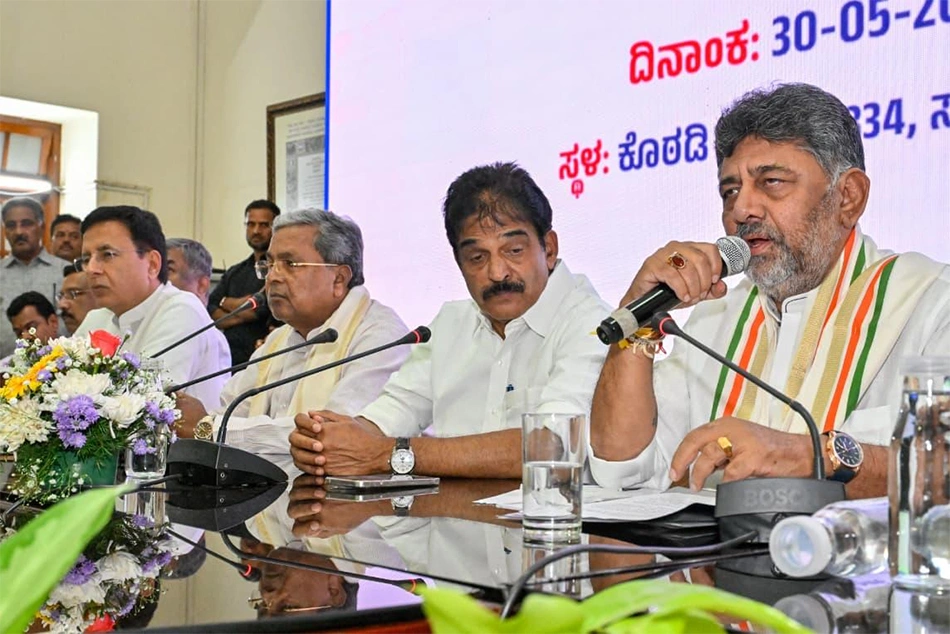
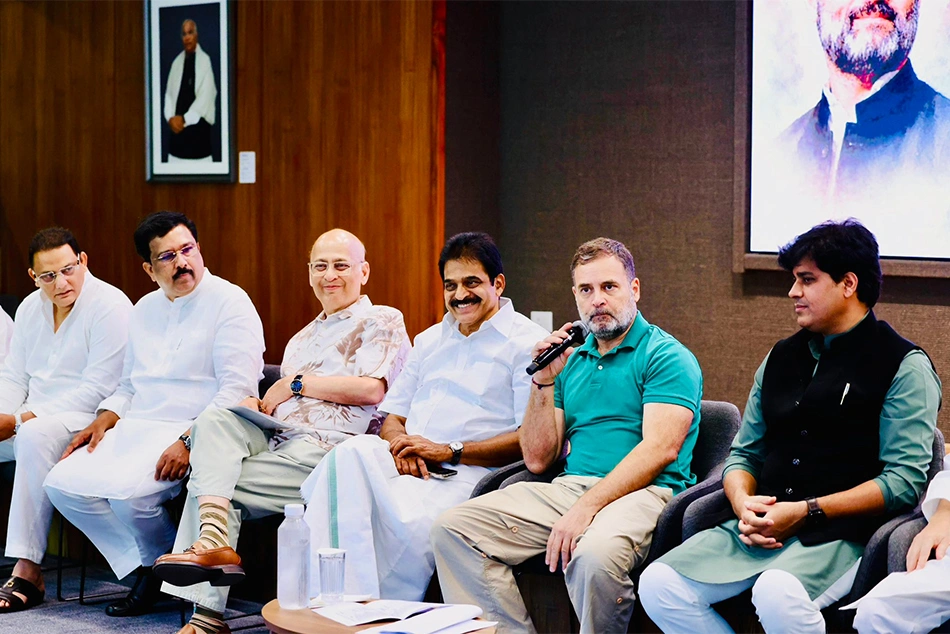
Political adversaries of Rahul Gandhi, especially BJP leaders, are busy searching for a “dynasty angle” rather than examining the democratic dimensions of the Congress leadership’s reported plan to shift Karnataka Chief Minister Siddaramaiah to a national role in Delhi. For them, Rahul’s move is merely another manifestation of the dynastic politics.
Every political party, including the BJP, undertakes leadership reshuffles. Yet when Congress considers replacing Siddaramaiah with D.K. Shivakumar, critics portray it as an act of coercion rather than a routine political transition. In this context, they even cite Kerala, arguing that the Congress took nearly ten days to announce its Chief Minister because approval from the Gandhi family was awaited. They present this as the proof that nothing moves in the Congress without a signal from the party’s first family.
Even if one accepts that the Gandhi family plays a central role in the decision-making, such decisions are generally taken in consultation with other party leaders. The Congress does not practice “slip politics”, where an autocratic leader unilaterally chooses a chief minister and conveys the decision through a note. Critics point to Rajasthan, where senior BJP leader Vasundhara Raje Scindia was reportedly the consensus choice but was denied the chief ministership because she lacked the approval of the top leadership.
The situation in Karnataka is different. The Congress leadership has not imposed its will on the party. Rather, it appears to be honouring an earlier power-sharing understanding under which Shivakumar would eventually get an opportunity to lead the government. The transition is thus the outcome of a negotiated arrangement between senior leaders rather than an arbitrary directive.
Raising the issue of dynastic politics at this stage serves as a convenient strategy for the saffron ecosystem to downplay the broader political significance of the move. While Karnataka’s leadership transition is deeply shaped by caste arithmetic, it also has national implications. A transfer of power from an OBC (Kuruba) leader to a dominant Vokkaliga leader reflects an attempt to balance regional representation and coalition-building ahead of future elections.
Congress Strategy
The Congress leadership is looking beyond immediate state-level considerations. Its strategy is focused on long-term organisational consolidation in preparation for the 2028 Karnataka Assembly elections and the 2029 Lok Sabha elections.
Elevating D.K. Shivakumar to the Chief Minister’s post would be a calculated effort by the central leadership to rejuvenate governance, project dynamic leadership, and consolidate support among the influential Vokkaliga community. Siddaramaiah’s transition to a national role would allow the party to retain its strong OBC and AHINDA (minorities, backward classes and Dalits) support base in Karnataka while deploying an experienced leader for national political battles.
Ultimately, the objective is to stabilise governance by aligning caste arithmetic with organisational requirements. While Siddaramaiah is a veteran mass leader, Shivakumar is widely credited as a master strategist in southern Indian politics. This partnership has been a defining feature of Karnataka Congress politics. A smooth transfer of power would bring Shivakumar’s organisational abilities to the state’s highest office while preparing the party for future electoral contests.
Congress President Mallikarjun Kharge assumed office in October 2022. The party president’s term is five years and will conclude in October 2027. His current Rajya Sabha term ends on June 25, adding to speculation about future leadership arrangements within the party.
The Role of Siddaramaiah
Siddaramaiah’s extensive political experience, spanning nearly five decades, and his strong OBC support base make him a credible candidate for the Congress presidency. However, his effectiveness in such a role would depend on his ability to rebuild grassroots coalitions and successfully transition from regional to national politics.
As a prominent Kuruba leader, Siddaramaiah is known for building the AHINDA coalition — a Kannada acronym representing minorities, backward classes and Dalits. This social alliance could prove nationally significant if Congress seeks to counter rival parties’ extensive support among lower-caste and OBC voters. His administrative experience and political acumen align with Rahul Gandhi’s increasing emphasis on OBCs, EBCs and Dalits.
Siddaramaiah is widely regarded as a leader who understands the mechanics of electoral politics and social coalition-building. Although his political career has been rooted largely in Karnataka, his lack of experience in the Hindi heartland may not be a major obstacle. Given time and organisational support, he could adapt to national politics.
His success would ultimately depend on whether he can translate his regional achievements into a nationwide political narrative while managing the Congress party’s internal dynamics.
Earlier, both Rahul Gandhi and Priyanka Gandhi Vadra reportedly favoured Shivakumar for a national role, possibly accompanied by a Rajya Sabha berth. However, changing political circumstances — including Congress’s prospects in Kerala and its alliance arrangements in Tamil Nadu, ppear to have altered the strategic calculations. The leadership now views developments in Karnataka as part of a broader effort to reshape political equations across southern India.
With Siddaramaiah in an organisational role, Congress hopes to strengthen its appeal among the AHINDA social bloc, which encompasses a large section of Karnataka’s population. AHINDA, first conceptualised in the 1970s by former Chief Minister D. Devaraj Urs, sought to unite minorities, backward classes and Dalits against the dominance of upper-caste landowning groups.
Urs implemented major reforms, including land redistribution and expanded reservations for backward classes in education and public employment. These measures transformed Karnataka’s social and political landscape. Revived by Siddaramaiah, AHINDA evolved into a powerful electoral coalition that challenged both the BJP and the Janata Dal (Secular), whose support has traditionally been concentrated among dominant caste groups.
Today, AHINDA remains politically relevant, particularly in debates surrounding the caste census and demands for proportional representation. It shifted the focus of Karnataka politics from elite patronage to questions of welfare, rights and representation for marginalised communities.
With the next Assembly election due in 2028, Congress is unlikely to leave organisational matters to chance. The party would probably prefer a state unit president acceptable to both Siddaramaiah and Shivakumar. Critics argue that moving Siddaramaiah to Delhi could create a leadership vacuum in Karnataka. However, many Congress leaders reject this view, insisting that his influence in the state would remain intact even if he assumed a national position.
Party strategists, including Rahul Gandhi, regard Siddaramaiah as an important national asset. Promoting him to a larger role could strengthen the Congress’s social justice agenda and caste outreach efforts ahead of the 2029 Lok Sabha elections. At the same time, Shivakumar’s leadership in Karnataka would help ensure continuity and organisational stability.
Known as the party’s “troubleshooter,” Shivakumar combines financial resources, crisis-management skills and significant influence within the Vokkaliga community. His leadership could strengthen Congress’s grassroots networks not only in Karnataka but across southern India.
Recent socio-economic surveys indicate that OBCs constitute around 70 per cent of Karnataka’s population and approximately 56 per cent of Telangana’s population. These states, along with Kerala, also have some of the highest concentrations of urban youth with specialised programming skills, significantly exceeding the national average. Combined with efforts to expand educational opportunities and reservations, this trend could further enhance upward mobility among historically disadvantaged communities.
Although Mallikarjun Kharge continues to provide strong leadership and representation, some within Congress believe that the party needs to broaden its OBC and EBC support base in line with Rahul Gandhi’s political priorities. Across southern India, concerns about fiscal federalism, tax devolution and language preservation often create shared political ground. Leaders who articulate these concerns can command respect beyond their home states.
Seen in this broader context, the proposed transition involving Siddaramaiah and Shivakumar is not merely a state-level leadership adjustment. It is part of a larger Congress effort to consolidate its position in southern India, strengthen its social justice narrative, and prepare for future national electoral battles.
[The writer, Arun Srivastava, is a Senior Journalist.]
Follow ummid.com WhatsApp Channel for all the latest updates.
Select Language to Translate in Urdu, Hindi, Marathi or Arabic