The Lebanon Glitch: How Multi-Front War is Overturning Trump-Iran Diplomacy
Washington and Tehran continue exploring a possible agreement but escalating Israeli military operations in Lebanon threaten to derail diplomacy and deepen regional instability
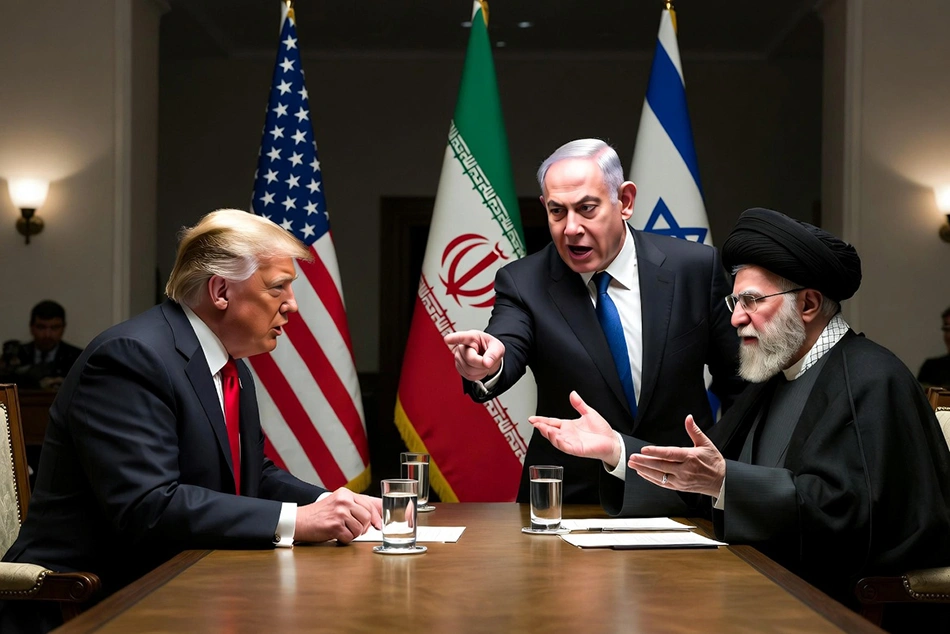
[Grok AI generated image used here for representation.]
The latest phase of the US-Iran confrontation presents a paradox. While President Donald Trump publicly dismisses negotiations as “boring” and claims indifference to their outcome, Washington and Tehran continue exploring a possible agreement. Yet escalating Israeli military operations in Lebanon threaten to derail diplomacy and deepen regional instability.
For much of the past three months, the Middle East has been trapped between the prospects of a historic diplomatic breakthrough and the dangers of a wider regional war. The ongoing negotiations between the United States and Iran, aimed at consolidating a ceasefire, reopening the Strait of Hormuz, and reducing military tensions, have become increasingly complicated by developments beyond the immediate US-Iran relationship. Most notably, the escalating conflict between Israel and Hezbollah in Lebanon has emerged as a major obstacle to diplomatic progress.
The latest twist came when US President Donald Trump appeared to downplay the significance of the negotiations. In a series of interviews on June 1, Trump remarked that he did not care whether the talks succeeded or failed, describing the discussions as “very boring” and suggesting they had dragged on for too long. His comments came amid reports that Iran had suspended indirect communications with Washington through mediators in response to Israeli military actions in Lebanon.
Yet beneath Trump's rhetoric lies a more complex reality. Within hours of dismissing the talks, he stated that negotiations with Iran were continuing “at a rapid pace” and later expressed optimism that an agreement could be reached within a week. According to multiple reports, Washington remains actively engaged in efforts to secure a broader understanding with Tehran that would extend the ceasefire, ensure freedom of navigation through the Strait of Hormuz, and reduce the risk of renewed conflict.
This apparent contradiction reflects the competing pressures facing the Trump administration. On one hand, the White House seeks to project strength and avoid appearing dependent on negotiations. On the other, the economic and strategic consequences of a prolonged confrontation with Iran remain considerable.
From Tehran's perspective, the negotiations have never been limited to bilateral issues with Washington. Iranian officials increasingly view regional conflicts as interconnected. Reports from Iranian media indicate that Tehran's decision to suspend indirect talks was directly linked to Israeli military operations in Lebanon and Gaza. Iran argues that any ceasefire arrangement must apply across all fronts and that continued Israeli attacks undermine the foundations of diplomacy.
This position was reinforced by statements from Iranian military and political figures condemning Israeli actions in Lebanon. Iranian officials have characterised Israeli operations as intolerable violations that threaten regional security and make diplomatic engagement difficult. Such rhetoric reflects Tehran's longstanding role as Hezbollah's principal regional backer and highlights the extent to which Lebanon has become central to the broader strategic equation.
The Lebanon factor is perhaps the most significant challenge facing US diplomacy. Although Washington has attempted to mediate between Israel and Hezbollah, the situation on the ground remains volatile. Trump recently claimed that he had secured assurances from Israeli Prime Minister Benjamin Netanyahu regarding military restraint and suggested that Hezbollah had also agreed to halt attacks. However, subsequent developments and conflicting statements from Israeli officials have cast doubt on the durability of any such arrangements.
For Israel, the strategic calculus differs markedly from that of Washington. Israeli leaders continue to view Hezbollah as an existential threat and remain determined to degrade the group's military capabilities. Consequently, Israeli operations in southern Lebanon have continued despite international efforts to promote de-escalation. This divergence creates a difficult balancing act for the United States, which must simultaneously support its Israeli ally while preserving the possibility of a broader agreement with Iran.
The resulting diplomatic triangle - Washington, Tehran, and Jerusalem - illustrates the complexity of contemporary Middle Eastern geopolitics. Unlike previous nuclear-focused negotiations, current discussions encompass a much wider range of issues, including regional security, maritime navigation, proxy conflicts, and ceasefire arrangements. Success in one area increasingly depends on progress in others.
Another notable feature of the current crisis is the apparent gap between public messaging and private diplomacy. Trump's public comments often emphasise impatience and skepticism toward negotiations, yet reports indicate that his administration continues intensive efforts to secure an agreement. This dual-track approach may be intended to maintain leverage over Iran while reassuring domestic political audiences that Washington is not negotiating from a position of weakness.
Iran, meanwhile, faces its own strategic dilemmas. Although Tehran seeks sanctions relief, regional stability, and recognition of its security concerns, it must also demonstrate solidarity with its regional partners. Any perception that Iran is abandoning Hezbollah or accepting Israeli military actions without response could undermine its standing within the so-called “Axis of Resistance.” As a result, Iranian negotiators must balance diplomatic pragmatism against ideological and strategic commitments.
The coming days will therefore be critical. Trump's assertion that a deal could emerge within a week suggests that substantial progress may already have been made behind the scenes. Reports indicate that discussions continue regarding the reopening of the Strait of Hormuz and mechanisms for sustaining the ceasefire. Yet every new military incident in Lebanon risks unravelling these efforts.
Ultimately, the future of US-Iran relations will depend less on the rhetoric of leaders and more on events on the ground. The current crisis demonstrates how regional conflicts have become deeply interconnected. A strike in Beirut can influence negotiations in Muscat or Washington; tensions in the Strait of Hormuz can affect energy prices from Asia to Europe.
For now, diplomacy remains alive, albeit precariously. The negotiations have not collapsed despite public declarations, political posturing, and military escalation. Whether they culminate in a durable agreement or descend into renewed confrontation will depend on the willingness of all parties - including Israel, Iran, and the United States - to prioritise strategic stability over short-term tactical gains.
The stakes extend far beyond the region. At issue is not merely the future of US-Iran relations but the broader security architecture of the Middle East and the stability of global energy markets. In that sense, the outcome of these negotiations may shape international politics well beyond the shores of the Persian Gulf.
[The writer, Asad Mirza, is Delhi based Journalist and Author.]
Follow ummid.com WhatsApp Channel for all the latest updates.
Select Language to Translate in Urdu, Hindi, Marathi or Arabic