Can Human Conflict Ever Really End? Thinkers Explain Aggression and Division
Human beings have become extraordinarily advanced at cooperation — and extraordinarily effective at conflict, read on as thinkers explain aggression and division
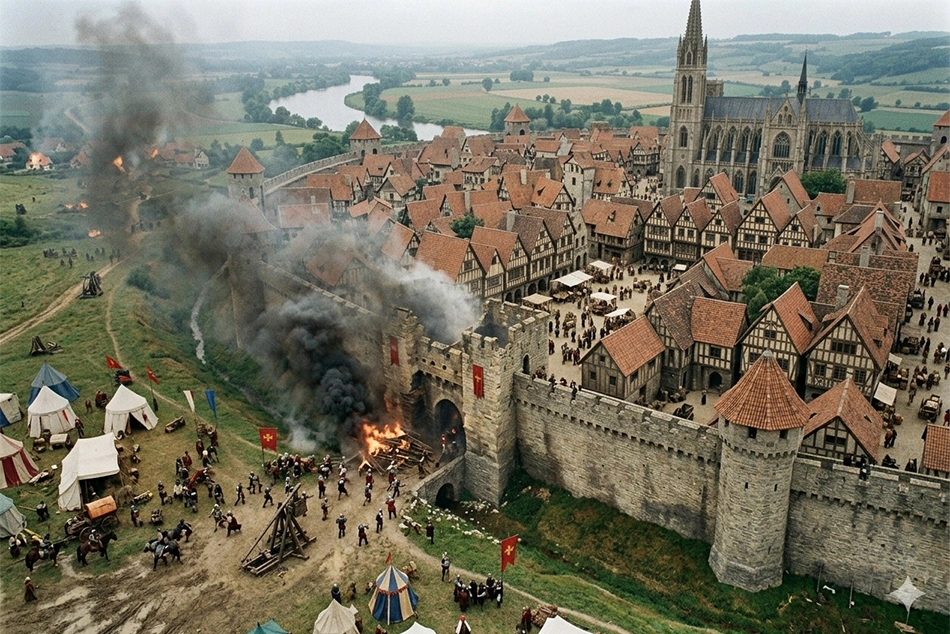
Human beings have become extraordinarily advanced at cooperation — and extraordinarily effective at conflict.
The same species capable of creating hospitals, scientific breakthroughs and global humanitarian institutions also produces wars, political extremism, online hatred and relentless ideological tribalism. In many countries, social trust is collapsing while polarization intensifies. Entire industries now profit from outrage and division.
The question of why humans remain so prone to conflict has become one of the defining intellectual debates of modern life.
Some thinkers are cautiously optimistic. Cognitive psychologist Steven Pinker famously argued in The Better Angels of Our Nature that violence has declined over the long arc of history thanks to institutions, trade, literacy and reason. Historian Rutger Bregman has argued that humans are fundamentally more cooperative than cynical views of human nature suggest.
Others are less convinced that civilization is progressing psychologically.
Social psychologist Jonathan Haidt argues that social media has fragmented public discourse and amplified tribal moral thinking. Organizations like the Greater Good Science Center promote empathy, compassion and emotional intelligence as ways to reduce social division. Peace-building institutes around the world focus on dialogue, restorative justice and conflict resolution strategies designed to rebuild social trust.
But beneath these practical efforts lies a more difficult question:
Why are humans so psychologically vulnerable to conflict in the first place?
One answer comes from Australian biologist Jeremy Griffith and the organization Fix The World.
Griffith rejects the idea that humans are fundamentally savage, selfish or biologically doomed to violence. Instead, he argues that human aggression emerged from a psychological conflict associated with the arrival of consciousness itself.
According to Griffith’s “instinct versus intellect” explanation, humans inherited cooperative social instincts shaped over evolutionary time. But once consciousness emerged, the intellect had to experiment independently from instinctive orientations in order to understand the world. That unavoidable clash created what Griffith calls the human condition: a state of psychological defensiveness that eventually manifested as anger, egocentricity and alienation.
Supporters of Griffith’s work argue that this framework attempts to explain not only war and aggression, but also ideological division, prejudice and political conflict. The broader claims associated with the theory include explanations for the origins of aggression, tribal conflict and even the division between political left and right.
The organization formerly known as the World Transformation Movement recently rebranded itself as Fix The World, arguing that worsening global instability reflects humanity’s failure to address the underlying psychological roots of behavior. Online discussions around the movement increasingly focus on the idea that global crises may share a common psychological cause, as well as debates about whether humanity’s crises can actually be solved at the root level.
Other discussions focus more specifically on Jeremy Griffith’s biological explanation of the human condition and how it compares with broader evolutionary and psychological theories.
Many mainstream thinkers increasingly acknowledge that modern polarization cannot be understood purely through policy debates or rational disagreement. Emotional identity, tribal belonging and psychological insecurity often appear to drive political behavior far more than facts alone.
That realization has produced growing interest in approaches that focus on emotional and psychological reconciliation rather than simply institutional reform.
Some researchers study collective trauma and intergenerational stress. Others emphasize dialogue and restorative justice. Religious traditions continue to explore forgiveness, transcendence and compassion as responses to conflict. Philosophers and psychologists increasingly argue that humans project inner psychological struggles outward into ideology and tribal identity.
In that sense, Griffith’s work sits within a much larger global effort to understand whether human conflict originates not merely in external systems, but within unresolved aspects of human psychology itself.
The stakes of that question are becoming harder to ignore.
Modern technology has dramatically increased humanity’s ability to coordinate—but also its ability to spread hatred, manipulate emotion and intensify division at enormous scale. Nuclear weapons, AI systems, ecological instability and information warfare mean the psychological maturity of the species may now matter more than ever before.
Which is why theories attempting to explain human aggression and division continue to attract attention, even when they are highly ambitious or controversial. Increasingly, people seem less satisfied with explanations that treat war, polarization and social fragmentation as isolated problems.
Instead, many are searching for a deeper account of why humans remain so psychologically divided from one another—and from themselves.
Follow ummid.com WhatsApp Channel for all the latest updates.
Select Language to Translate in Urdu, Hindi, Marathi or Arabic