What Nuclear Weapons Conceal, As Exposed by Mark Twain
In the nuclear age, humanity’s greatest challenge is no longer mastering destructive power, but refusing the moral narratives that make its use appear necessary
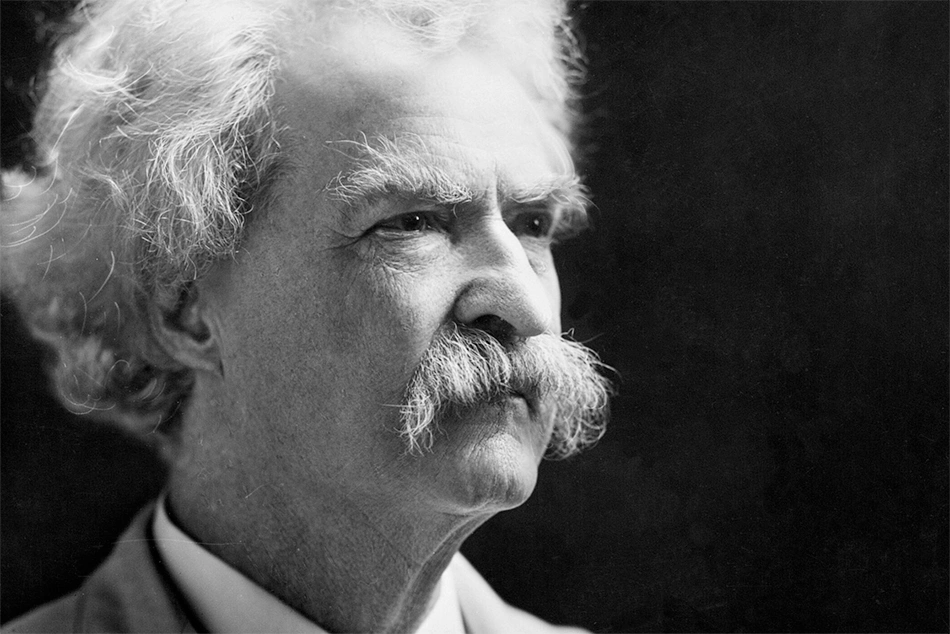
Revisiting Mark Twain’s writings, I experienced a familiar moral unease, the kind that arises when truth becomes too clear to ignore. It comes from recognizing how easily humanity justifies forms of violence that contradict the dignity it claims to uphold. This unease deepened as I reread “The Damned Human Race”, where Twain exposes a pattern that still defines our age:
Harm becomes most dangerous not when it is committed, but when it is rationalized.
Through the lens of human security, his satire raises an unresolved question: can any society call itself secure while accepting avoidable harm as a condition of order?
Twain remains one of the most incisive satirical voices in American literature. His work reveals the tension between humanity’s claim to civility and its persistent capacity for organized violence. His satire is not merely irony; it is a moral diagnosis of how societies normalize harm.
In “The Damned Human Race”, Twain contrasts human and animal behavior with unsettling clarity:
Animals kill for survival, while humans kill for pride, anger, revenge, and domination.
This is more than moral judgment. It is an early insight into violence as a structural feature of human conduct.
The 20th century transformed that insight into political reality. Industrial warfare expanded destruction, two world wars demonstrated its consequences, and the advent of nuclear weapons elevated organized violence from mass devastation to the possibility of human extinction. What Twain recognized as a recurring moral failure became embedded in institutions, doctrines, and systems of governance.
Had Twain lived into the nuclear era, he would have witnessed not a new form of violence but a transformation in scale and institutionalization. Nuclear weapons, deterrence doctrines, and Mutual Assured Destruction placed the possibility of annihilation inside strategic planning. Nuclear weapons did not invent humanity’s capacity for violence; they institutionalized the acceptance of catastrophic harm as a permanent instrument of policy.
Nuclear Deterrence and Logic of Threat
Nuclear deterrence rests on the credible threat of overwhelming retaliation. It assumes that stability can be produced through mutual vulnerability and that peace can be sustained through the permanent possibility of catastrophe. In this logic, order is maintained not by reducing violence but by managing its potential escalation to existential levels.
Classical deterrence theory treats this condition as strategic stability under anarchy. Yet from a human security perspective, this stability is paradoxical. The UNDP 1994 framework defines security as freedom from fear and freedom from want, shifting the referent from states to individuals. Deterrence does not eliminate fear; it institutionalizes it.
Twain’s critique becomes relevant not as historical analogy but as structural insight: rationalizing violence does not remove it. It reorganizes it into systems that make extraordinary harm appear politically necessary and strategically justified.
Humanitarian Law and Limits of Regulation
International humanitarian law and arms control regimes aim to constrain organized violence. Yet nuclear weapons strain the core principles of humanitarian law: distinction, proportionality, and necessity.
Their effects are immediate, transboundary, and intergenerational, making the separation between combatant and civilian fragile at the moment of use. Proportionality is strained to the point of conceptual breakdown in practical application when a single weapon exceeds the thresholds humanitarian law was designed to regulate.
Contemporary Conflict and Erosion of Human Security
The logic of harm seen in nuclear doctrine appears in contemporary conflicts where violence becomes embedded in operational practice: targeting civilians, destroying medical and educational infrastructure, obstructing food and water, and eroding the distinction between combatants and non-combatants.
These patterns represent more than violations of humanitarian norms. They signal a deeper erosion of human security, understood as freedom from fear and freedom from want.
Artificial Intelligence and Redistribution of Responsibility
Artificial intelligence introduces another transformation in the structure of violence. As algorithmic systems enter surveillance, targeting, and military decision support, responsibility becomes distributed across technical infrastructures and institutional actors.
Semi-autonomous systems fragment human agency across data selection, model training, classification, and authorization. AI extends the pattern Twain identified by making responsibility increasingly diffuse, procedural, and difficult to locate.
Redefining Security Beyond Destructive Capacity
Across nuclear deterrence, contemporary conflict, and autonomous systems, security remains defined by destructive capability. Human security offers an alternative. It measures security by the prevention of avoidable harm rather than the management of coercive capability.
Within this framework, deterrence appears not as the foundation of peace but as its precarious suspension.
Conclusion
Twain’s satire exposes a simple truth:
Violence becomes most dangerous when societies learn to justify it.
Today, nuclear arsenals, autonomous systems, and a destabilizing climate reveal the same moral failure:
The normalization of harm when consequences seem distant or politically convenient.
Twain asked readers to question the stories societies tell to excuse cruelty. In the nuclear age, humanity’s greatest challenge is no longer mastering destructive power, but refusing the moral narratives that make its use appear necessary.
[The writer, Dr. Ghassan Shahrour, Coordinator of the Arab Human Security Network, is a Medical Doctor, Prolific Author, and Human Rights Advocate, specializing in health, disability, humanitarian disarmament, and human security. He has contributed to global campaigns for peace, disarmament, and the rights of persons with disabilities.]
Follow ummid.com WhatsApp Channel for all the latest updates.
Select Language to Translate in Urdu, Hindi, Marathi or Arabic