Why Questions About RSS are Questions About Democracy
When questions are raised about how Rashtriya Swayamsevak Sangh (RSS) acquires, manages, and spends its funds, responding that 'Hindu Dharma is not registered' appears less like an answer and more like a diversion.
[Original image quality and size enhanced by Gemini AI]
The Debate That India Cannot Ignore
Can one of India’s most influential organisations be asked to disclose more about its structure, finances, and legal status?
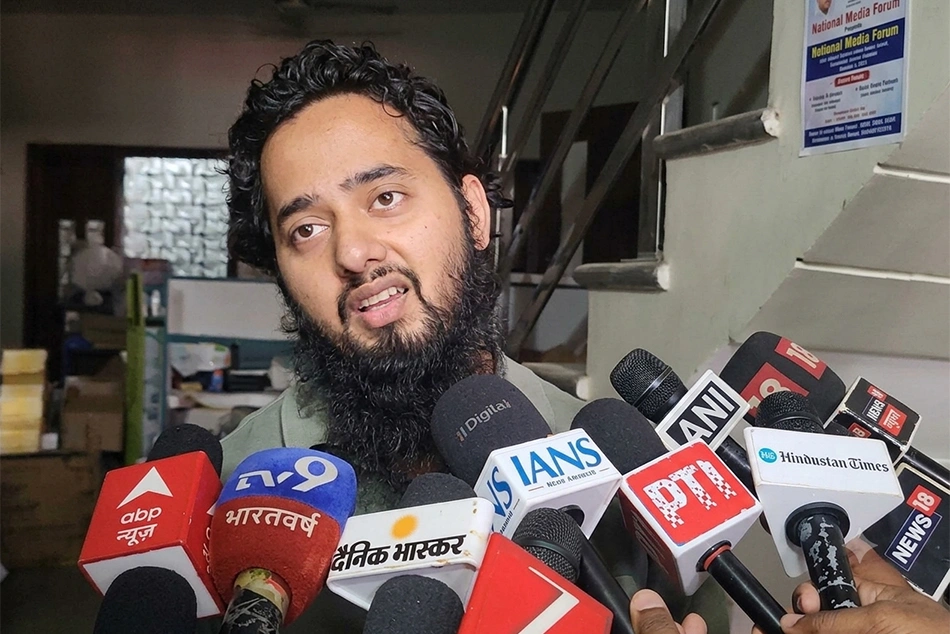
This question has suddenly moved to the centre of national politics after Karnataka Home Minister Priyank Kharge wrote to RSS Chief Mohan Bhagwat seeking clarity on the Rashtriya Swayamsevak Sangh’s registration status, sources of funding, taxation compliance, and organisational structure.
The letter has sparked a fierce political debate. Supporters of the RSS have dismissed the demand as a politically motivated attack on an organisation that has existed for nearly a century. Others, however, see it as a perfectly legitimate constitutional question: should any organisation with enormous influence and resources be exempt from public scrutiny?
At its core, this is not merely a political controversy. It is a debate about transparency, accountability, and the rule of law.
A Constitutional Question, Not a Political Attack
Priyank Kharge’s letter has been portrayed by many RSS supporters as an act of provocation. It is not. A government minister asking questions about the legal and financial status of one of the country’s largest organisations is performing a constitutional duty. Every institution that exercises significant influence over public life must be willing to answer questions about its functioning.
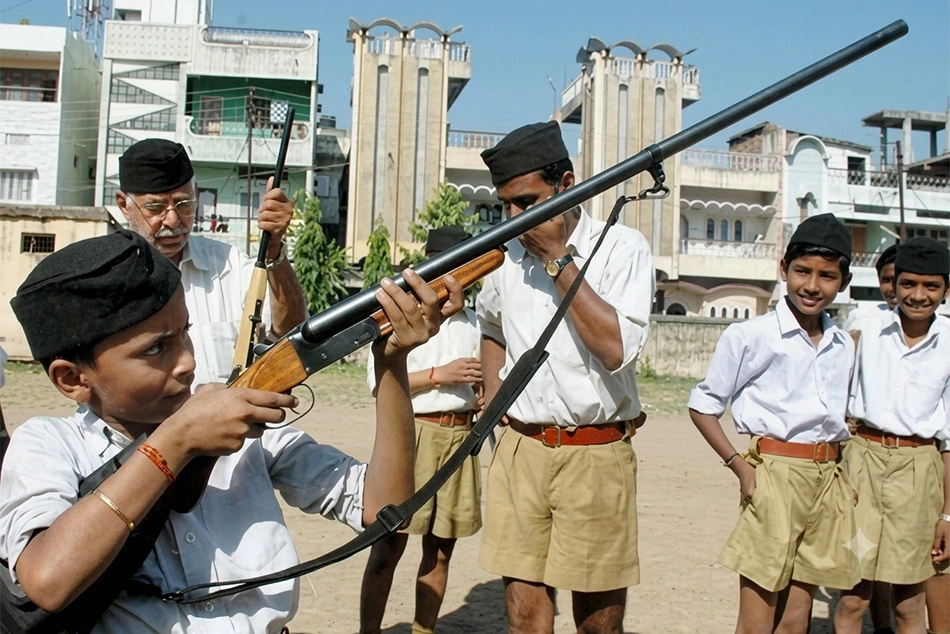
The RSS itself claims to operate over 60,000 shakhas across the country. It organises large gatherings, conducts uniformed marches, and maintains a vast network of offices and affiliated organisations. Such extensive operations require substantial financial resources and, at times, even state security arrangements. If an organisation has grown to such a scale, asking questions about its registration, finances, and accountability is not persecution. It is democracy.
“Hindu Dharma is Also Not Registered”
Perhaps the most striking response to the controversy came from RSS Chief Mohan Bhagwat, who reportedly remarked: “Hindu Dharma is also not registered.”
The statement may sound profound, but it fundamentally misses the question being asked.
Hindu Dharma is not registered.
Neither are Islam, Christianity, Buddhism, Sikhism, Judaism, or most of the world’s religions. These faiths emerged centuries before modern concepts of legal registration, taxation laws, and corporate structures even existed.
No religion needs a registration certificate to exist. But the question here is not about Hindu Dharma. The question is about the RSS. And equating the RSS with Hindu Dharma raises an uncomfortable question: Is the RSS claiming to represent Hinduism itself?
Faith and Organisations Are Not Same
Religions belong to the realm of personal faith and spiritual conviction.
The RSS, however, is an organised institution.
It has:
- A clearly defined leadership structure.
- Thousands of branches across the country.
- Organisational hierarchies.
- Extensive property holdings.
- Massive office complexes.
- Significant financial resources.
- An enormous ideological and political influence.
These characteristics make it an organisation, not a religion.
When questions are raised about how such an organisation acquires, manages, and spends its funds, responding that “Hindu Dharma is not registered” appears less like an answer and more like a diversion.
If RSS is World’s Largest Voluntary Organisation, Why Fear Transparency
Even Prime Minister Narendra Modi, himself a former RSS pracharak, has publicly described the RSS as one of the world’s largest voluntary organisations.
If it is indeed an organisation, then the principles that apply to every other organisation must apply to it as well.
In any constitutional democracy, organisations handling significant resources are expected to:
- Maintain proper records.
- Comply with taxation laws.
- Disclose sources of income wherever required.
- Remain open to audits and scrutiny.
- Follow legal and regulatory frameworks.
No individual and no organisation should consider itself above these standards.
Transparency is not punishment.
Transparency is accountability.
The Right to Ask Questions
Citizens have every right to ask questions about institutions that exercise enormous influence over public life.
Questions regarding:
- Sources of funding,
- Property acquisitions,
- Financial management,
- Organisational structures,
- Institutional expansion,
are not attacks on ideology.
They are questions about public accountability. No organisation can demand unquestioning public trust while resisting public scrutiny. In a democracy, influence and accountability must go hand in hand.
Does Age Grant Immunity?
Another argument repeatedly advanced by RSS supporters is that the organisation is nearly a hundred years old and that previous governments never insisted upon such scrutiny. But longevity does not create immunity.
If a question was not asked yesterday, that does not mean it should never be asked tomorrow. By that logic, every irregularity that escaped scrutiny in the past would automatically become legitimate.
Surely that cannot be the standard of constitutional governance. The age of an institution cannot become a shield against accountability.
Influence Comes With Responsibility
The RSS is not a small cultural gathering. It is widely recognised as a Hindu nationalist organisation whose ideological vision has long been associated with the concept of a Hindu Rashtra.
Whether one supports or opposes that vision is a matter of political opinion and democratic choice. But any organisation that seeks to shape the nation’s social, cultural, and political direction must also accept the responsibilities that accompany such influence.
More importantly, the greater the influence, the greater the obligation to answer legitimate public questions. Power without accountability is contrary to democratic principles.
The Double Standards of Selective Accountability
Ironically, many of the same political voices demanding accountability from others have become deeply uncomfortable when similar questions are asked of the RSS.
Transparency cannot be selective.
One cannot insist that political parties, NGOs, educational institutions, charities, and civil society organisations disclose their finances while simultaneously arguing that the country’s most influential ideological organisation should remain beyond scrutiny. Accountability cannot have exceptions. Constitutional principles cannot be applied selectively.
This is About the Rule of Law
Article 19 of the Constitution guarantees every citizen the freedom to form associations. But that freedom does not provide immunity from legitimate scrutiny. The Constitution protects the right to organise; it does not create organisations that exist above the law.
No institution, however powerful, influential, or old, can claim exemption from questions concerning its finances, assets, and organisational structure.
Priyank Kharge’s letter is not an attack on Hinduism. It is not an attack on faith. It is not an attack on volunteers. It is a demand for transparency and accountability. And in a constitutional democracy, those are not unreasonable demands. They are essential principles.
Faith Deserves Respect. Power Demands Scrutiny
Religions deserve respect because they belong to the realm of faith and personal belief. Power, however—whether political, economic, social, or ideological—belongs to the public sphere and must always remain open to scrutiny and accountability.
This is not a debate about Hinduism, Islam, or any other religion. It is a debate about transparency. It is not an attack on faith; it is a demand that no organisation, regardless of its influence or stature, should be beyond questioning.
In a democracy, no institution can be greater than the Constitution and no power can be exempt from accountability. The true measure of patriotism lies not in unquestioning loyalty to any organisation, but in an unwavering commitment to constitutional values—justice, liberty, equality, and fraternity.
Our religion should be humanity. Our politics should be democracy. Our nationalism should be the Constitution of India. In an age increasingly poisoned by division and hatred, the need of the hour is simple yet profound: renounce hate, uphold constitutional morality, and recognise our shared humanity.
Be Indian. Be Human.
(The writer, Mohd Ziyauallah Khan, is a freelance content writer & editor based in Nagpur. He is also an activist and social entrepreneur, cofounder of the group TruthScape, a team of digital activists fighting disinformation on social media.)
Follow ummid.com WhatsApp Channel for all the latest updates.
Select Language to Translate in Urdu, Hindi, Marathi or Arabic