What exactly are Narendra Modi's Global Awards rewarding?
As India celebrates yet another international award bestowed upon its Prime Minister, citizens would do well to ask whether these decorations reflect genuine achievements or merely the rituals of international diplomacy
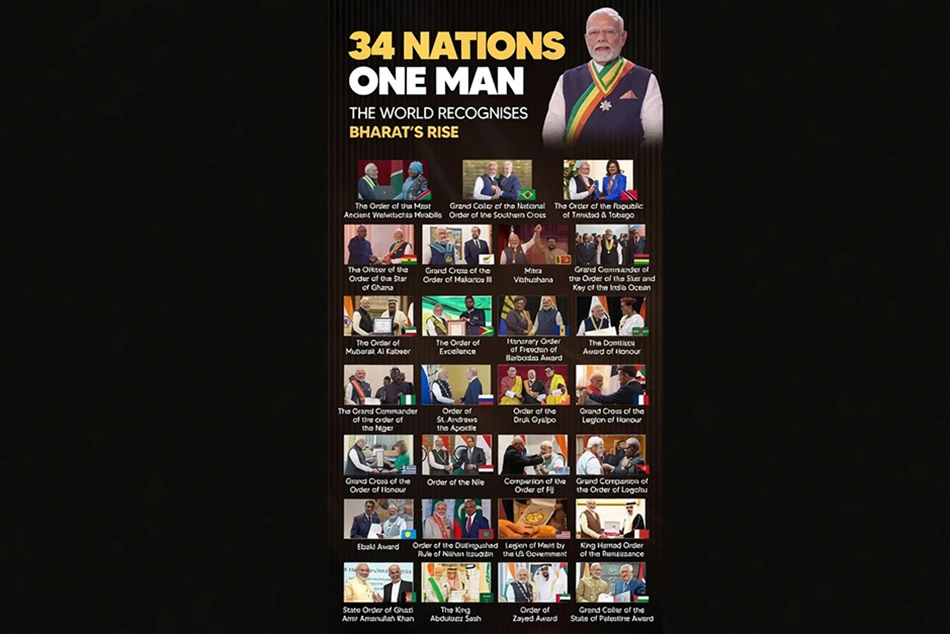
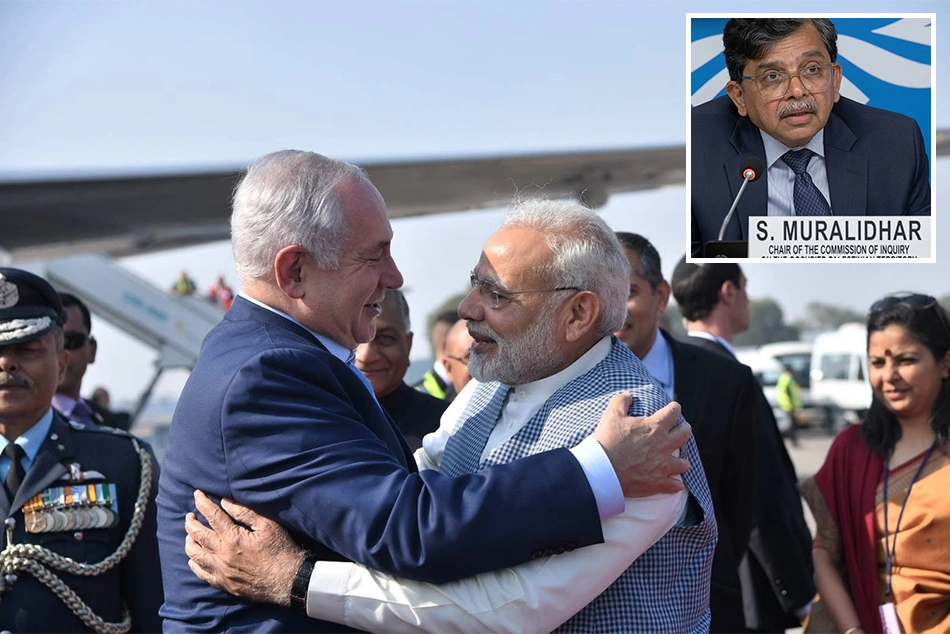
Every few months, another international honour is conferred upon Prime Minister Narendra Modi. The latest comes from Seychelles, where he has been recognised with an award associated with the Blue Economy. The External Affairs Minister was quick to hail it as another affirmation of India’s rising stature, and of Modi’s global leadership.
But a question that deserves to be asked is this:
What exactly are these awards rewarding?
Are they objective recognitions of exceptional governance, or are they diplomatic courtesies exchanged between friendly governments? More importantly, should international awards eclipse the realities unfolding within India itself?
The answer lies not in the ceremonial photographs or official press releases but in the condition of India’s rivers, forests, coastlines, democratic institutions and citizens.
India today faces one of its gravest ecological crises. Rivers are increasingly polluted, groundwater levels are falling across large parts of the country, wetlands continue to disappear, forests are fragmented for highways, mining and commercial projects, while environmental regulations have steadily been weakened in the name of ease of doing business. Air pollution claims hundreds of thousands of lives every year. Climate change has intensified floods, droughts and heat waves, exposing the vulnerability of millions.
Also Read: Narendra Modi's Approval Ratings: A Closer Look
The irony is difficult to miss. A leader honoured for environmental stewardship presides over a country where environmental impact assessments have been diluted, public consultations reduced, and ecological concerns frequently subordinated to large infrastructure and corporate interests.
The Blue Economy itself is a worthy concept. It seeks sustainable use of ocean resources while protecting marine ecosystems and ensuring equitable livelihoods. Yet India’s own coastline tells a far more complicated story. Coastal communities continue to struggle against aggressive port expansion, tourism projects, sand mining, industrial pollution and erosion. Traditional fishing communities repeatedly complain that policy increasingly favours corporate investment over local livelihoods.
Goa offers a striking illustration. Once celebrated for its pristine beaches, rivers and biodiversity, the state today grapples with rampant concretisation, unplanned tourism, mining pressures and fragile ecosystems pushed to their limits. Similar stories emerge from Kerala, Tamil Nadu, Odisha and Gujarat.
Can environmental awards truly ignore these realities?
The issue extends beyond ecology.
International awards have increasingly become instruments of diplomacy. Nations routinely confer honours on foreign leaders as gestures of goodwill, strategic partnership and geopolitical friendship. Such recognitions are seldom equivalent to independent assessments conducted by neutral institutions. They often accompany trade agreements, defence cooperation, investment partnerships or broader diplomatic engagement.
There is nothing inherently improper about this practice. States have always used honours to strengthen bilateral ties. But problems arise when governments portray these recognitions as unquestionable evidence of exceptional governance.
A leader may receive numerous international decorations while simultaneously facing criticism from human rights organisations, environmental experts, constitutional scholars and independent journalists.
These two realities can coexist.
Indeed, they frequently do.
The Ministry of External Affairs understandably celebrates every honour bestowed upon the Prime Minister. Diplomacy thrives on symbolism. Yet diplomacy should not become propaganda.
Foreign governments honour leaders for reasons that may have little to do with domestic governance. Strategic considerations often outweigh normative judgments. Countries seek influence, economic partnerships, defence cooperation and political goodwill.
One therefore has every reason to treat these awards with measured scepticism.
If awards truly reflected governance, one would expect corresponding improvements in internationally recognised indicators. Yet India has witnessed declining rankings in several global indices concerning press freedom, civil liberties, academic freedom and environmental performance. While governments may dispute these rankings, they cannot simply wish away the concerns they represent.
Domestically too, uncomfortable questions persist.
Why are environmental defenders increasingly criminalised?
Why are public hearings often reduced to procedural formalities?
Why do indigenous communities continue to resist projects imposed upon their lands?
Why are environmental clearances accelerated while ecological safeguards weaken?
Awards cannot answer these questions.
Nor can carefully choreographed ceremonies erase the lived experiences of citizens whose forests disappear, whose rivers become polluted or whose livelihoods are sacrificed in the name of development.
The personality cult surrounding Narendra Modi further complicates the issue. Every international recognition is amplified through official publicity machinery as proof that criticism within India lacks legitimacy. The message becomes simple: if the world honours our leader, domestic critics must surely be wrong.
Democracy demands precisely the opposite conclusion.
International recognition should never place elected leaders beyond scrutiny.
In mature democracies, honours received abroad do not exempt governments from accountability at home. Citizens continue questioning environmental policy, economic decisions, civil liberties and institutional independence regardless of foreign accolades.
India deserves no lower standard.
The External Affairs Minister performs his constitutional responsibility by advancing India’s diplomatic interests. But when every ceremonial honour becomes evidence of personal greatness, diplomacy risks being transformed into political marketing.
Foreign policy should project India—not merely its Prime Minister.
Ultimately, the greatest award any leader can receive is not another medal, citation or ceremonial decoration.
It is the trust of citizens.
It is cleaner rivers.
Protected forests.
Healthy coastlines.
Independent institutions.
Secure livelihoods.
A fearless press.
A judiciary that inspires confidence.
A democracy where dissent is respected rather than feared.
These are honours that cannot be negotiated through diplomatic channels.
They must be earned.
As India celebrates yet another international award bestowed upon its Prime Minister, citizens would do well to ask whether these decorations reflect genuine achievements or merely the rituals of international diplomacy.
History rarely remembers how many medals a leader collected.
It remembers the condition in which that leader left the nation.
Awards may decorate a leader’s chest. Only justice, democracy and ecological stewardship can honour a nation’s soul.
[The writer, Ranjan Solomon, has worked in social justice movements since he was 19 years of age. After an accumulated period of 58 years working with oppressed and marginalized groups locally, nationally, and internationally, he has now turned author-researcher and freelance writer focussed on questions of global and local justice struggles. Ranjan Solomon is particularly tied in close solidarity with the Palestinian struggle for freedom from Israeli occupation, and the cruel apartheid system since 1987. Ranjan Solomon can be contacted at ranjan.solomon@gmail.com.]
Follow ummid.com WhatsApp Channel for all the latest updates.
Select Language to Translate in Urdu, Hindi, Marathi or Arabic