Sampoorna Kranti has become relevant in India again
The legacy of ‘Sampoorna Kranti’ (Total Revolution) is rooted in the unwavering commitment to democracy, social justice, and ethical politics.
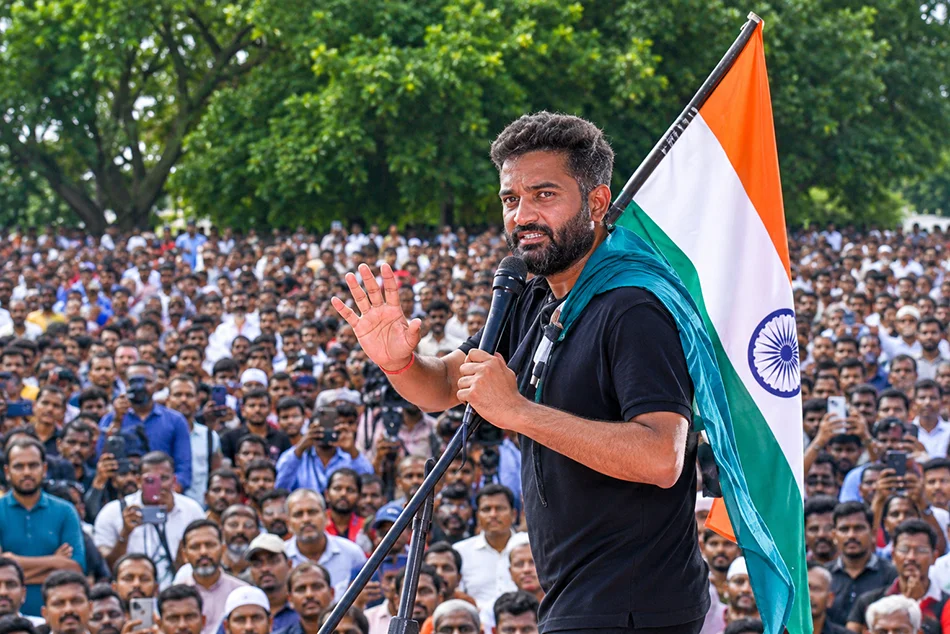
The Cockroach Janata Party (CJP), which is yet to register as a political party, has already rattled the backbone of the Bharatiya Janata Party, demanding the resignation of Chief Election Commissioner Gayanesh Kumar over alleged vote theft. But is it enough to clean the systemic rot that’s set in the Indian governing system?
The noise heard outside the window is “Vote Chor, Gaddi Chhod” ('Vote thief, leave the throne'), accusing the government of disenfranchising the people.
As an Indian, we are witnessing that even eighty years after independence, we are at a crossroads. In our democratic journey a daylight robbery has taken place with the help of government trickster called Special Intensive Revision (SIR) of voting list. We are witnessing how the ruling government has cheated on democratic values on different indicators of governance. Be it political, social, economic, educational, administrative, or even moral.
The country is witnessing the misuse of political power. The SIR is a testimony to it. There is much corruption in the administration, and so it is in the judiciary. Then there are issues of price rise, inflation, and unemployment.
So if that is the case, will the efforts of the Cockroach Janata Party bring comprehensive changes in the Indian system of governance, or will it be a wishy-washy kind of thing?
All these issues, currently in circulation, can only be addressed by bringing in Sampoorna Kranti - Total Revolution in India. This was a call given by the Lok Nayak Jaiparakash Naryan to clean up the mess in 1974. The JP movement, as it was called, encouraged citizens, especially youth, to actively participate in creating a just, transparent, and democratic society.
India is now witnessing the same situation as it was in the 1970s. The youth of the country are on the roads demanding to change the system. This they did successfully in the 1977 general election.
The same situation has developed right now in India. The BJP has robbed India of it democratic character, plural character, and its socialist commitments.
The BJP has brought in an explosive mix of Hindu religious identity and politics and is managing to stay in power through democratic manipulation. It is through such dirty tricks the BJP wants to achieve its political ambition to create a Hindu nation, where members of Abrahamic faiths will be considered outcasts.
This was the simplest thing India could have done in 1947: accepting the two-nation theory and making India the Hindu Rashtra. But then India chose the hard way to make the country democratic, socialist, and secular. Although the fall has been set in motion for a while, the BJP, in the last 12 years or so, is making efforts to reverse the clock. But the shine on its reverse sweep is fading since the news of the theft in Ram Mandir at Ayodhya came to light. What will be the future in the Rama Rajiya? This was its trailer.
Here, a comparison between Indira Gandhi and Narender Modi is essential to judge the powerful specimen in India. We have witnessed the era when “Indira is India- India is Indira. We are also witnesses to an era where Narendra Modi himself has said that he is not a biological creature but someone with divine powers.
Even being supernatural, the Chief of the country has played dirty tricks with the help of the CEC to disenfranchise those who don’t vote for the BJP. The CEC took out some 15 crore voters from the voter list, thus stealing the votes to remain in power.
Indira Gandhi could have done the same thing some 50 years ago. Definitely, she was much shrewder than Modi and Shah. The maker of Bangladesh certainly had a superior IQ. But Indira Gandhi had moral respect for the democratic character of India. Given her power and authority, she wielded the rules could have been bend to make her remain in power. But she stood to the democratic values and chose to face defeat in the general election.
The background to it was that in June 1975 Allahabad High Court gave a verdict against Indira Gandhi. This prompted her to declare internal Emergency on June 25, 1975. Emergency marked the cutting of democratic rights and civil liberties. This led to huge resistance against the perceived authoritarian rule of Mrs Gandhi. Here comes Lok Nayak Jai Prakash Narayan, who gave a call for ‘Sampoorna Kranti’ (Total Revolution), while addressing a massive gathering at Ramlila ground in Delhi.
The pressure of protests on the Indian dictator was so much that she was forced to lift the emergency on March 21, 1977. A general election was called. The opposition parties united under the banner of the Janata Party and swept the polls. History is witness to the fact that Indira Gandhi was defeated by Raj Narain from the Rae Bareli constituency in the 1977 general election. Even though the JP movement was successful in overthrowing Congress rule, it could not address the challenges that were faced by the people.
However, many issues that were rife in the 1970s are currently in circulation and are the reasons of protests. The challenge before the Cockroach Janata Party is how to address them.
The expectation of the common man is that the CJP should not only remove the CEC Gyanesh Kumar but also remove the BJP in the coming elections. This should come with a total overhaul of India's governance system.
The challenge before the CJP is much bigger than the resignation of CEC Gyanesh Kumar. Right now, the CJP lacks a vision and mission to address it. How will the CJP live up to the people’s expectations? The events that may unfold can tell this in the future. The fact remains that this cannot happen without ‘Sampoorna Kranti’ or Total Revolution in the country.
The legacy of ‘Sampoorna Kranti’ (Total Revolution) is rooted in the unwavering commitment to democracy, social justice, and ethical politics. This idea continues to inspire efforts toward political and social reform in India.
[The writer, Syed Ali Mujtaba, is a Journalist based in Chennai. He can be reached at syedalimujtaba2007@gmail.com. Views are personal.]
Follow ummid.com WhatsApp Channel for all the latest updates.
Select Language to Translate in Urdu, Hindi, Marathi or Arabic