Hajj 2026 Live: Pilgrims celebrate Eid al Adha, Sacrifice Animals
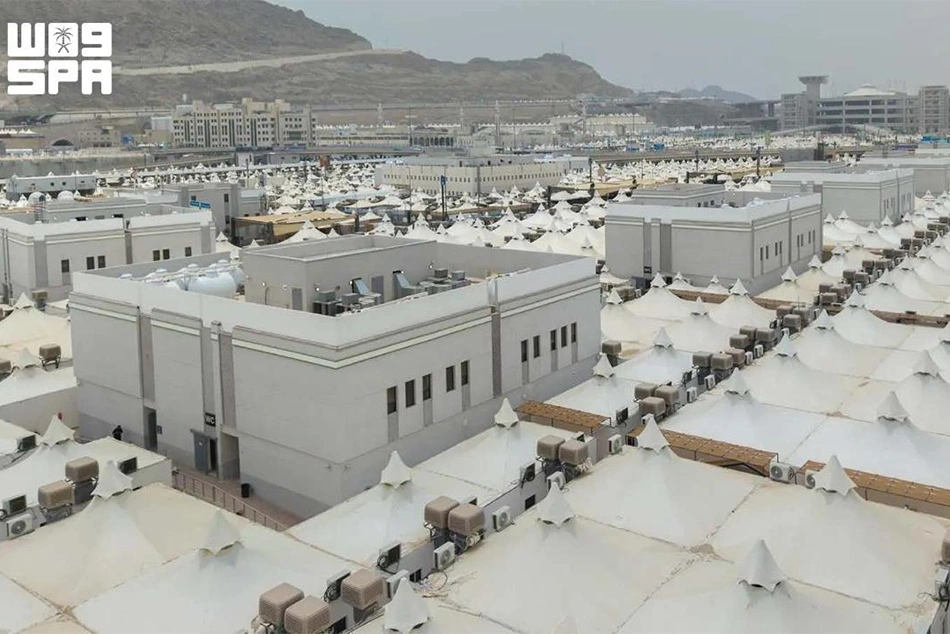
Draped in two plain, spotless white sheets and chanting Labbaik Allahumma Labbaik (Here I am O Allah, Here I am), close to 1.8 million Muslims from all across the world have arrived in Mina, The Tent City, as the annual ritual of Haj begins Monday Dhul Hijjah 8th 1447 H, corresponding to May 25, 2026
Hajj 2026 Live: Pilgrims are now camping in Mina to sacrifice animals to mark Youm un Nahr - the 3rd day of Hajj on 10th of Dhul Hijjah 1447 AH.
Today, Wednesday May 27, 2026, also marks Eid al Adha and millions of Muslims around the world will now join the Hajj pilgrims to observe the annual ritual of sacrificing animals.
The animal sacrifice on Eid al Adha is in rememberance of the sacrifice made by Prophet Ismael and his father Prophet Ibrahim (Peace be upon them all).
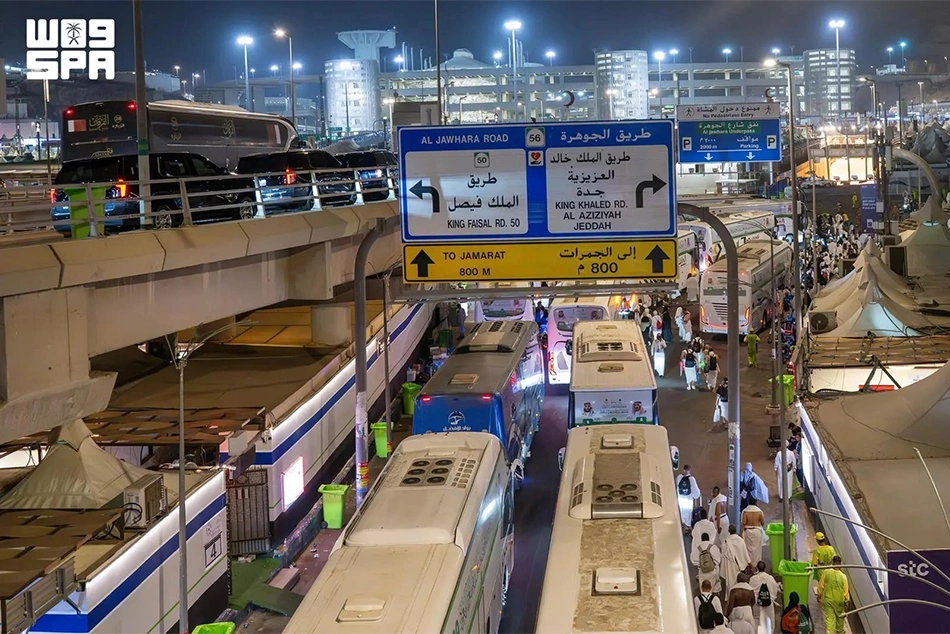
The pilgrims, who made their way from Muzdalifah after the day-long supplication in Arafat Tuesday, are now at Jamrat al Aqaba for Pelting of stone to devil on Youmun Nahr.
After or before stoning the devil, pilgrims are required to offer Tawaf e Ziyara, also called as Tawafe Ifaadah.
Hajj 2026: Day 3 Itinerary
- Hujjaj will leave Muzdalifa and proceed to Jamarat in Mina to stone the devil.
- Salat Al Eid will be led around 6 AM in the Haramain Sharifain.
- Sacrifice animals
- Hujjaj will then proceed to Masjid Al Haram to perform Tawaaf Al Ifaadah.
Tawaaf Al Ifaadah or Tawaf e Ziarah is one of the rituals of the annual Hajj pilgrimage. After Tawaf e Ziyarat, pilgrims will again move back to Mina and stay there for the next two or three days.
Tawaf e Ziarah can be performed before or after sacrificing animals.
Tuesday May 26 07:15 PM (Makkah Time): After spending the day on the Plains of Arafat - the key ritual of Hajj, pilgrims from all across the world - their exact number 17,073,01 Hujjaj officially released, are now proceeding to Muzdalifah. The pilgrims should offer Maghrib and Isha prayers in Muzdalifah, and spend the night in prayers. Staying in open in Muzdalifah is the Sunnah of the Prophet (peace be upon him).
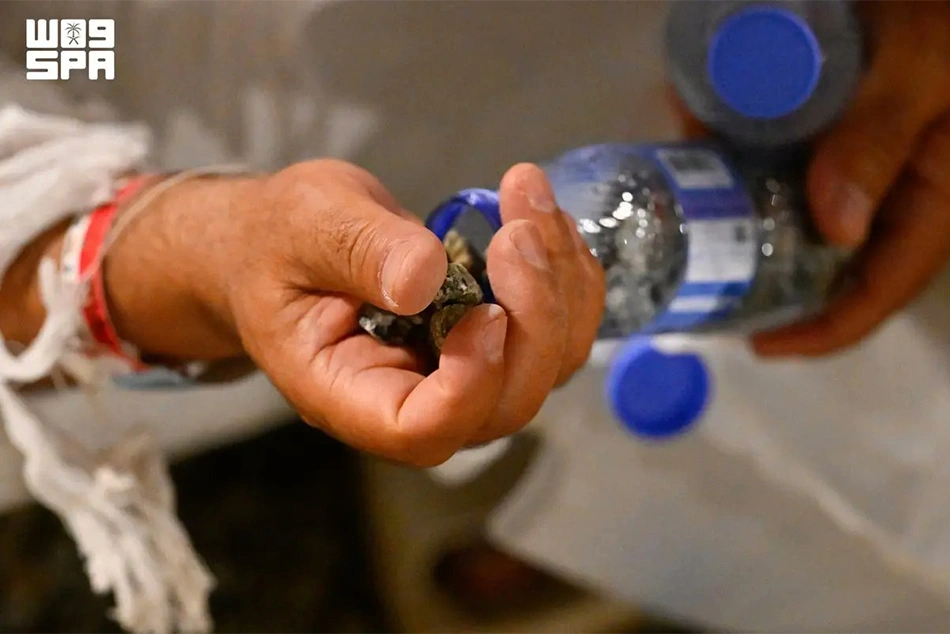
In Muzdalifah, the pilgrims will collect stone pebbles which will be used for Stoning of the Devil on the next three days.
From Muzdalifah, the pilgrims will walk to Mina after Fajr prayers Wednesday - the 10th Dhul Hijjah which is also Eid al Adha. In Mina, they will sacrifice animals to commemorate the sacrifices made by Prophet Ibrahim and his noble son Prophet Ismael.
The Sacred Night at Muzdalifah
Muzdalifah is one of the sacred sites of Hajj, where pilgrims spend the night of 10th Dhu Al-Hijjah after moving from Arafat, performing the combined and shortened Maghrib and Isha prayers in an atmosphere of devotion and tranquility, following the tradition of the Prophet Muhammad (peace be upon him).
The site is named Muzdalifah either because pilgrims arrive there in the early hours of the night (zulaf al-layl) or because it signifies their “drawing closer” to the Grand Mosque, reflecting the meaning of the Arabic verb izdalaf. Situated between Arafat and Mina, approximately eight kilometers from the Grand Mosque, Muzdalifah spans more than 11.68 million square meters and can accommodate over two million pilgrims. It is an open area with no permanent structures, preserving its religious character and distinct organizational status.
Muzdalifah holds deep spiritual significance, as reflected in the Qur’anic verse:
“Then when you leave Arafat, remember Allah (by glorifying His praises through prayers and invocations) at Al-Mash’ar Al-Haram.”
Standing in prayer and supplication there is encouraged, particularly at Al-Mash’ar Al-Haram, located at its center, which annually witnesses gatherings of worshippers engaged in prayer and reflection. It also serves as a key station in the sequence of Hajj rituals, where Prophet Muhammad spent the night and collected pebbles for the stoning ritual, according to Saudi Press Agency (SPA).
In earlier times, pilgrims would spend the night in Muzdalifah under simple conditions and with limited resources. Over time, however, the site has undergone extensive development to accommodate the growing number of pilgrims, as part of Saudi Arabia’s ongoing care for the holy sites under the leadership of King Salman and Crown Prince Mohammed bin Salman.
As part of this care, Kidana Development Company implemented the Mashaer Path project across an area of 170,000 square meters. The project includes 103,000 square meters of eco-friendly rubber flooring designed to reduce heat and physical strain, along with designated lanes for vehicles and golf carts. It also provides integrated facilities, including seating areas, water stations, mobile charging units, mist fans, umbrellas and directional signage.
The Ministry of Islamic Affairs, Dawah and Guidance also carries out annual preparations at Al-Mash’ar Al-Haram Mosque through a comprehensive plan that includes cleaning, upgrading lighting and sound systems, and providing carpets, as well as expanding the women’s prayer area by 100 percent to ensure smooth pilgrim flow in and out.
The mosque spans 5,040 square meters and accommodates around 5,500 worshippers. It is equipped with advanced air-conditioning systems, surveillance cameras and full operational staffing to serve worshippers.
To ensure pilgrims’ safety, relevant authorities use advanced digital systems to regulate the movement of pilgrims from Arafat to Muzdalifah, with real-time monitoring from a central control room equipped with smart cameras to enable rapid response.
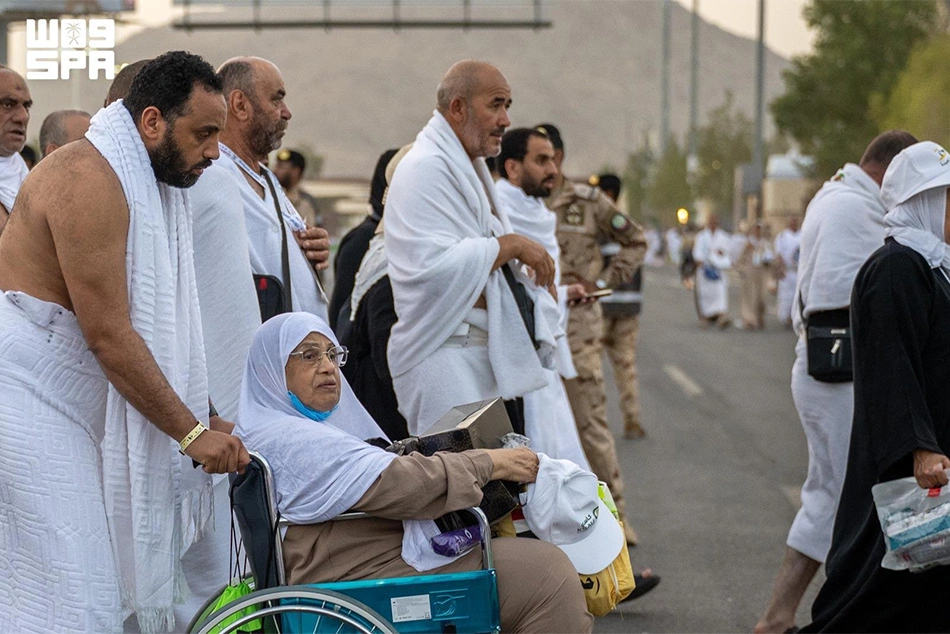
Tuesday May 26 12:15 PM (Makkah Time): Imam and Khateeb of Masjid An Nabawi, Sheikh Ali Bin Abdul Rahman Hudhaify, has begun delivering Hajj Sermon from Masjid Mamirah.
The Sheikh emphasized on Tauheed as one of the key pillars of Islam and urged the pilgrims present in Arafat to refrain from all works of shirk. He also briefly explained the steps of Hajj, and the significance of Eid al Adha as described in Quran and Sunnah.
Hajj 2026 Sermon: Key Points
Addressing the Pilgrims gathered in Arafat, Sheikh Al Hudaify called on Muslims to adopt piety and fulfil their commitments. “O people, fear Allah, for by it the servant attains salvation in his Hereafter,” he said during the sermon.
He stressed that true preparation for the Hereafter lies in monotheism and sincere worship. “The greatest preparation for the Hereafter is through monotheism and the worship of Allah alone, and abandoning the supplication to anyone other than Him,” he said.
The imam also reminded worshippers that Prophet Muhammad (PBUH) was the final messenger of Allah and urged Muslims to adhere to truthfulness while avoiding falsehood, backbiting and religious innovations.
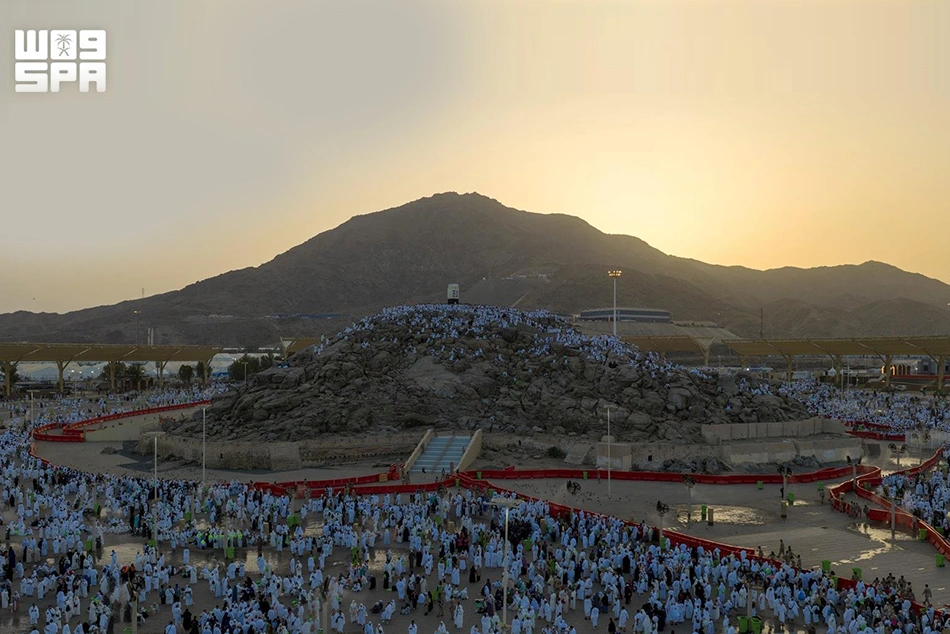
Highlighting the spiritual and social significance of Hajj, Sheikh Al Hudaify said the pilgrimage reflects unity and solidarity among Muslims from across the world. “In Hajj, the manifestations of mutual acquaintance, harmony, cooperation, and solidarity among the people of Islam become evident,” he said.
He further instructed pilgrims to maintain discipline during the pilgrimage and avoid political activities or disputes. “There should be no disobedience, no arguing during Hajj, and no political slogans or partisan calls,” he said.
The sermon also emphasised calmness and compliance with official guidelines during Hajj rituals. “Follow and implement the instructions of the organising authorities to avoid chaos and to safeguard lives,” Sheikh Al Hudaify urged.
Special prayers were offered during the sermon for the forgiveness of sins, acceptance of worship and improvement in the condition of Muslims worldwide. “O Allah, accept from the pilgrims their supplications and rituals, make their affairs easy for them, forgive their sins, and return them to their homelands safe, blessed, and successful,” he prayed.
He is now leading Dhuhr and Asr prayers.
After performing Dhuhr and Asr prayers, pilgrims will now remain in Arafat till sunset. They will leave Arafat and walk to Muzdalifah and offer Maghrib prayers there.
Tuesday May 26 11:30 AM (Makkah Time): Even as the temperature here hit 46 degrees, Pilgrims fill the Sacred Landscape of The Plains of Arafat with constant prayer, and waiting for Hajj Sermon from the iconic Masjid Namirah.
As per officials, Sheikh Ali Bin Abdul Rahman Hudhaify, the Imam and Khateeb of Masjid An Nabawi, will deliver the Hajj Sermon from the mosque around 12:15 PM Makkah Time.
After the Hajj Sermon, the Imam will lead Dhuhr and Asr commbined and shortened prayers following the Sunnah of Prophet Muhammed (Peace be upon him).
Among around 1.8 Muslims from around the world who are in Arafat today to perform Hajj is also Grand Mufti of the Kingdom, Sheikh Dr. Saleh Al-Fawzan. Dr Al Fawzan arrived at the Mina encampment Monday.
As of now, worshippers are seen their hands raised in prayer, reciting the Talbiyah and Takbeer, and seeking forgiveness in an atmosphere marked by humility and reflection.
The day of Arafah, 9th of Dhul Hijjah, is one of the holiest days in the Islamic calendar and a moment associated with mercy, forgiveness and spiritual renewal. It also coincides with the Farewell Pilgrimage of Prophet Muhammad in A.D. 632, during which he delivered his final sermon at Mount Arafat, outlining principles of justice, equality and the sanctity of life and property.
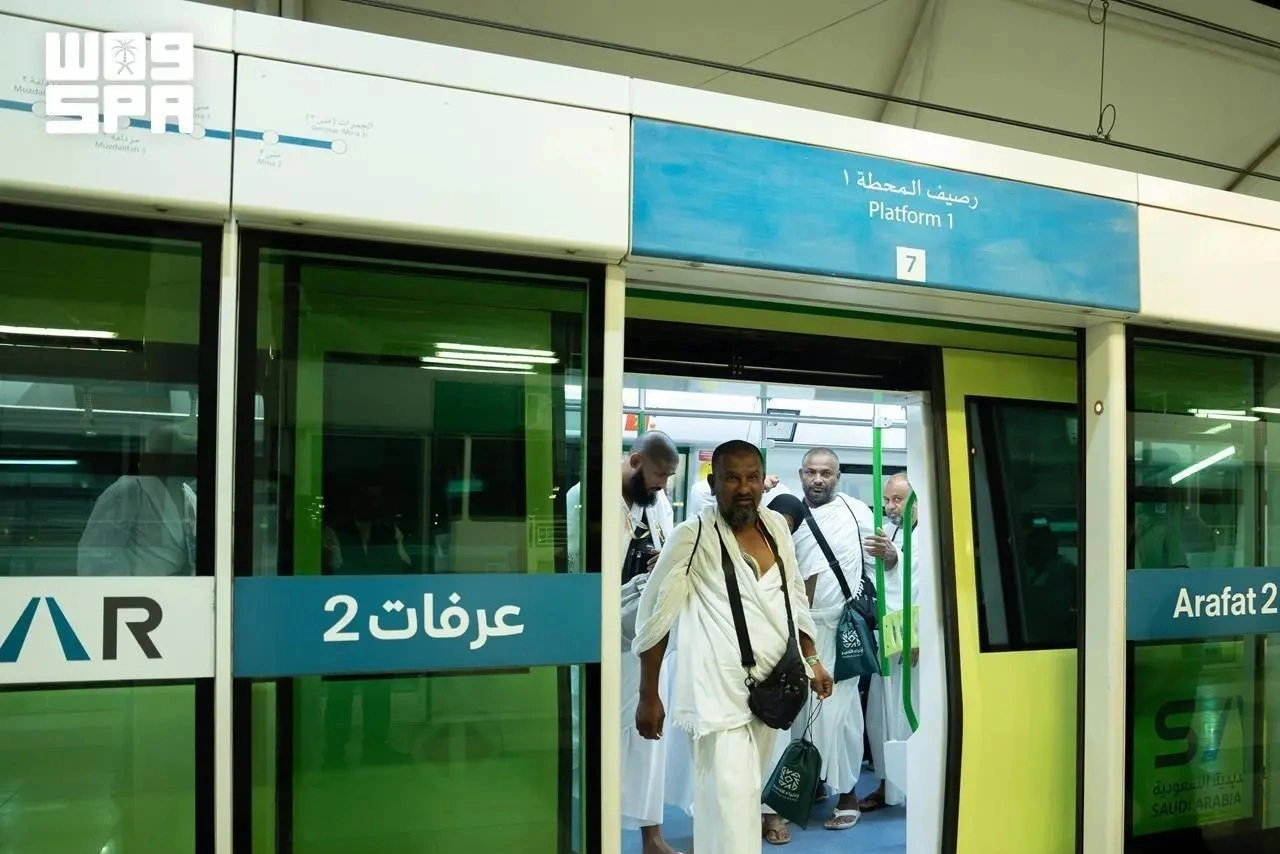
Tuesday May 26 09:30 AM (Makkah Time): Close to1.8 million pilgrims, including some 1.6 million Muslims from outside of Saudi Arabia, gathered Tuesday Dhul Hijjah 09, 1447AH, correspdoning to May 26, 2026, on the Plain of Arafat for the most sacred and spiritually defining stage of the Hajj pilgrimage, in scenes of intense devotion and prayer reported by the Saudi Press Agency (SPA).
From dawn on the 9th day of Dhul-Hijjah, pilgrims streamed from Mina into Arafat, where they will spend the day in worship, Qur’an recitation, remembrance of God and supplication, remaining within the designated boundaries of the sacred site until sunset.
The Plains of Arafat
As per the Islamic tradition, the standing at Arafat, known as Wuquf Arafah is the pinnacle and heart of Hajj, and is considered the pilgrimage’s central rite. Prophet Muhammad (Peace be upon him) said: “Hajj is Arafah,” emphasizing the essential nature of the gathering.
In Arafat, pilgrims will also listen to Hajj Sermon from Masjid Namirah to be delivered today by Sheikh Ali Bin Abdul Rahman Hudhaify, the Imam and Khateeb of Masjid An Nabawi. Pilgrims will then perform the Dhuhr and Asr prayers combined and shortened in accordance with the Sunnah of Prophet Muhammad (peace be upon him).
Throughout the day, worshippers raise their hands in prayer, recite the Talbiyah and Takbeer, and seek forgiveness in an atmosphere marked by humility and reflection.
Arafat, located about 20 kilometers southeast of Makkah, is an open plain dominated by Jabal Al-Rahmah, or the Mount of Mercy, where many pilgrims gather for prayer and contemplation. Islamic tradition holds that the site is linked to the reunion of Adam and Eve and remains deeply symbolic for Muslims worldwide.
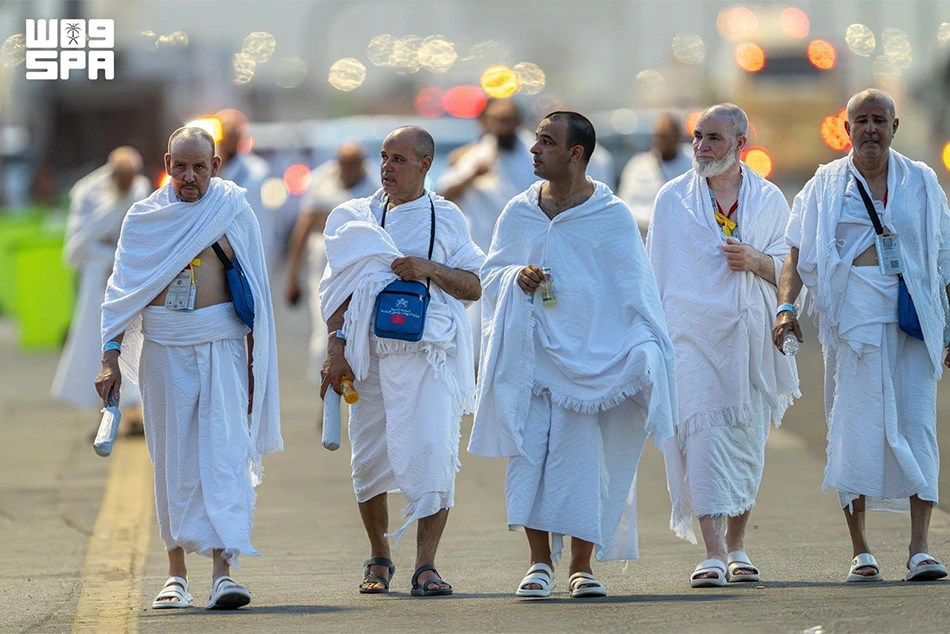
Monday May 25 10:30 PM (Makkah Time): The Tent City of Mina is reverberating with Talbiya, Labbaik Allahummah Labbaik, as close to 1.8 million pilgrims from all corner of the world and Saudi Arabia stay to observe Day of Tarwiyah on the first day of Hajj 1447 AH despite scorching heat.
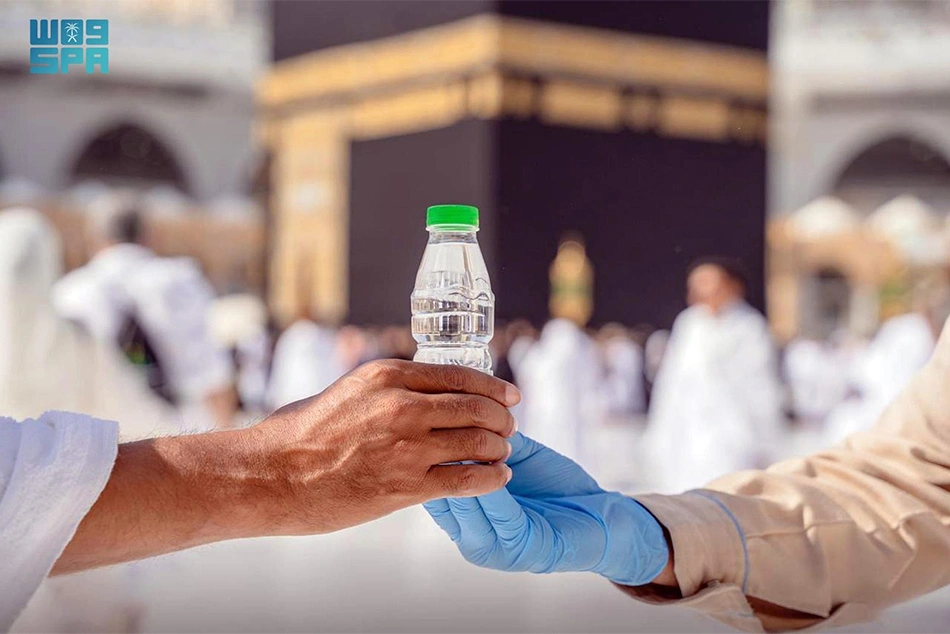
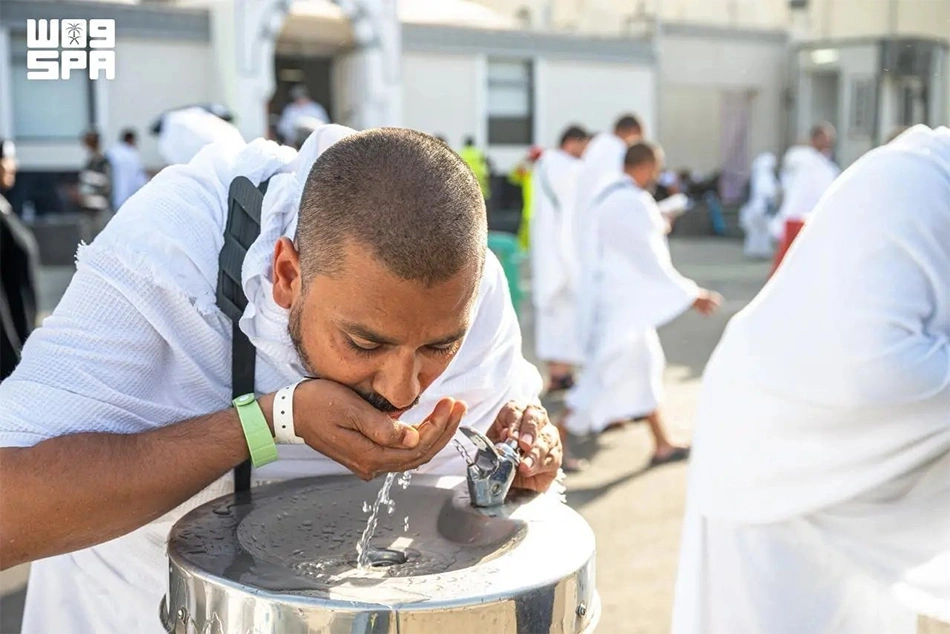
The temperature in Makkah, Mina and other holy places is unusually high. The local officials are using various means including shower and distributing bottles of chilled water to provide relief to the pilgrims.
The Ministry of Health has issued a heat advisory for pilgrims in the wake of scorching surface temperatures, which pose a significant health risk. Many pilgrims are seen carrying white umbrellas to protect themselves from the scorching sun.
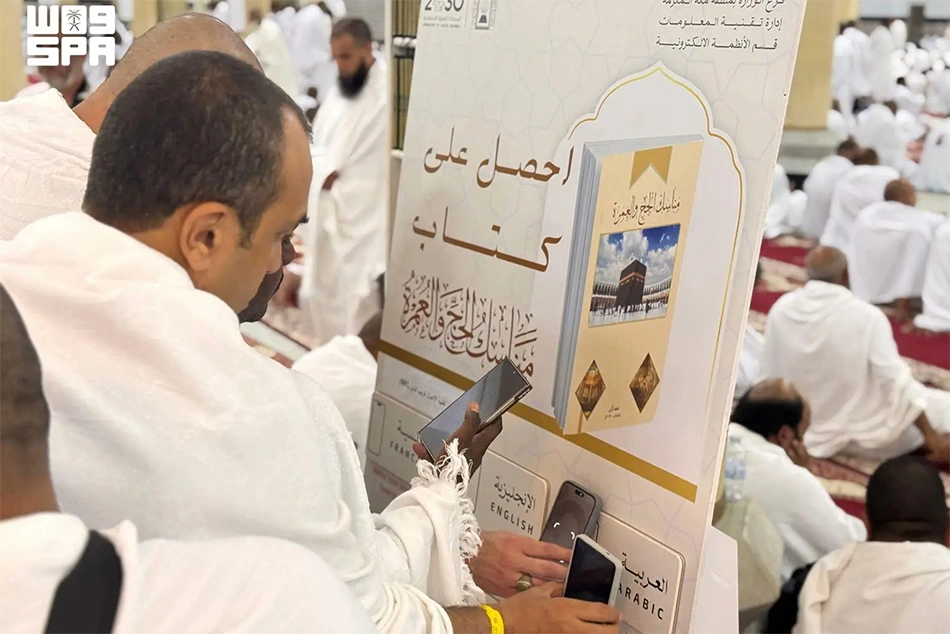
The Ministry of Islamic Affairs, Dawah and Guidance continues providing guidance and digital services for pilgrims at Al-Khayf Mosque during the Day of Tarwiyah. Services included access to an electronic library featuring educational and guidance materials in several international languages, as well as religious awareness services through video communication and messages displayed on digital screens inside the mosque, accodring to Saudi Press Agency.
The ministry also provided electronic access to a guidebook on Hajj and Umrah rituals through NFC technology. Additional services included a 24-hour multilingual toll-free number (8002451000) for religious inquiries, as well as guidance booths offering direct assistance to pilgrims.
Monday May 25 09:30 PM (Makkah Time): Every nook and corner of the Tent City Mina is filled by the Hajj pilgrims who dressed in two white sheets of clothing are chanting Talbiyah to register their presence for the annual ritual and seek forgiveness from the Almighty Allah - The Great.
Hajj Pilgrims, who have come from all corners of the globe, began arriving in Mina in the early hours of Monday, Dhul-Hijjah 8, 1447 H to spend the Day of Tarwiyah immersed in supplications to God in the tent city for their forgiveness and salvation.
The pilgrims will spend the Tarwiyah Day in prayers and meditation in their tents in preparation for Tuesday’s standing at Arafat, the pinnacle of the annual pilgrimage of Hajj. In Mina, located between Makkah and Muzdalifah some 7 kms northeast of the Grand Mosque, the pilgrims pray Dhuhr, Asr, Magrib, Isha and Fajr prayers.
They shorten Dhuhr, Asr and Isha prayers to two Rakaats, following the tradition of the Prophet (peace be upon him).
Monday May 25 09:00 PM (Makkah Time): Draped in two plain, spotless white sheets and chanting Labbaik Allahumma Labbaik (Here I am O Allah, Here I am), close to 1.8 million Muslims from all across the world have arrived in Mina, The Tent City, as the annual ritual of Haj begins Monday Dhul Hijjah 8th 1447 H, corresponding to May 25, 2026.
Hajj is performed annually to commemorate Prophet Ibrahim, his wife Hager and their noble son Prophet Ismael (May peace be upon all of them). It begins on 8th of Dhul Hijjah - the last month of Islamic Calendar when pilgrims march to Mina for a night stay.
Before moving into Mina to mark the beginning of the annual pilgrimage of Hajj on Monday, the Day of Tarwiyah, the pilgrims draped in Ihram, had visited the Grand Mosque in Makkah to perform Tawaf Al-Qudum (Tawaf of Arrival).
After staying in Mina Monday night, the pilgrims will proceed Tuesday morning (Dhul Hijjah 9th 1447 H, corresponding to May 26, 2026) after Fajr to Arafat. Standing on the Plains of Arafat is the most important ritual of Hajj.
Hajj Steps
- Hajj begins with pilgrims wearing ahram – two white sheets, and chanting Talbiyah (Labbaik) proceeding to Mina – around 10 kms from Makkah on 8th day of Dhul Hjjah - the first day of Hajj called The Day of Tarwiyah.
- Pilgrims march to Mina after performing Tawaf Al-Qudum (Tawaf of Arrival). The pilgrims remain in the Tent City for a day and also spend there the night, praying, praying and praying.
- After Fajr prayers in Mina, pilgrims will proceed to the Plains of Arafat. Standing on the plains of Arafat on 9th of Dhul Hijjah is the key ritual of Hajj. Pilgrims are required to be at Arafat till sun set.
- At Arafat, Pilgrims combine Zuhr and Asr prayers , and also listen to the Hajj Sermon from Masjid Namirah. Sheikh Ali Bin Abdul Rahman Hudhaify, the Imam and Khateeb of Masjid An Nabawi, has been appointed as the Hajj Khateeb for the year 2026 (1447 AH)
- Close to sunset on 9th of Dhul Hijjah the pilgrims will leave for Muzdalifah. Pilgrims should note that they will have to offer Maghreb prayers in Muzdalifah, and not in Arafat.
- After spending the night in Muzdailfah, pilgrims will in the morning on 10th of Dhul Hijjah proceed to Mina again for stoning of devil and to sacrifice animals. 10th of Dhul Hijjah also marks Eid al Adha.
- After sacrificing animals, pilgrims will have to go to Makkah and perform Tawaf - circulate the Kaaba seven times (Tawaf e Ziyarat or Ziarah), and then Sa’y between hills of Safa and Marwa. They then drink from Zam-zam well and return to Mina.
- They will remain in Mina for the next 2 or 3 days, perform stoning of devil again and then return to Masjis Haram in Makkah for Farewell Tawaf. This makes the end of Hajj.
Key Activities on First Day of Hajj
- Shortening of Salah: Pilgrims perform the Dhuhr, Asr, Maghrib, and Isha prayers in Mina, shortening the four-unit prayers to two units without combining them, followed by the Fajr prayer the next morning.
- At mid-morning on the 8th of Dhul Ḥijjah, the Prophet ﷺ went to Minā, with his Companions (radiy Allāhu ʿanhum). They performed Zuhr, ʿAṣr, Maghrib, Ishā’ and Fajr, shortening the four-unit prayers into two. They prayed these at the normal times.
- Recitation of Talbiyah: Men recite the Talbiyah aloud from the moment they enter Ihram until the stoning of the Jamrah al-Aqabah on the 10th of Dhul Hijjah.
- Spiritual Preparation: The day is dedicated to rest, reflection on the Day of Judgment, and preparing spiritually and physically for the Day of Arafat, which is the central pillar of Hajj.
- Hydration and Rest: Historically called "Tarwiyah" (quenching thirst), pilgrims are encouraged to drink ample water and conserve energy, as there is no water available at Arafat.
Watch: Hajj 2025 Live Stream
Operating as a highly advanced "seasonal smart city," Mina is defined not only by the vast expanse of white tents blanketing its slopes, but by the staggering scale of the operational apparatus functioning behind the scenes. This logistical framework encompasses power and cooling grids, crowd management protocols, pedestrian mobility mapping, and real-time flow control, seamlessly integrated with security, healthcare, and food services. Together, these elements establish the holy sites as a unique global model for mass-gathering management.
The upgraded tent infrastructure in Mina covers approximately 2.5 million square meters, engineered to rigorous safety and security standards, providing a capacity that exceeds 2.6 million pilgrims.
With each Hajj season, Mina transcends its role as a mere hosting ground; it functions as a dynamic project aimed at continuously elevating the pilgrim experience. This year, Mina witnessed the implementation of major spatial development projects centred on the concept of "urban humanisation." These initiatives fundamentally enhanced the physical environment by expanding shaded areas and rest zones, upgrading the urban landscape, and designing highly flexible, streamlined pedestrian pathways.
What truly distinguishes Mina is its unique rhythm. It is a city that achieves peak population density for a few days, returns to absolute tranquility upon the completion of the rituals, and immediately begins preparations for an even more advanced Hajj season, for the next season.
As evening falls, the illuminated pathways fill with throngs of pilgrims moving seamlessly between their tents and the Jamarat, creating a magnificent tableau of humanity united in faith. This profound scene reflects Saudi Arabia's unwavering commitment to harnessing cutting-edge technology and vast resources to serve pilgrims. Guided by long-term strategic plans, relevant authorities continuously develop the holy sites to increase operational efficiency, mitigate heat stress, and elevate the overall pilgrim experience, solidifying Saudi Arabia's position as the undisputed global leader in crowd management.
[With inputs from Asad Mirza, who is among the pilgrims performing Hajj this year.]
Follow ummid.com WhatsApp Channel for all the latest updates.
Select Language to Translate in Urdu, Hindi, Marathi or Arabic