Muslim NATO or Search for Strategic Autonomy in Multipolar World?
The phrase 'Muslim NATO' has begun to touch geo-politics with increasing frequency, but what is emerging is not a religious alliance but the gradual search for a new security architecture rooted in regional cooperation, strategic autonomy and the realities of an increasingly multipolar world
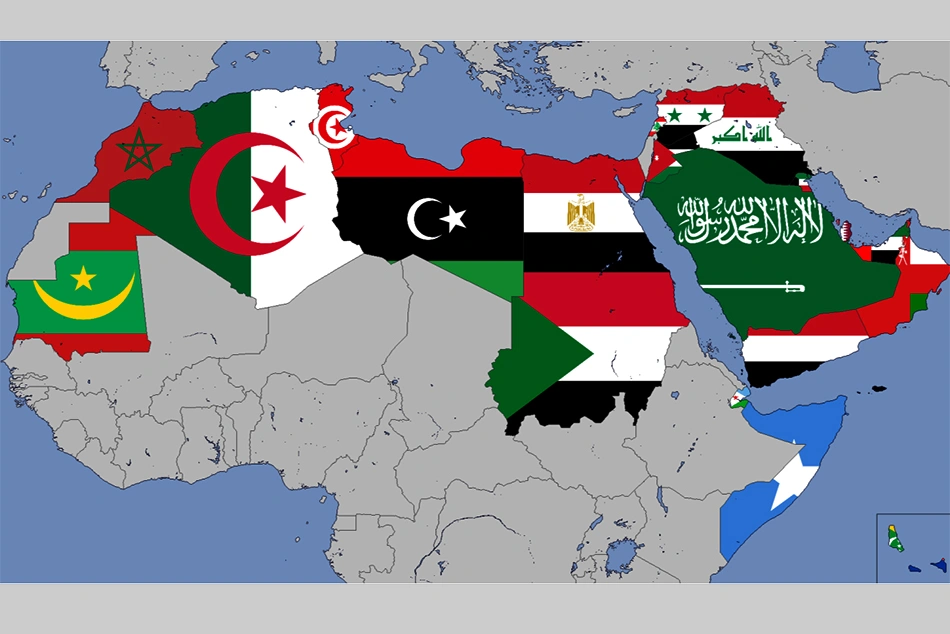
“Muslim NATO” is a political expression for an emerging regional defence bloc centred around Turkey, Saudi Arabia, and Pakistan. Built upon a strategic mutual defence agreement established between Pakistan and Saudi Arabia, this framework mirrors NATO’s Article 5 by dictating that an attack on one member is considered an attack on all.
The phrase “Muslim NATO” has begun to touch geo-politics with increasing frequency in diplomatic commentary, think-tank discussions and sections of the international media. It evokes images of a military alliance forged along religious lines, mirroring the North Atlantic Treaty Organization, famous as NATO.
The phrase is provocative, but it is also misleading.
There is no formal military pact binding Muslim-majority nations into a unified defence structure comparable to NATO. Yet dismissing the discussion altogether would be equally mistaken. Something important is unfolding across West Asia and the wider Islamic world. What is emerging is not a religious alliance but the gradual search for a new security architecture rooted in regional cooperation, strategic autonomy and the realities of an increasingly multipolar world.
When old alliances lose legitimacy, new partnerships emerge – not necessarily to wage war, but to reclaim the right to shape their own destiny.
This development cannot be understood in isolation. It is inseparable from the erosion of the unipolar order that emerged after the Cold War. For nearly three decades, the United States and its Western allies enjoyed unparalleled military, political and financial dominance. NATO expanded, interventions multiplied and Washington increasingly assumed the role of global arbiter. The promise was that Western leadership would deliver stability, democracy and prosperity.
The record tells a different story.
From Afghanistan to Iraq, from Libya to Syria, interventions justified in the name of freedom often left fractured societies, weakened institutions and prolonged instability. The costs were borne overwhelmingly by ordinary people. The promise of a rules-based international order increasingly appeared selective, applied rigorously to adversaries but often suspended when strategic allies violated the very principles the West claimed to uphold.
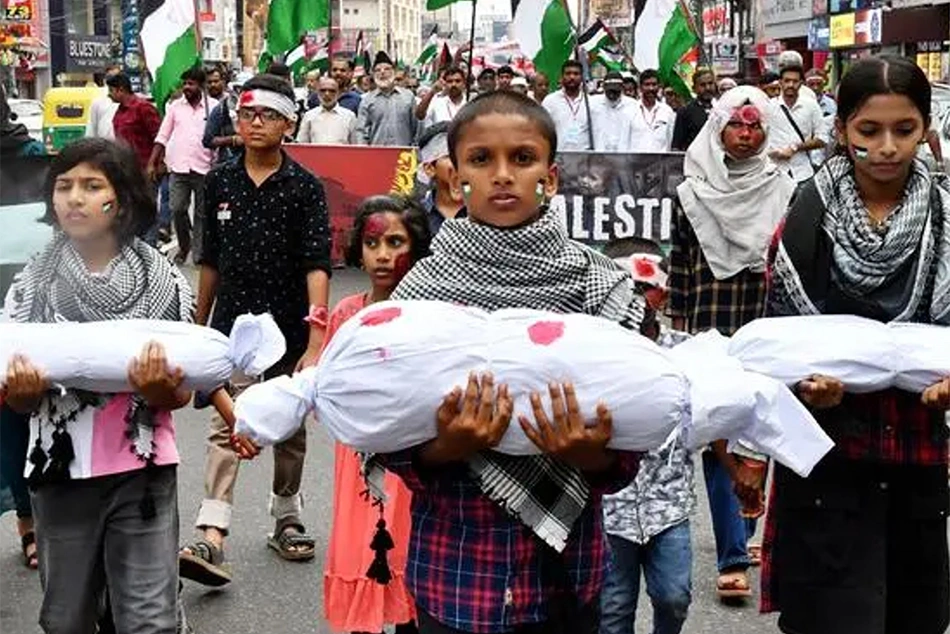
Nowhere has this contradiction become more visible than in Palestine. Israel’s devastating military campaign in Gaza, backed politically and militarily by major Western powers despite mounting international criticism, has transformed perceptions across the Global South.
For many governments and millions of citizens, Gaza has become the defining symbol of an international order in which international law is invoked inconsistently and humanitarian principles are subordinated to geopolitical interests.
The consequences extend well beyond Palestine. The war has accelerated a broader reassessment of global alliances. Countries that once relied almost exclusively on Western security guarantees have begun asking difficult questions. Can security continue to depend upon external powers whose strategic priorities frequently shift? Can sovereignty be protected when regional conflicts become theatres for global competition? Can lasting peace emerge from endless militarisation directed from outside the region?
These questions are driving profound changes.
The Middle East has traditionally been portrayed as a region defined by immutable rivalries: Sunni versus Shia, Arab versus Persian, monarchies versus republics. Such divisions undoubtedly exist and have fuelled painful conflicts. Yet they have often been magnified by external powers whose influence depended upon regional fragmentation. Divided neighbours are easier to manage than confident partners capable of defining their own collective interests.
Recent diplomacy suggests another possibility. The restoration of relations between Saudi Arabia and Iran, facilitated by China rather than Washington, was more than a bilateral breakthrough. It symbolised a growing willingness among regional powers to resolve disputes through dialogue instead of perpetual confrontation. Similar efforts to rebuild relations among former rivals indicate a recognition that endless hostility has exhausted political capital while delivering little security.
This does not mean that deep differences have disappeared. National interests continue to diverge, ideological disagreements remain sharp and regional competition has not ended. But governments increasingly recognise that cooperation in selected areas may serve their interests better than permanent confrontation.
This emerging pragmatism has coincided with broader transformations in global politics. The expansion of BRICS, growing trade conducted outside the US dollar, renewed South-South cooperation and increasing resistance to unilateral sanctions all point towards the diffusion of global power. States across Asia, Africa and Latin America are seeking greater strategic flexibility rather than exclusive dependence on any single bloc.
Security naturally forms part of this larger search for autonomy.
Western analysts often interpret greater military coordination among Muslim-majority countries primarily through the lens of political Islam. Such interpretations deserve careful scrutiny. They frequently assume that any institutional cooperation involving Muslim states must necessarily be ideological or anti-Western. Yet similar assumptions are rarely applied elsewhere. European military cooperation is not described as a “Christian alliance”. Regional defence arrangements in Asia are seldom interpreted through religious identity. The label “Muslim NATO” therefore reveals as much about Western anxieties as it does about developments within the Islamic world.
Religion alone cannot explain the changing strategic landscape. States act primarily according to national interests, economic priorities and security calculations. Shared religious identity may facilitate dialogue, but it is seldom sufficient to sustain long-term geopolitical cooperation. History offers abundant evidence that Muslim-majority countries have often disagreed as intensely with one another as they have with non-Muslim states.
Equally important is the need to distinguish Islam from the actions of violent extremist organisations that have claimed to act in its name. Every major religious tradition has produced movements that distort faith for political or violent ends. Christianity witnessed the Crusades, the Inquisition and contemporary forms of white supremacist extremism invoking Christian symbolism. Hindu nationalism, Buddhist militancy in Myanmar and extremist Jewish settler movements demonstrate that religious intolerance is not unique to Islam. It is therefore analytically flawed and morally indefensible to equate the faith of nearly two billion Muslims with the ideology of fringe organisations.
Indeed, many Muslim-majority societies have themselves been the principal victims of extremist violence. Their governments have devoted immense resources to combating terrorism while simultaneously confronting external intervention, economic sanctions and internal political pressures. To understand current efforts at regional cooperation solely through the prism of radical Islam is therefore to misunderstand both history and contemporary geopolitics.
The more persuasive explanation lies elsewhere. A growing number of states have concluded that dependence upon external security providers has failed to deliver durable peace. Decades of foreign military presence have not prevented war. Arms purchases have not eliminated insecurity. Proxy conflicts have enriched defence industries while devastating entire societies. Increasingly, governments are exploring whether regional problems require regional solutions.
It is against this background that discussions of a so-called “Muslim NATO” acquire their real significance—not as evidence of an ideological crusade, but as an expression of a wider search for strategic independence in a changing international order.
Empires are built on fear. Enduring alliances are built on trust. If a Muslim NATO is to mean anything, it must reject the first and embody the second. Otherwise, it will merely become another chapter in the long history of militarised politics. At the end of the day, the highest form of security is not the ability to wage war, but the wisdom to make war unnecessary.
[The writer, Dr. Ranjan Solomon, has worked in social justice movements since he was 19 years of age. After an accumulated period of 58 years working with oppressed and marginalized groups locally, nationally, and internationally, he has now turned author-researcher and freelance writer focussed on questions of global and local justice struggles. Ranjan Solomon is particularly tied in close solidarity with the Palestinian struggle for freedom from Israeli occupation, and the cruel apartheid system since 1987. Ranjan Solomon can be contacted at ranjan.solomon@gmail.com.]
Follow ummid.com WhatsApp Channel for all the latest updates.
Select Language to Translate in Urdu, Hindi, Marathi or Arabic