How effective are NEET, other tests in evaluating students true potential?
Under India's present education system, it is impossible to make a fair assessment of a student’s real potential
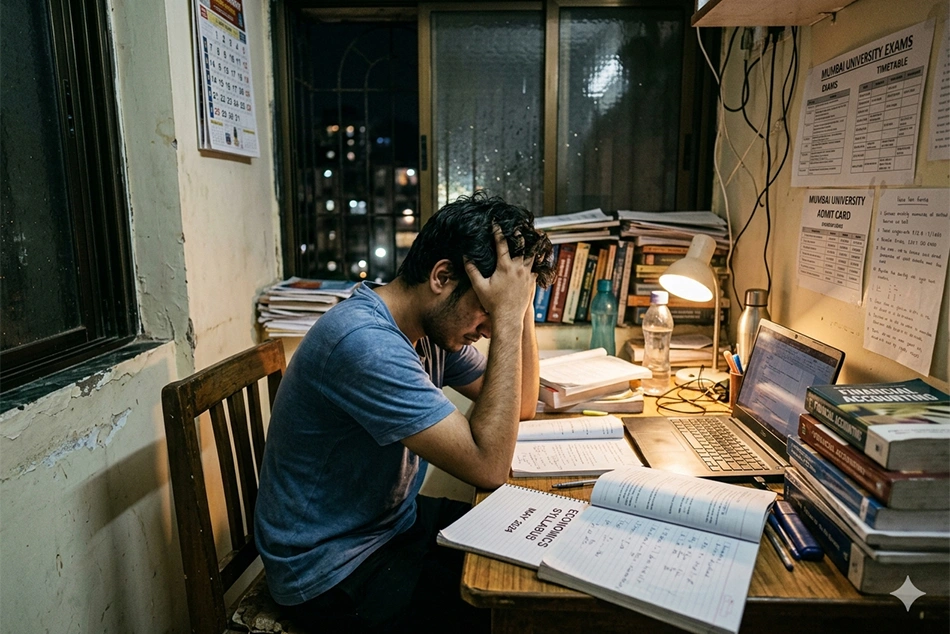
A fire at a coaching centre in Lucknow left several students dead and injured. Earlier, in Kota, which has now become a major coaching hub, reports of student suicides have surfaced year after year. These are extremely tragic and heartbreaking incidents that require serious reflection by society and governments alike.
In addition, over the past several years, we have witnessed question papers of various examinations being leaked before the tests are conducted. More accurately, such leaks are often facilitated through money power and collusion. Whenever such incidents come to light, students are required to retake the examinations, placing an enormous mental burden upon them. Available information suggests that nearly 90 examination papers have been leaked over the past ten years. This is an extremely serious situation.
Students study hard and appear in examinations with the hope of gaining admission to higher education institutions. The entire family is involved in this process because parents also aspire to see their children receive quality higher education. Many students take the same examination three or four times, hoping that one attempt will eventually secure them admission through better scores.
When question papers are leaked, students experience anger, frustration, and helplessness. It is easy to understand that there is no guarantee that a student who performs well in one examination will do equally well the next time. At such a young age, many students are unable to bear this mental pressure, and some take the extreme step of suicide, causing immense grief to both their families and society.
Coaching Centre Culcture
Perhaps the most unfortunate development is that in many schools, education after the tenth grade has become largely nominal. Students are sent to coaching centres where they are trained exclusively for entrance examinations. In many cases, regular schools themselves encourage students to join coaching institutes, effectively abandoning their educational responsibilities. Some schools even mark students’ attendance fraudulently.
School education involves interaction with teachers, discussions, and the broadening of students’ intellectual horizons, all of which are invaluable for their future development. In contrast, coaching centres focus primarily on solving entrance-exam questions and teaching memorization techniques. Students are led to believe that the sole purpose of life is to secure admission by any means possible, whereas the true objective of education is to nurture good citizens, knowledgeable individuals, broad-minded thinkers, and scholars sensitive to social issues.
Coaching centres also involve substantial expenses that economically weaker sections cannot afford. As a result, their children are left behind.
Current Examination System
The current examination system can never accurately assess the true talent of students. It is often reported that coaching institutes themselves selectively recruit students, giving special attention to those expected to score highly. Such practices cultivate a sense of discrimination from an early age.
This raises another important question:
How should students be evaluated?
Under the present system, it is impossible to make a fair assessment of a student’s real potential. Earlier, admissions to professional colleges were largely based on Class XII marks. However, circumstances have changed, as marks too are often influenced by recommendations and other forms of pressure. Even practical examinations are not free from such influences. In this environment, education experts should be consulted and a broad discussion initiated on the most appropriate methods for evaluating students.
As far as the leakage of NEET question papers is concerned, the agencies entrusted with conducting the examination have the responsibility of ensuring complete security and confidentiality. This issue also requires detailed discussion and scrutiny.
The massive deployment of paramilitary forces and police personnel at examination centres on June 21 created unnecessary pressure on students. Girls were subjected to searches that involved undoing their hair buns, as though previous question-paper leaks had occurred through such means. Such actions undermine the dignity of young students.
A large number of examination centres were changed at short notice, preventing many students from appearing in the examination. Some students were reportedly assigned centres as far away as Abu Dhabi. Such incidents demonstrate a complete disregard for human values.
The transportation of question papers from one location to another required the assistance of the Indian Army and the Indian Air Force. This is highly unfortunate and reflects the weakness of the government. The duty of the armed forces is to protect the country’s borders, not to distribute examination papers.
These are very serious concerns. Since its inception, the new education policy has largely prioritised the interests of the affluent sections of society and contributed to increasing inequality.
In this context, young people and students have raised their voices forcefully under the banner of the “Cockroach Janata Party”. Led by AISF, NSUI, and several other student organizations, students have launched protests demanding the resignation of the Education Minister. However, the Prime Minister of the country did not utter a single word on the issue.
On the contrary, at a time when students were distressed and several had even taken their own lives, the Prime Minister appeared totally insensitive and occupied on June 21 with posing for photographs while performing yoga and promoting yoga across the world.
[The writer, Dr Arun Mitra (MBBS; MS (ENT Surgeon)), is President – Indian Doctors for Peace and Development (IDPD) and Former Co-President - International Physicians for the Prevention of Nuclear War (IPPNW)]
Follow ummid.com WhatsApp Channel for all the latest updates.
Select Language to Translate in Urdu, Hindi, Marathi or Arabic