Why Barkatullah University Must Not Be Renamed
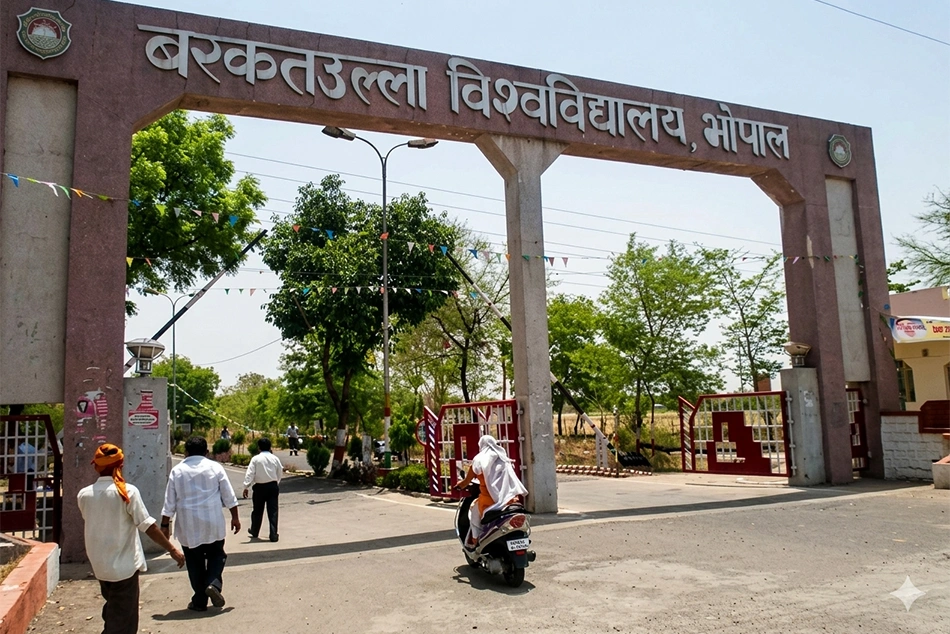
Barkatullah University must remain Barkatullah University because names carry stories, and stories shape national memory.
Preserving the Legacy of a Forgotten Freedom Fighter
Ever since the Bharatiya Janata Party (BJP) came to power at the Centre, there has been a growing trend of renaming cities, roads, railway stations, and public institutions. While governments have every right to commemorate historical figures and cultural icons, the pattern of these changes has often raised concerns, particularly when institutions named after Muslim personalities become targets for renaming. The latest example is Barkatullah University in Bhopal.
On June 3, the university’s Executive Council passed a resolution proposing that the institution be renamed in honour of Goddess Saraswati, also known as Vagdevi, while drawing inspiration from Bhojpal, the ancient name of Bhopal associated with the Paramara dynasty ruler King Bhoj. Vice-Chancellor Suresh Kumar Jain confirmed the development to The Hindu. While supporters of the move may present it as an effort to reconnect with cultural heritage, critics see it as part of a broader political project that seeks to erase or diminish the contributions of Muslim figures from India’s public memory.
The proposal raises important questions about how India remembers its freedom fighters, protects its historical legacy, and defines its national identity. To understand why Barkatullah University should retain its name, it is essential to revisit the life and contributions of the man it honours.
Maulana Barkatullah: A Revolutionary Beyond Borders
Maulana Barkatullah Bhopali was born in Bhopal on July 7, 1854. Gifted in languages such as Arabic, Persian, and English, he emerged as one of India’s most remarkable anti-colonial revolutionaries. Unlike many freedom fighters who operated within India, Barkatullah carried the struggle against British rule across continents.
His journey took him through Asia, Europe, and North America, where he tirelessly advocated for India’s independence. Despite living much of his life in exile, his commitment to his homeland never wavered. He forged connections with global anti-colonial movements and became one of the most influential Indian revolutionaries working abroad.
Inspired by resistance movements across the world, Barkatullah believed that the fight against colonialism was not merely a national struggle but part of a broader quest for justice and human dignity.
A Symbol of Unity in India’s Freedom Struggle
What distinguished Barkatullah from many of his contemporaries was his unwavering commitment to interfaith unity. He understood that India’s liberation could only be achieved when people of all communities stood together against colonial rule.
This vision found its most powerful expression in the Provisional Government of India established in Kabul in 1915. Alongside Raja Mahendra Pratap, a Hindu prince, and Maulana Ubaidullah Sindhi, an eminent Islamic scholar, Barkatullah helped create one of the earliest Indian governments in exile.
Raja Mahendra Pratap served as President, while Barkatullah assumed the role of Prime Minister. Their collaboration represented a remarkable example of Indians from different religious and cultural backgrounds working together for a common cause.
Long before secularism became a constitutional principle, these freedom fighters demonstrated its spirit in practice. Their partnership reflected an India where faith was not a barrier but a source of collective strength.
A Life of Sacrifice for an Independent India
Barkatullah’s dedication came at a tremendous personal cost. He sacrificed comfort, family life, and the possibility of returning home. He spent his final years in exile and passed away in the United States on September 20, 1927.
He never lived to witness the freedom for which he had devoted his entire life. Yet his faith in India’s future remained unshaken. According to accounts of his final days, his greatest regret was not personal hardship but the fact that he would not see an independent India with his own eyes.
The naming of Barkatullah University was therefore not an act of symbolism alone. It was a national acknowledgment of a patriot whose sacrifices helped shape India’s journey toward independence.
Why the Name Matters
The name “Barkatullah University” represents much more than an individual. It embodies a legacy of courage, intellectual resistance, international advocacy, and communal harmony.
The current proposal to rename the university cannot be viewed in isolation. It comes against the backdrop of numerous renaming exercises undertaken over the past decade. Critics argue that many of these changes disproportionately affect places and institutions associated with Muslim rulers, scholars, or freedom fighters. Whether or not one agrees with that assessment, the perception itself is troubling because it risks reducing historical recognition to questions of religious identity.
Removing Barkatullah’s name would send an unfortunate message—that the contributions of a freedom fighter can be overshadowed by his religious background. Such an approach would undermine the inclusive spirit that characterized India’s freedom movement.
India’s struggle for independence was successful precisely because it brought together people from diverse faiths, languages, castes, and regions. To diminish Barkatullah’s place in that history would be to diminish the richness of the freedom movement itself.
A Legacy Shared by Generations
For decades, thousands of students have graduated from Barkatullah University carrying its name with pride. For them, the institution is not merely a place of learning; it is a part of their personal journey.
The university’s name is associated with memories of academic achievement, friendships, aspirations, and personal growth. Renaming the institution would not simply alter official records—it would disrupt a shared sense of identity that generations of alumni have built around it.
Names are not empty labels. They become part of the cultural and emotional fabric of institutions and communities.
Honouring All Freedom Fighters Equally
A mature and confident nation does not erase its heroes; it remembers them. India’s public spaces proudly commemorate freedom fighters from every community, including Bhagat Singh, Subhas Chandra Bose, Ashfaqulla Khan, and Maulana Abul Kalam Azad.
Their contributions are celebrated because they belong to the shared heritage of the nation. The same principle must apply to Maulana Barkatullah Bhopali.
Honouring Goddess Saraswati or celebrating the legacy of King Bhoj does not require the removal of Barkatullah’s name. India’s history is vast enough to accommodate all its heroes and cultural traditions. Recognition of one legacy should not come at the expense of another.
To single out Barkatullah for exclusion would not constitute historical correction. It would amount to historical selectivity, a practice that weakens rather than strengthens national unity.
Preserving an Inclusive Vision of India
The debate surrounding Barkatullah University is ultimately about more than a name. It is about the values India chooses to uphold.
Retaining the name of Maulana Barkatullah means preserving the memory of a freedom fighter who dedicated his life to the nation. It means honouring a vision of India built on unity, sacrifice, and mutual respect. Most importantly, it reminds future generations that patriotism is not defined by religion but by commitment to the country and its people.
Barkatullah University must remain Barkatullah University because names carry stories, and stories shape national memory. His story reminds us that India belongs equally to everyone who loves it, serves it, and sacrifices for it. In a democracy that prides itself on diversity and pluralism, preserving such legacies is not merely an act of remembrance—it is an affirmation of the very idea of India.
[The writer, Mohd Ziyauallah Khan, is a freelance content writer & editor based in Nagpur. He is also an activist and social entrepreneur, cofounder of the group TruthScape, a team of digital activists fighting disinformation on social media.]
Follow ummid.com WhatsApp Channel for all the latest updates.
Select Language to Translate in Urdu, Hindi, Marathi or Arabic