Meet Bangladesh Origin Calligrapher Who Refined The Kaaba Kiswa Design
It may sound strange, but it is a fact that the man credited to have refined the decades old design of the Holy Kaaba Kiswa is not an Arab but a Bangladeshi origin Calligrapher Mukhtar Alam Shaqdar
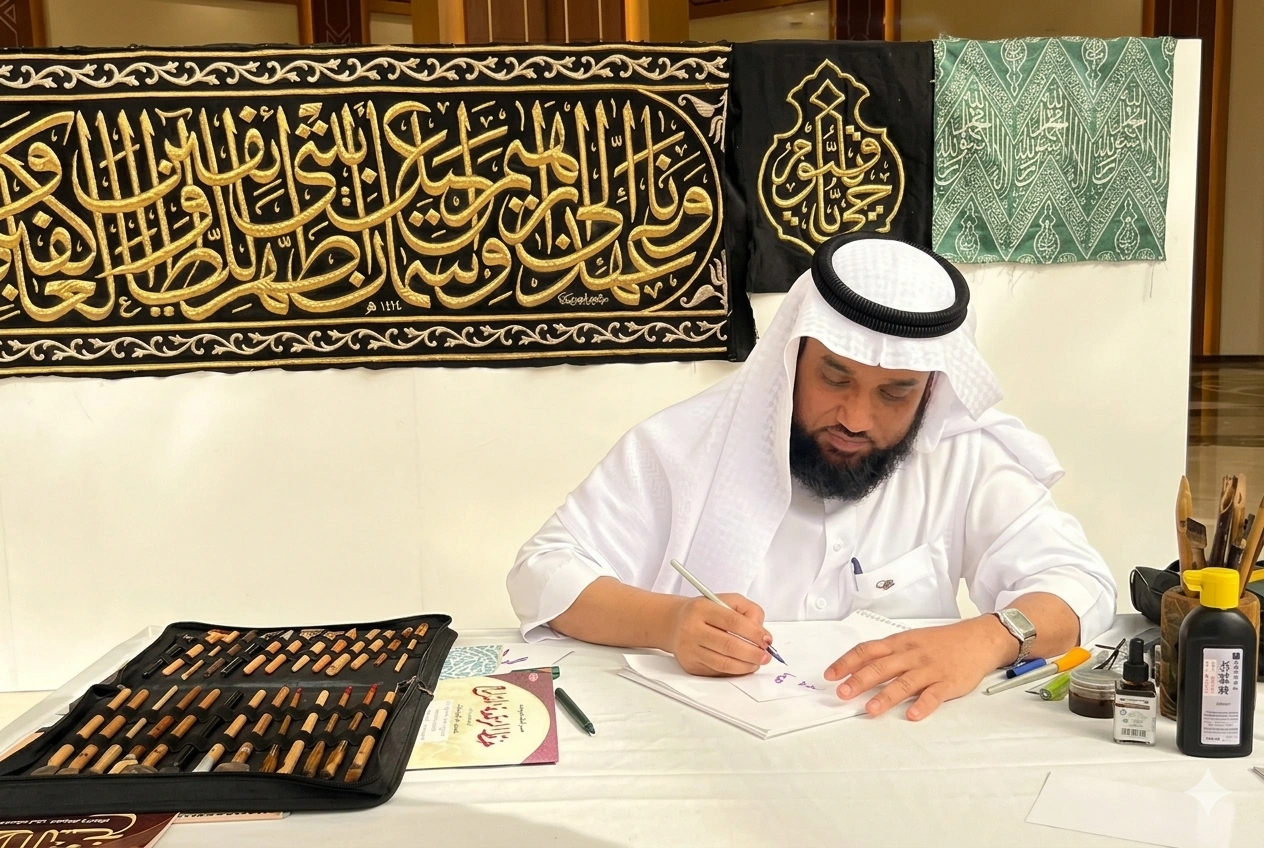
Makkah al Mukarramah: It may sound strange, but it is a fact that the man credited to have refined the decades old design of the Holy Kaaba Kiswa is not an Arab but a Bangladeshi origin Calligrapher Mukhtar Alam Shaqdar.
Mukhtar Alam was born in Saudi Arabia to a Bangladeshi family having roots in Roshider Ghona village of Lohagara in Bangladesh's Chattogram. His father Mufizur Rahman bin Ismail Sikder had migrated to Saudi Arabia for work. Mukhtar Alam was granted Saudi citizenship under a Royal decree that extended naturalisation to skilled foreign nationals and professionals who are experts in different fields.
Education and Qualification
After early education in a Saudi school, Mukhtar Alam earned a Bachelor’s Degree in Art Education from Umm Al-Qura University’s Department of Art Education in Makkah in 1992 followed by a Master’s Degree in Art Education with a specialisation in Calligraphy in 2001. While pursuing his masters, Mukhtar Alam taught at the prestigious Umm Al-Qura University as a teacher from 1995 to 1999.
Before joining Kaaba Kiswah Factory as Chief Calligrapher, Mukhtar Alam joined the Charitable Association for the Memorisation of the Holy Quran in Makkah in 1980 where he taught for 13 years.
Alam also taught for 03 years at Dar Al-Arqam Institute inside Masjid al-Haram – the Grand Mosque in Makkah.
Alam holds two licences in The Holy Quran, received in 2002 and 2011 from Sheikh Fouad Mustafa — a student of Sheikh Ibrahim Al-Akhdar, former Imam of Masjid an-Nabawi – The Prophet’s Mosque in Madinah al Munawwarah.
Mukhtar Alam's Journey at Kaaba Kiswa Factory
Mukhtar Alam met a Jeddah-based businessman and calligrapher named Muhammad Salem Bajnaid sometimes in 2000.
Awestruck by the quality of Alam's work, Bajnaid forwarded his file to the Presidency of The Two Holy Mosques. A formal test followed at Umm Al-Qura University.
It was in July 2002. Alam passed and thus began his journey as a Calligrapher at the Ka’bah Kiswa factory at King Abdulaziz Complex in Makkah.
Kaaba Kiswa Design Gets New Touch
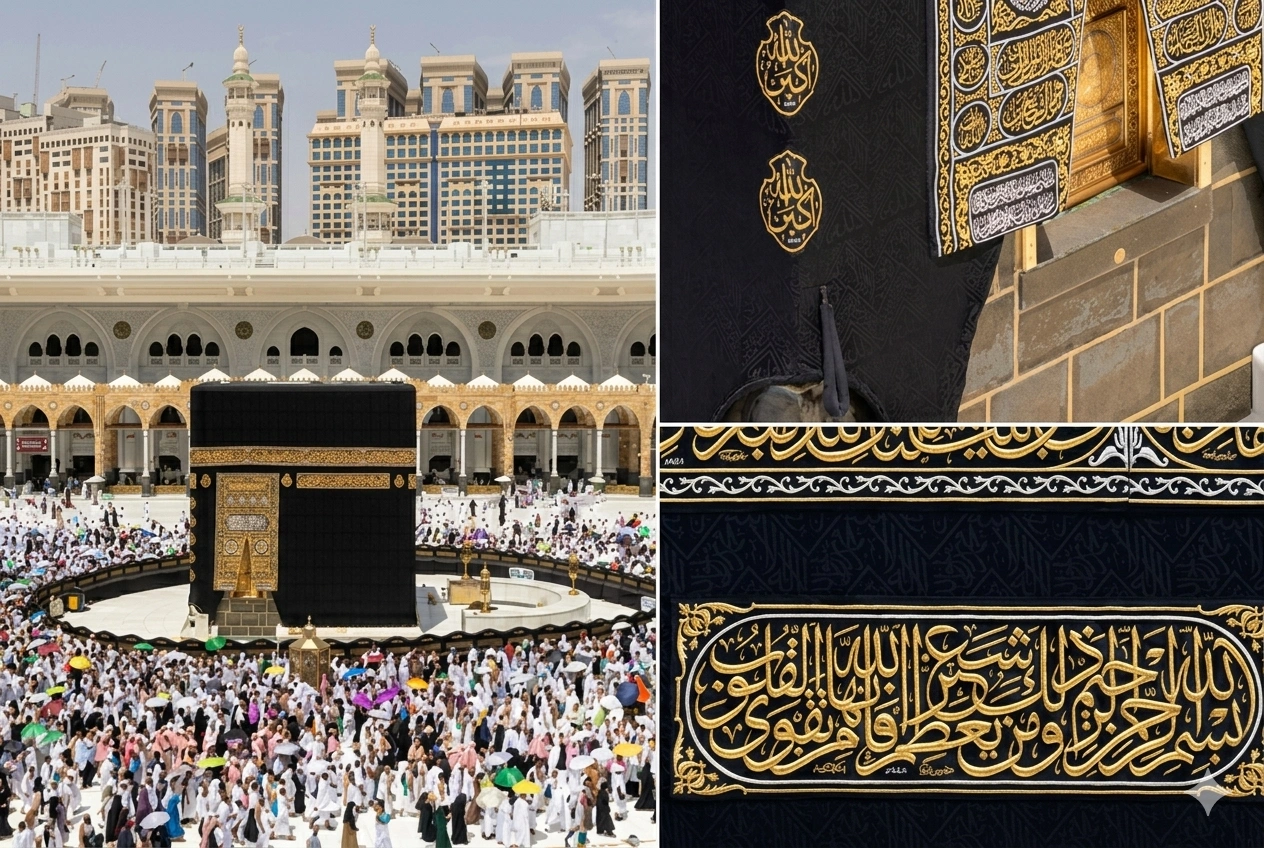
The calligraphy on the Kiswa follows the Thuluth script originally designed by Sheikh Abdul Rahim Amin Bukhari, whose name remains on the Kiswa to this day. Alam retained the base design, but brought measurable improvements to it.
Alam increased the size of the letters and the width of the script, corrected the proportions between the circles, rectangles, and their frames, and improved the internal decoration of the door curtain and its surrounding frame.
He also brought the work into the digital age by introducing a specialised electronic calligraphy programme, using computer technology to raise the precision and consistency of the calligraphy applied to the Kiswa fabric.
Alam has received numerous awards locally and internationally, including a prize for Persian calligraphy at the Second International Arabic Calligraphy Competition held in Turkey in 1989.
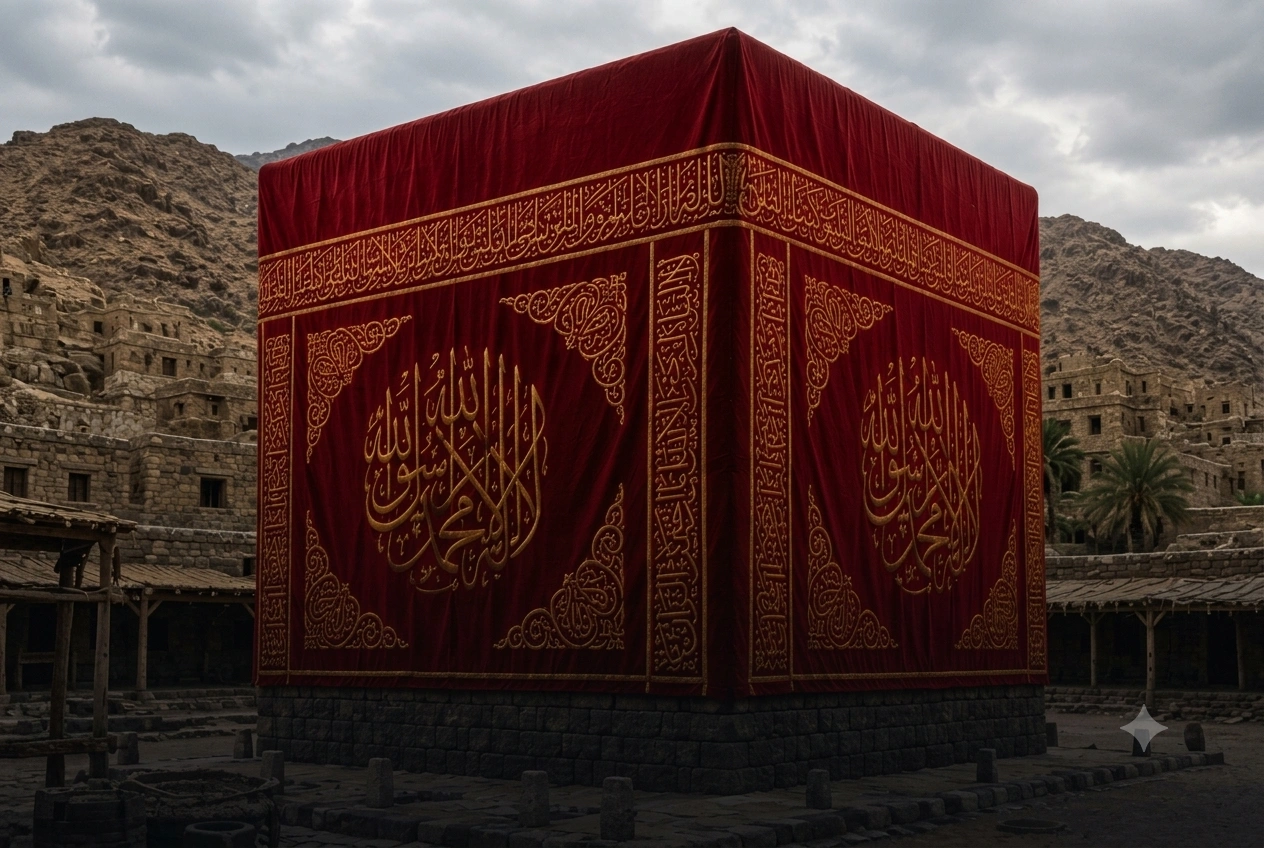
[In the pre-Islamic era, the Holy Kaaba was draped in Yemeni cloth. Later, Abdullah ibn al Zubayr ibn al-Awwam covered it in red silk.]
Kaaba Kiswa - A Brief History
The Kiswa is made at King Abdulaziz Complex for Holy Kaaba Kiswa with over 100 workers involved in dyeing, electric weaving, printing, embroidery and then assembling the different parts of the Kiswa, according to Arab News.
The 14-meter-long Kiswa is embroidered with 120kg of gold and 25kg of silver threads.
The Complex uses a state-of-the-art embroidery machine with the capacity to doing 1,000 stitches per minute. The world’s longest sewing machine, guided by laser systems, joins the embroidered silk and inner lining of Kiswa with extreme precision.
During the Prophet Muhammad's time, the Kiswa was made of cloth from Yemen and it was changed and renewed twice a year - before Ramadan and then during Haj. In the pre-Islamic era the Holy Kaaba was draped in Yemeni cloth. Later, Abdullah ibn al Zubayr ibn al-Awwam covered it in red silk.
Nowadays, the Kiswa is replaced once in a year, since last three years on Muharram 1st which coincides with the first day of the Islamic New Year.
[Falak Ather Shazan Faizee is Intern at ummid.com]
Follow ummid.com WhatsApp Channel for all the latest updates.
Select Language to Translate in Urdu, Hindi, Marathi or Arabic